In today’s media environment, multi-screening is not the exception—it’s the norm. From endless social media scrolls to binge-worthy over-the-top (OTT) streams, Indonesians are consuming more content than ever across screens. This creates a vibrant multi-screen ecosystem—one where the real challenge for brands is turning fragmented attention into unified, compelling journeys. But within this complexity lies a powerful upside—an opportunity to engage consumers across screens in ways that drive discovery, build preference and accelerate purchase. After all, if your ads aren’t there to capture these moments, your competitor’s surely will. This is the true promise of multi-screening.
多屏幕的机遇
According to recent Nielsen data, more than 70% of Gen Z and Gen Y in Indonesia now own both smartphones and TVs, with smart TV adoption rising rapidly, especially in urban and younger households.1 While television still enjoys strong household penetration across all generations, smartphone usage has surged, particularly among younger audiences, reflecting a growing urban-rural divide in digital connectivity.
这种跨屏幕的转变给广告商带来了一个悖论:传播潜力更大了,但注意力却分散了。了解当今人们的媒体消费方式至关重要。
如今,受众的行为多种多样--全天在不同屏幕之间切换,同时使用多个设备进行无关的活动,通过在第二个设备上搜索相关内容或细节来增强他们的主要观看体验。无论他们是从电视跳转到移动设备研究产品,还是在观看节目时滚动社交媒体,或者在网上深入了解屏幕上的内容,这些习惯都为品牌创造了多层次、动态的联系机会。
For brands, these behaviors are not necessarily distractions—they’re pathways to discovery and conversion. Especially among younger Indonesians, multi-screening while watching TV often leads to product searches, online purchases, or social sharing.
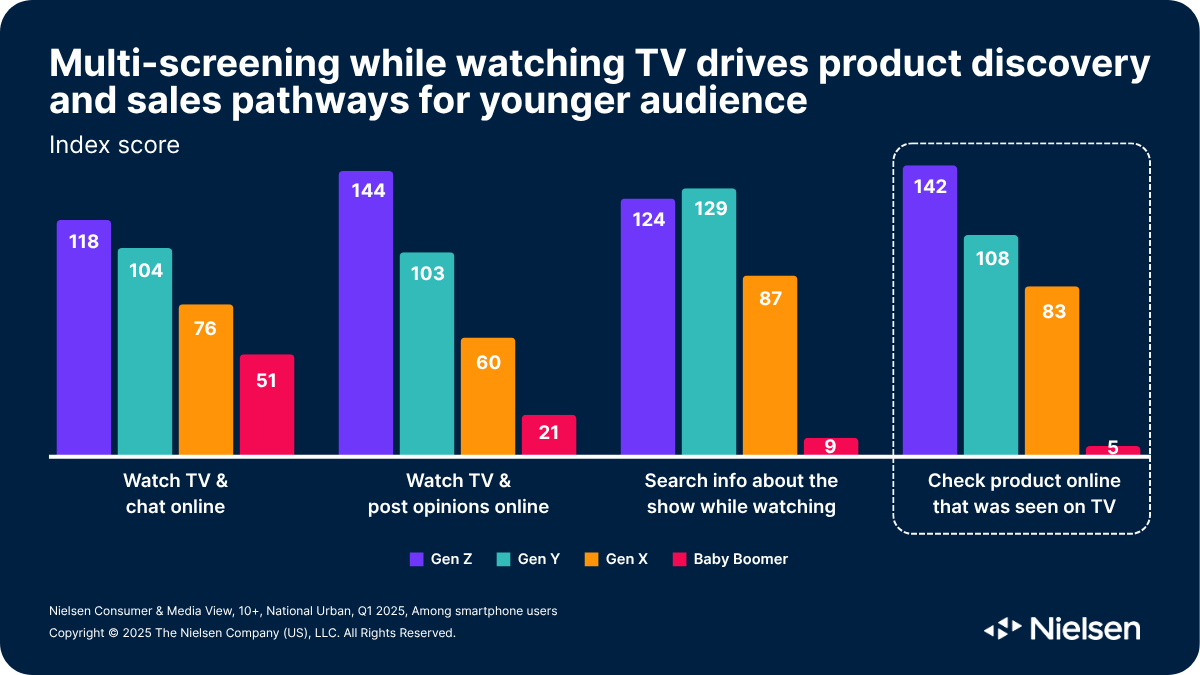
Z 世代和 Y 世代让客厅成为商务中心
年轻的印尼受众,尤其是 Z 世代和 Y 世代,是这一转变的核心,他们将多屏习惯转化为发现和销售的强大引擎。他们在观看电视或流媒体 OTT 内容时,会同时在移动设备上进行浏览--通常是查找刚刚看过的品牌或产品。
According to recent Nielsen Consumer & Media View data, Gen Z is 42% more likely than the average Indonesian to discover products through multi-screening, followed by Gen Y at 8%.2 This underscores why synchronized multi-screen campaigns like pairing a TV spot with TikTok retargeting and an e-commerce voucher can prove helpful in capturing momentum and driving meaningful conversions among these high-value segments.
挑战:无缝消费世界中的零散数据
While consumers expect a seamless brand experience, advertisers continue to struggle with holistic media measurement. Nielsen’s 2025 Annual Marketing Report found that only 37% of marketers across the Asia-Pacific region are measuring digital and traditional media spending holistically.
随着受众跨媒体分散,用于衡量其收视情况的数据也在分散。如果没有正确的跨媒体测量方法,不兼容的指标和缺乏透明度的 "围墙花园 "会使广告商更难统一认识媒体接触点是如何协同工作的。这种各自为政的现象造成了一些实际问题,例如
- 预算分配不当,因为广告商无法明确归因于各屏幕的效果。
- 频率效率低,导致过度曝光和错失良机。
- 信息传递不一致,尤其是在不同年龄段和不同地域。
广告商如何在印尼的多屏环境中取胜
要在印尼复杂的媒体环境中实现投资回报率并推动可持续增长,营销人员必须从平台思维转变为以受众为中心的战略。
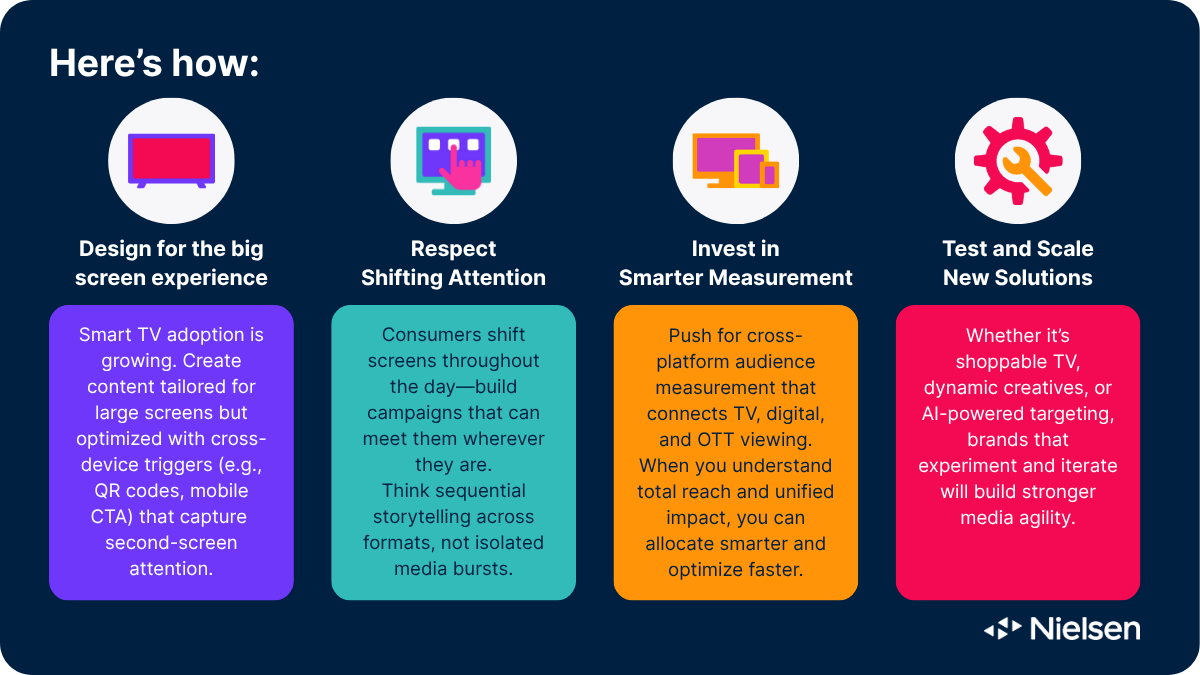
首席营销官和营销人员的底线
印尼的媒体环境比以往任何时候都更具活力,但复杂性不应阻碍您的发展。事实上,有了正确的洞察力和统一的衡量标准,这种分散性就会成为发展机遇。
在尼尔森,我们通过将受众行为转化为商业成果,帮助品牌驾驭这一新常态。无论是了解所有受众,优化跨屏创意,还是调整媒体投资的投资回报率,我们都能为您提供帮助。
说明
1 Source: Nielsen Consumer & Media View, 10+, National Urban, Q1 2025
2 Nielsen Consumer & Media View, 10+, National Urban, Q1 2025, Among smartphone users

想与我们的专家团队交流?