In today’s media environment, multi-screening is not the exception—it’s the norm. From endless social media scrolls to binge-worthy over-the-top (OTT) streams, Indonesians are consuming more content than ever across screens. This creates a vibrant multi-screen ecosystem—one where the real challenge for brands is turning fragmented attention into unified, compelling journeys. But within this complexity lies a powerful upside—an opportunity to engage consumers across screens in ways that drive discovery, build preference and accelerate purchase. After all, if your ads aren’t there to capture these moments, your competitor’s surely will. This is the true promise of multi-screening.
멀티 스크리닝의 기회
According to recent Nielsen data, more than 70% of Gen Z and Gen Y in Indonesia now own both smartphones and TVs, with smart TV adoption rising rapidly, especially in urban and younger households.1 While television still enjoys strong household penetration across all generations, smartphone usage has surged, particularly among younger audiences, reflecting a growing urban-rural divide in digital connectivity.
이러한 스크린 간 변화는 광고주에게 도달 가능성은 커졌지만 관심은 파편화되는 역설을 낳습니다. 오늘날 사람들이 미디어를 소비하는 방식을 이해하는 것이 중요합니다.
오늘날의 시청자는 하루 종일 여러 화면을 전환하고, 관련 없는 활동을 위해 여러 기기를 동시에 사용하며, 두 번째 기기에서 관련 콘텐츠나 세부 정보를 검색하여 기본 시청 경험을 향상시키는 등 다양한 행동을 취합니다. TV에서 모바일로 이동하며 제품을 검색하거나, 쇼를 시청하면서 소셜 미디어를 스크롤하거나, 온라인에서 화면 속 내용을 더 자세히 살펴보는 등 이러한 습관은 브랜드가 연결될 수 있는 다층적이고 역동적인 기회를 창출합니다.
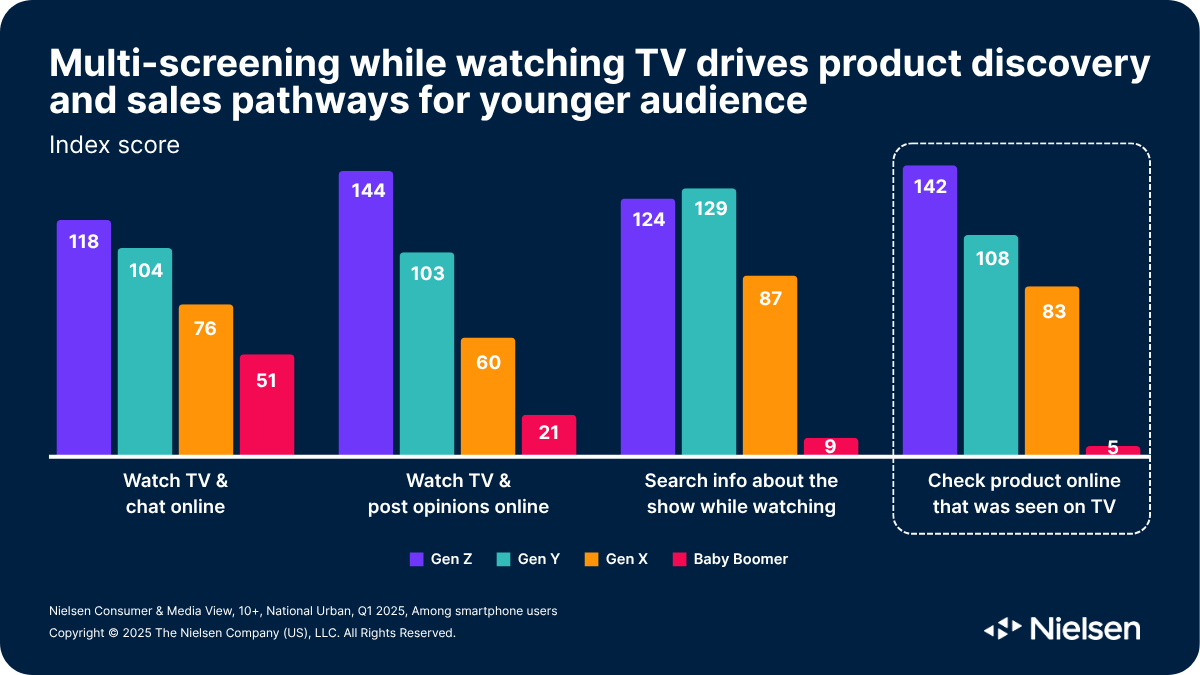
For brands, these behaviors are not necessarily distractions—they’re pathways to discovery and conversion. Especially among younger Indonesians, multi-screening while watching TV often leads to product searches, online purchases, or social sharing.
거실을 커머스 허브로 만드는 Z세대와 Y세대
인도네시아의 젊은 시청자, 특히 Z세대와 Y세대가 이러한 변화의 중심에 있으며, 멀티스크린 습관을 검색과 판매의 강력한 엔진으로 활용하고 있습니다. 이들은 TV를 시청하거나 OTT 콘텐츠를 스트리밍하면서 동시에 모바일 디바이스에서 검색을 하고, 방금 본 브랜드나 제품을 찾아보는 경우가 많습니다.
According to recent Nielsen Consumer & Media View data, Gen Z is 42% more likely than the average Indonesian to discover products through multi-screening, followed by Gen Y at 8%.2 This underscores why synchronized multi-screen campaigns like pairing a TV spot with TikTok retargeting and an e-commerce voucher can prove helpful in capturing momentum and driving meaningful conversions among these high-value segments.
도전 과제 과제: 원활한 소비자 경험의 파편화된 데이터
While consumers expect a seamless brand experience, advertisers continue to struggle with holistic media measurement. Nielsen’s 2025 Annual Marketing Report found that only 37% of marketers across the Asia-Pacific region are measuring digital and traditional media spending holistically.
오디언스가 여러 미디어에 걸쳐 파편화됨에 따라 시청을 측정하는 데 사용되는 데이터도 파편화되고 있습니다. 올바른 크로스 미디어 측정이 없다면, 호환되지 않는 지표와 벽으로 둘러싸인 정원의 투명성 부족으로 인해 광고주는 미디어 터치포인트가 함께 작동하는 방식을 통합적으로 파악하기가 더 어려워질 수 있습니다. 이러한 파편화는 다음과 같은 실제 문제를 야기합니다:
- 광고주가 여러 스크린의 성과를 명확하게 파악할 수 없기 때문에 예산이 잘못 할당됩니다.
- 비효율적인 빈도로 인해 과다 노출과 기회 누락이 모두 발생합니다.
- 특히 세대와 지역에 따라 일관성 없는 메시지가 전달되는 경우가 많습니다.
인도네시아의 멀티스크린 환경에서 광고주가 승리하는 방법
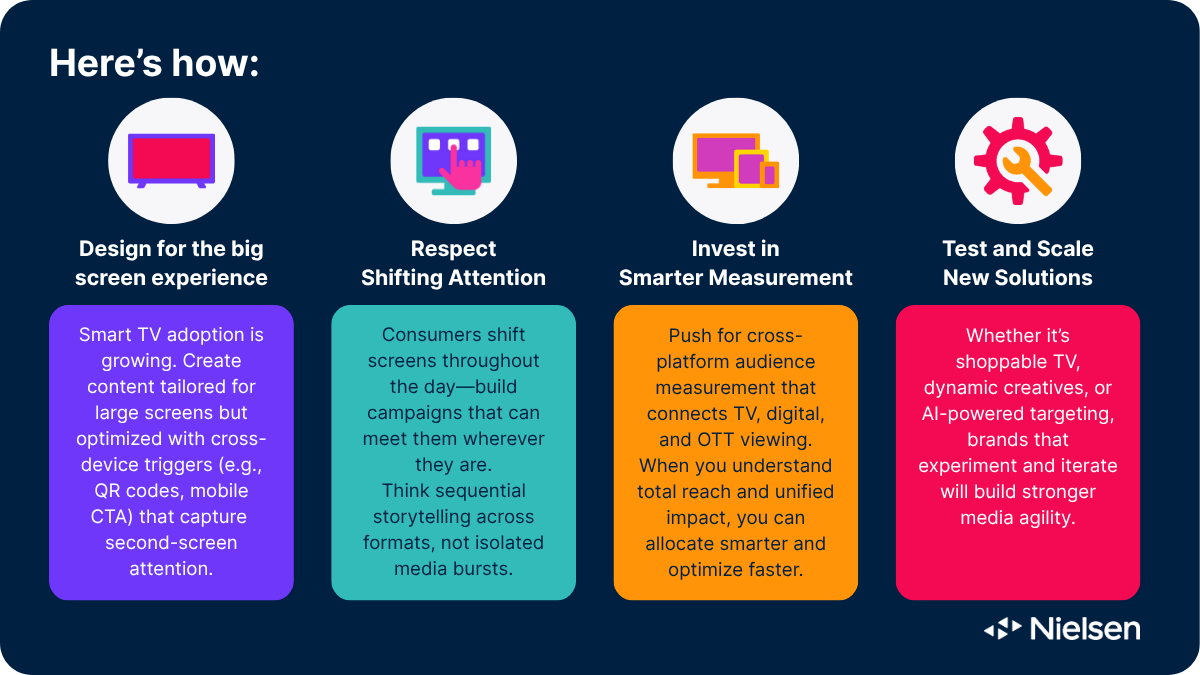
인도네시아의 복잡한 미디어 환경에서 ROI를 실현하고 지속 가능한 성장을 추진하려면 마케터는 플랫폼 사고에서 오디언스 중심 전략으로 진화해야 합니다.
CMO와 마케터를 위한 결론
인도네시아의 미디어 환경은 그 어느 때보다 역동적이지만 복잡성이 발목을 잡아서는 안 됩니다. 오히려 올바른 인사이트와 통합된 측정이 있다면 이러한 세분화는 성장의 기회가 될 수 있습니다.
닐슨은 잠재고객 행동을 비즈니스 성과로 전환하여 브랜드가 새로운 표준을 탐색할 수 있도록 지원합니다. 전체 잠재고객을 파악하고, 여러 스크린에서 크리에이티브를 최적화하며, 미디어 투자에 따른 ROI를 조정하는 등, 닐슨이 도와드리겠습니다.
참고
1 Source: Nielsen Consumer & Media View, 10+, National Urban, Q1 2025
2 Nielsen Consumer & Media View, 10+, National Urban, Q1 2025, Among smartphone users

전문가 팀과 상담하고 싶으신가요?