In today’s media environment, multi-screening is not the exception—it’s the norm. From endless social media scrolls to binge-worthy over-the-top (OTT) streams, Indonesians are consuming more content than ever across screens. This creates a vibrant multi-screen ecosystem—one where the real challenge for brands is turning fragmented attention into unified, compelling journeys. But within this complexity lies a powerful upside—an opportunity to engage consumers across screens in ways that drive discovery, build preference and accelerate purchase. After all, if your ads aren’t there to capture these moments, your competitor’s surely will. This is the true promise of multi-screening.
マルチスクリーンのチャンス
According to recent Nielsen data, more than 70% of Gen Z and Gen Y in Indonesia now own both smartphones and TVs, with smart TV adoption rising rapidly, especially in urban and younger households.1 While television still enjoys strong household penetration across all generations, smartphone usage has surged, particularly among younger audiences, reflecting a growing urban-rural divide in digital connectivity.
このようなスクリーン間のシフトは、広告主にとって、より大きなリーチの可能性と、断片的なアテンションというパラドックスを生み出す。人々が今日どのようにメディアを消費しているかを理解することは非常に重要である。
今日の視聴者は、1日中スクリーンを切り替えて見たり、無関係なアクティビティで複数のデバイスを同時に使ったり、2台目のデバイスで関連コンテンツや詳細を検索してメインの視聴体験を高めたりするなど、さまざまな行動をとっている。製品をリサーチするためにテレビからモバイルにジャンプしたり、番組を見ながらソーシャルメディアをスクロールしたり、画面に映し出されたニールセンについて オンラインでさらに深く調べたりと、このような習慣は、ブランドにとって何層にも重なったダイナミックなつながりを生み出す機会となっています。
For brands, these behaviors are not necessarily distractions—they’re pathways to discovery and conversion. Especially among younger Indonesians, multi-screening while watching TV often leads to product searches, online purchases, or social sharing.
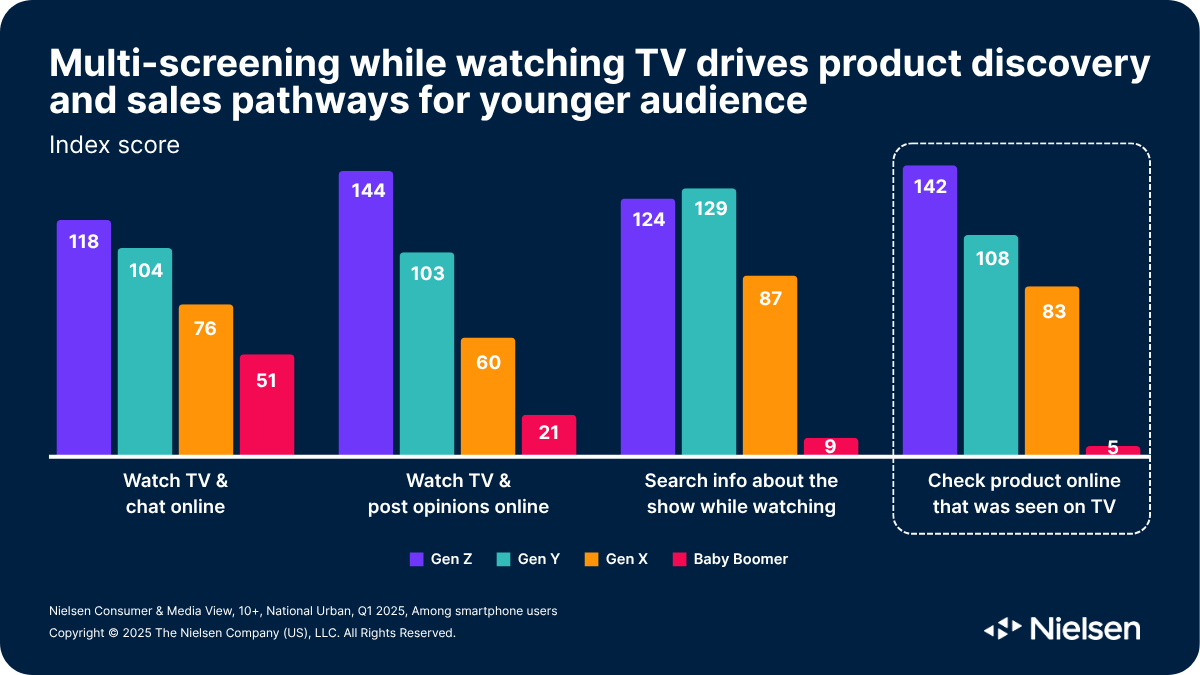
Z世代とY世代、リビングルームを商取引の拠点に
インドネシアの若い視聴者、特にZ世代とY世代がこのシフトの中心で、マルチスクリーン習慣を発見と販売の強力なエンジンに変えている。彼らは、テレビを見たりOTTコンテンツをストリーミングしたりしながら、同時にモバイル端末でブラウジングを行い、多くの場合、見たばかりのブランドや商品を調べている。
According to recent Nielsen Consumer & Media View data, Gen Z is 42% more likely than the average Indonesian to discover products through multi-screening, followed by Gen Y at 8%.2 This underscores why synchronized multi-screen campaigns like pairing a TV spot with TikTok retargeting and an e-commerce voucher can prove helpful in capturing momentum and driving meaningful conversions among these high-value segments.
課題シームレスな消費者の世界における断片化されたデータ
While consumers expect a seamless brand experience, advertisers continue to struggle with holistic media measurement. Nielsen’s 2025 Annual Marketing Report found that only 37% of marketers across the Asia-Pacific region are measuring digital and traditional media spending holistically.
視聴者がメディア間で細分化されるにつれ、視聴を測定するためのデータも細分化される。適切なクロスメディア測定がなければ、互換性のない測定基準やウォールガーデンによる透明性の欠如により、広告主はメディアのタッチポイントがどのように連携しているかを統一的に把握することが難しくなります。このような断片化は、次のような現実的な問題を引き起こす:
- 広告主がスクリーン間の成果を明確に特定できないため、予算の配分を誤る。
- 非効率的な頻度で、過剰な露出と機会損失の両方を招く。
- 特に世代や地域セグメントによって、メッセージングに一貫性がない。
インドネシアのマルチスクリーン環境で広告主が勝つ方法
インドネシアの複雑なメディア環境でROIを引き出し、持続可能な成長を推進するためには、マーケティング担当者はプラットフォーム思考から視聴者中心の戦略へと進化しなければならない。
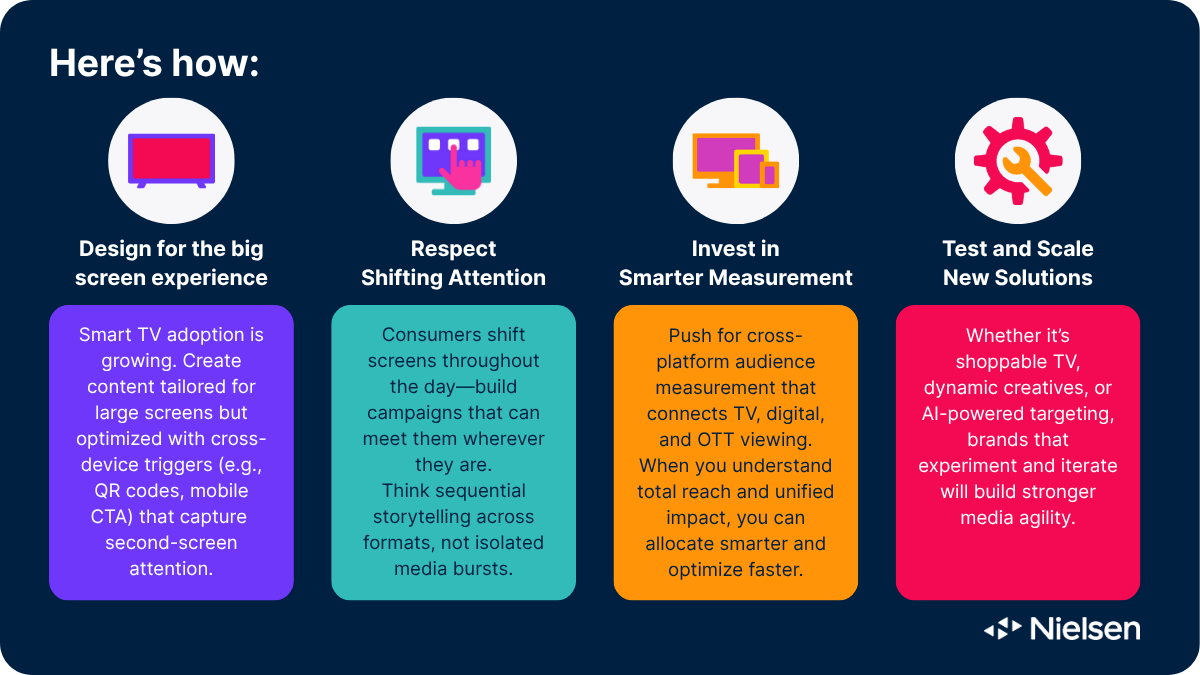
CMOとマーケターにとっての結論
インドネシアのメディア事情はかつてないほどダイナミックだが、その複雑さが足かせになることはない。実際、適切なインサイトと統一された測定があれば、この断片化は成長のチャンスとなる。
ニールセンでは、視聴者の行動をビジネスの成果に変えることで、ブランドがこの新しい常識をナビゲートするお手伝いをしています。ニールセンは、視聴者の行動をビジネス成果に変えることで、ブランドが新しい常識をナビゲートできるようお手伝いします。
備考
1 Source: Nielsen Consumer & Media View, 10+, National Urban, Q1 2025
2 Nielsen Consumer & Media View, 10+, National Urban, Q1 2025, Among smartphone users

私たちの専門家チームと話をしたいですか?