Panels—and the data they generate—have been the research industry’s gold standard for nearly a century now, and they remain the most accurate tool to measure media audiences.
请跟随我们一起分析 什么是面板数据、面板数据为何重要以及面板数据的发展方向。
到底什么是面板数据?
在媒体研究中,小组是指一组家庭或个人,他们同意在一定时期内分享个人资料并参与定期研究或对其媒体使用情况进行持续测量。
但并非所有的面板都是一样的。主要有两种类型:
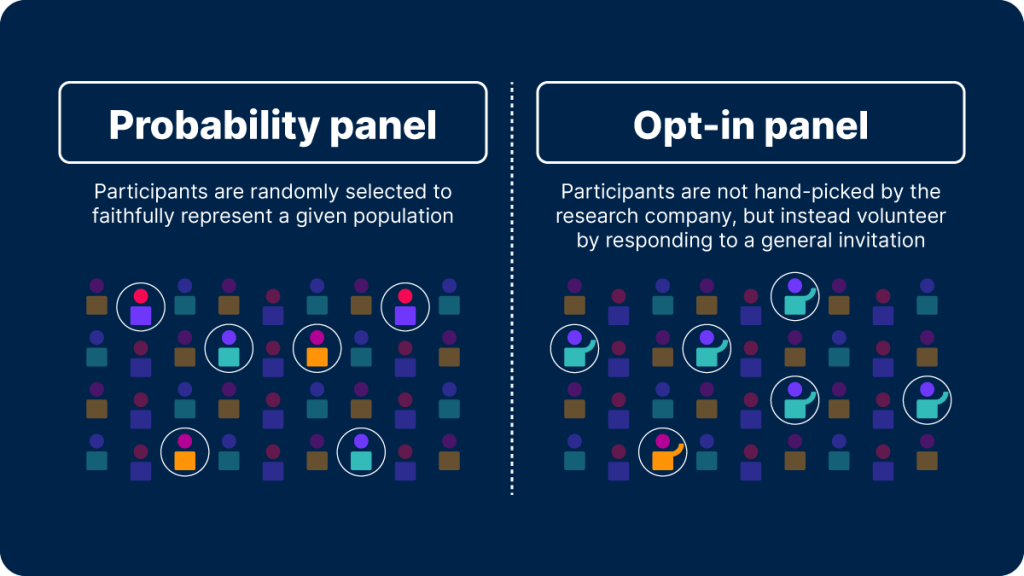
概率面板
概率调查小组的参与者是为了忠实代表特定人群(如全国电视观众或地方广播市场)而挑选的。调查公司会非常谨慎地管理招募过程,并长期保持小组的统计完整性。这意味着要招募小组成员,及时注册新设备,考虑家庭规模和组成的变化,并确保数据准确反映人们的行为。尼尔森的电视和音频面板是概率面板。
选入(便利)面板
Participants in opt-in panels volunteer by responding to a general invitation from a research company. Since only certain types of people might respond to that invitation, opt-in panels aren’t representative of any given population. However, they are extremely useful in audience measurement. They’re helpful in understanding biases in identity, used as calibration inputs to fine-tune models, and can validate and correct third-party information from big data partners. At Nielsen, opt-in panelists aren’t always actively metered, but we do use our large opt-in panel to validate third-party records from big data partners.
Probability panel data, combined with census data that speaks to the income, age and makeup of a household, gives you a statistically accurate look at who is consuming media.
概率面板和选择加入面板可共同提供直接的媒体消费洞察,校准和消除普查级数据中的偏差,并确保最准确地了解受众在不同设备上的参与情况。
专家组成员要做什么?
有些小组需要主动参与,而不是被动参与。小组成员可能会被要求填写定期调查问卷,按下按钮以确认他们正在看电视,或者佩戴一个设备来捕捉户外活动,比如在车里听收音机或在酒吧看体育比赛。其他小组除了授权研究公司安装硬件或软件(称为 "计价器")在幕后记录他们的媒体使用情况外,不要求他们做出任何承诺:例如,他们正在收看哪些电视节目,或正在使用哪些播客、网站或应用程序。
要获取最精确的个人数据并最大限度地发挥其价值,通常需要主动参与,而不是自动测量。为了保持较高的合作度--这对维持较高的数据质量至关重要--正规的调查公司会在小组成员体验方面投入大量资金,以消除每个环节的摩擦。
At Nielsen, we have four different kinds of panels:
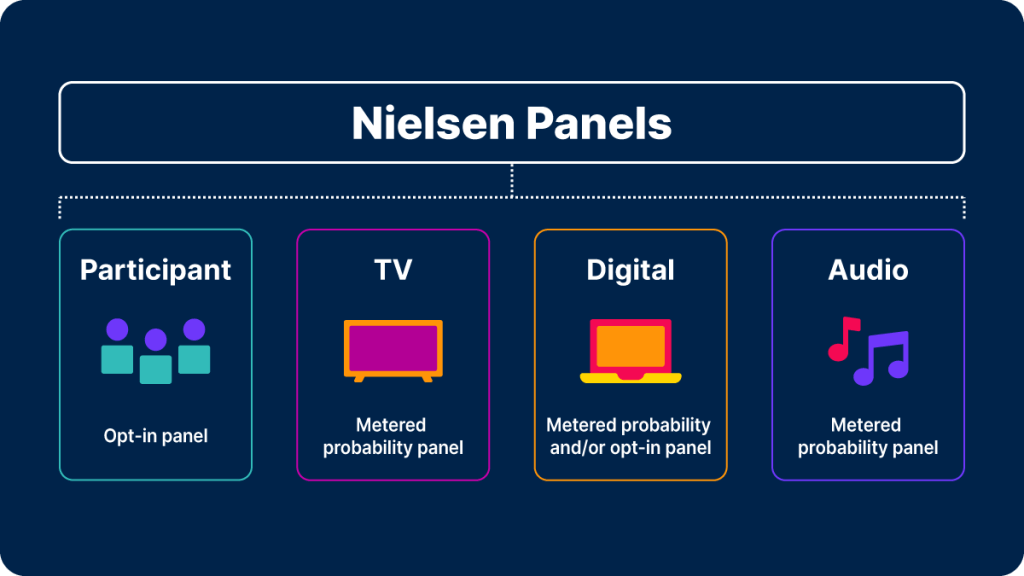
• TV — A probability panel that measures the who, what, how and where of TV and streaming audiences
• 音频 — A probability panel that measures in-home and out-of-home audio consumption at the local and national level and consists of both metered and diary markets
• Digital — Depending on the market, a metered probability and/or opt-in panel that measures ad and content exposure for computers, mobile and across platforms
• 参与者 — An opt-in panel of registered, non-metered panelists to enhance our measured panel assets with features like big data calibration and identity validation
如何使用媒体面板数据?
研究公司可能会使用面板数据来寻找消费者趋势,政府机构也可能会使用面板数据来监控人口的消费习惯,而媒体公司、品牌和广告商则最常使用媒体面板数据来了解内容的收视率以及广告活动的覆盖范围和频率。
For networks, publishers and other media sellers, panel data helps them know their audience size, habits and trends, which is then used to inform programming, pricing and content distribution strategies.
For brands, advertisers and other media buyers, panel data is used to understand who’s actually seeing their ads, which platforms their target audiences prefer, and predict how these behaviors may change over time.
在大数据时代,面板是否已经过时?
You may be thinking: Do we even need panels now that we have big data from set-top boxes, smart TVs, streaming platforms, social media channels, retail media networks and everything in-between?
That’s a popular misconception.
First off, big data (like automatic content recognition {ACR} data from smart TVs) can tell us what’s playing on screen, but not who is watching, or how many friends and family might be sitting on the couch and watching too. In fact, it’s impossible to tell from big data alone whether a show or a movie is playing to an empty room. Nobody wants to pay for media without an audience.
What’s more, big data isn’t representative of the full media audience. The only way it could be is if everyone used the same technology and had access to the same content available to them. A cable company might have tens of millions of subscribers, but those viewers don’t all pay for the same channels or watch the same programs.
如果不能识别真正的受众,然后精确定位并代表观众的人口统计学特征,完全依赖大数据的研究公司就不可能在不同平台、设备和服务之间重复受众,也就无法将整个故事串联起来。
如何才能两全其美?
明确地说,由于抽样或非响应问题而产生的偏差可能会削弱概率小组,就像削弱大型数据集一样。但是,只要规模适当、注重细节并对统计学有敏锐的理解,运行良好的调查小组仍然是代表普通人群的最佳方式,并能对当今极其多样化的媒体生态系统中的受众构成提供可靠的估计。
那么,大数据是否一无是处?当然不是!大数据的规模使得对媒体使用情况进行更精细的分析成为可能,如果有正确的校准和基于人的建模,大数据集可以为长尾节目和难以接触到的受众提供宝贵的见解。
A number of organizations, including the World Federation of Advertisers, now believe that the combination of panels and big data is the true future of audience measurement, and many research companies are hard at work developing these capabilities.
Nielsen’s Need to Know reviews the fundamentals of audience measurement and demystifies the media industry’s hottest topics. Read every article here.
备注
1. Two notable early examples were the National Consumer Panel, launched by Samuel Barton in 1942 under Roosevelt’s Office of Price Administration initiative to measure household consumption of rationed goods during WWII; and the panel behind the Nielsen Radio Index, launched that same year by Arthur C. Nielsen to capture radio on/off and channel tuning activity using an ingenious mechanical device first developed at MIT: the Audimeter.