Panels—and the data they generate—have been the research industry’s gold standard for nearly a century now, and they remain the most accurate tool to measure media audiences.
ติดตามขณะที่เราแบ่งข้อมูล: ข้อมูลแผงคืออะไร เหตุใดจึงสำคัญ และจะมุ่งไปทางใด
ข้อมูลแผงคืออะไรกันแน่?
ในการวิจัยสื่อ กลุ่มตัวอย่างเป็นเพียงกลุ่มครัวเรือนหรือบุคคลที่ตกลงที่จะแบ่งปันรายละเอียดส่วนบุคคลและมีส่วนร่วมในการศึกษาวิจัยตามปกติหรือการวัดผลอย่างต่อเนื่องของการใช้สื่อของพวกเขาเป็นระยะเวลาที่กำหนด
แต่แผงโซลาร์เซลล์ก็ไม่ได้เหมือนกันทั้งหมด มีสองประเภทหลักๆ ได้แก่:
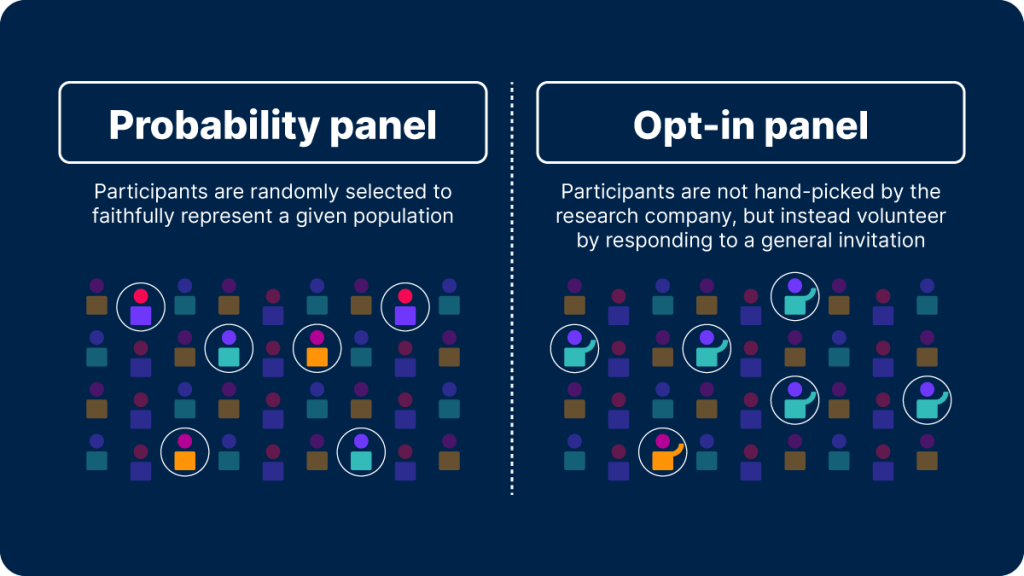
แผงความน่าจะเป็น
ผู้เข้าร่วมในคณะกรรมการความน่าจะเป็นจะถูกเลือกให้เป็นตัวแทนของประชากรกลุ่มหนึ่งอย่างซื่อสัตย์ (เช่น ผู้ชมโทรทัศน์ระดับประเทศหรือตลาดวิทยุในท้องถิ่น) บริษัทวิจัยจะดูแลกระบวนการคัดเลือกและรักษาความสมบูรณ์ทางสถิติของคณะกรรมการไว้ตลอดเวลา ซึ่งหมายถึงการคัดเลือกผู้เข้าร่วมในคณะกรรมการ การลงทะเบียนอุปกรณ์ใหม่โดยไม่ชักช้า การคำนึงถึงการเปลี่ยนแปลงของขนาดและองค์ประกอบของครัวเรือน และการตรวจสอบให้แน่ใจว่าข้อมูลสะท้อนถึงสิ่งที่ผู้คนกำลังทำอย่างถูกต้อง คณะกรรมการด้านโทรทัศน์และเสียงของ Nielsen เป็นคณะกรรมการความน่าจะเป็น
แผงการเลือกเข้า (ความสะดวก)
Participants in opt-in panels volunteer by responding to a general invitation from a research company. Since only certain types of people might respond to that invitation, opt-in panels aren’t representative of any given population. However, they are extremely useful in audience measurement. They’re helpful in understanding biases in identity, used as calibration inputs to fine-tune models, and can validate and correct third-party information from big data partners. At Nielsen, opt-in panelists aren’t always actively metered, but we do use our large opt-in panel to validate third-party records from big data partners.
Probability panel data, combined with census data that speaks to the income, age and makeup of a household, gives you a statistically accurate look at who is consuming media.
เมื่อนำมารวมกัน แผงความน่าจะเป็นและแผงการเลือกเข้าสามารถส่งมอบข้อมูลเชิงลึกเกี่ยวกับการบริโภคสื่อโดยตรง ปรับเทียบและลบอคติจากข้อมูลระดับสำมะโน และรับรองการดูที่แม่นยำที่สุดของการมีส่วนร่วมของผู้ชมในทุกอุปกรณ์
ผู้ร่วมเสวนาจะลงทะเบียนเรียนอะไรบ้าง?
คณะผู้เชี่ยวชาญบางคณะต้องการการมีส่วนร่วมแบบมีส่วนร่วมมากกว่าแบบมีส่วนร่วมแบบมีส่วนร่วม คณะผู้เชี่ยวชาญอาจได้รับการขอให้กรอกแบบสำรวจเป็นประจำ กดปุ่มเพื่อยืนยันว่ากำลังดูทีวีอยู่ หรือสวมอุปกรณ์เพื่อบันทึกกิจกรรมนอกบ้าน เช่น ฟังวิทยุในรถหรือดูรายการกีฬาที่บาร์ คณะผู้เชี่ยวชาญบางคณะไม่ต้องการการผูกมัดใดๆ นอกจากการอนุญาตให้บริษัทวิจัยติดตั้งฮาร์ดแวร์หรือซอฟต์แวร์ (ที่เรียกว่า "มิเตอร์") เพื่อบันทึกการใช้สื่อเบื้องหลัง เช่น รายการทีวีที่กำลังดู หรือพ็อดคาสต์ เว็บไซต์ หรือแอปที่กำลังใช้งาน
การมีส่วนร่วมอย่างแข็งขันนั้นจำเป็นต่อการเก็บรวบรวมข้อมูลในระดับบุคคลที่แม่นยำที่สุดและเพิ่มมูลค่าของข้อมูลให้สูงสุดเมื่อเทียบกับการวัดผลอัตโนมัติ บริษัทวิจัยที่จริงจังจึงลงทุนอย่างหนักในประสบการณ์ของคณะผู้เชี่ยวชาญเพื่อลดความขัดแย้งในทุกขั้นตอน เพื่อให้ความร่วมมืออยู่ในระดับสูง ซึ่งถือเป็นสิ่งสำคัญในการรักษาคุณภาพของข้อมูลให้อยู่ในระดับสูง
At Nielsen, we have four different kinds of panels:
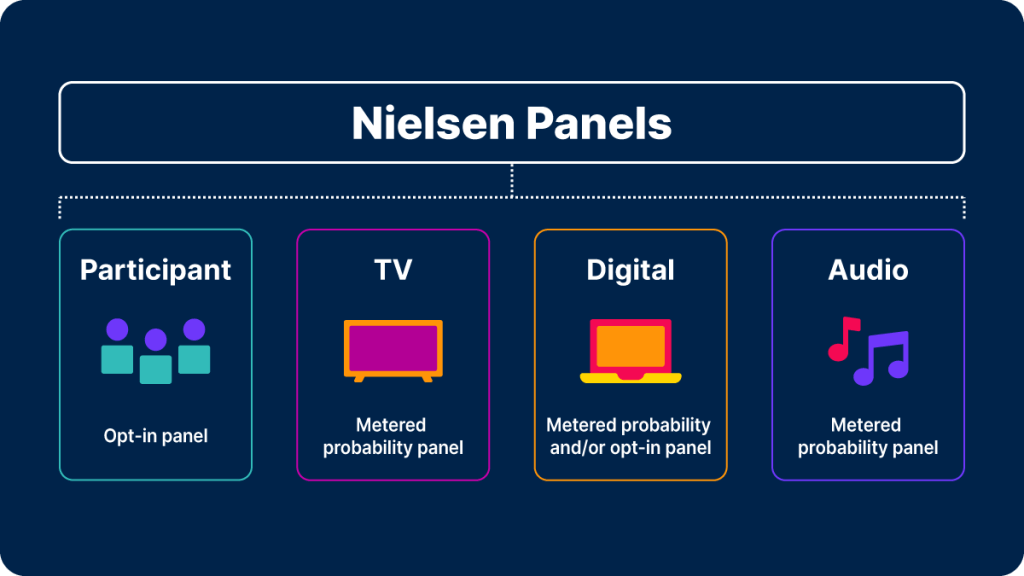
• โทรทัศน์ — A probability panel that measures the who, what, how and where of TV and streaming audiences
• เสียง — A probability panel that measures in-home and out-of-home audio consumption at the local and national level and consists of both metered and diary markets
• Digital — Depending on the market, a metered probability and/or opt-in panel that measures ad and content exposure for computers, mobile and across platforms
• ผู้เข้าร่วม — An opt-in panel of registered, non-metered panelists to enhance our measured panel assets with features like big data calibration and identity validation
ข้อมูลแผงสื่อจะถูกใช้อย่างไร?
ในขณะที่บริษัทวิจัยที่มองหาแนวโน้มของผู้บริโภคหรือหน่วยงานภาครัฐที่ต้องการติดตามพฤติกรรมการบริโภคของประชากรอาจใช้ข้อมูลแผงข้อมูล แต่บริษัทสื่อ แบรนด์ และผู้โฆษณามักใช้ข้อมูลแผงข้อมูลสื่อเพื่อทำความเข้าใจผู้ชมเนื้อหา การเข้าถึง และความถี่ของแคมเปญโฆษณา
For networks, publishers and other media sellers, panel data helps them know their audience size, habits and trends, which is then used to inform programming, pricing and content distribution strategies.
For brands, advertisers and other media buyers, panel data is used to understand who’s actually seeing their ads, which platforms their target audiences prefer, and predict how these behaviors may change over time.
แผงข้อมูลจะล้าสมัยในยุคข้อมูลขนาดใหญ่หรือไม่?
You may be thinking: Do we even need panels now that we have big data from set-top boxes, smart TVs, streaming platforms, social media channels, retail media networks and everything in-between?
That’s a popular misconception.
First off, big data (like automatic content recognition {ACR} data from smart TVs) can tell us what’s playing on screen, but not who is watching, or how many friends and family might be sitting on the couch and watching too. In fact, it’s impossible to tell from big data alone whether a show or a movie is playing to an empty room. Nobody wants to pay for media without an audience.
What’s more, big data isn’t representative of the full media audience. The only way it could be is if everyone used the same technology and had access to the same content available to them. A cable company might have tens of millions of subscribers, but those viewers don’t all pay for the same channels or watch the same programs.
หากไม่มีความสามารถในการระบุกลุ่มเป้าหมายที่แท้จริง จากนั้นจึงระบุและแสดงโปรไฟล์ประชากรของผู้ชม บริษัทวิจัยที่พึ่งพาข้อมูลขนาดใหญ่เพียงอย่างเดียวก็ไม่สามารถคัดกรองกลุ่มเป้าหมายที่ซ้ำซ้อนในแพลตฟอร์ม อุปกรณ์ และบริการต่างๆ และนำเรื่องราวทั้งหมดมารวมกันได้
คุณจะได้รับสิ่งที่ดีที่สุดจากทั้งสองโลกได้อย่างไร
หากจะให้ชัดเจน อคติที่เกิดจากปัญหาการสุ่มตัวอย่างหรือการไม่ตอบแบบสอบถามสามารถทำให้กลุ่มตัวอย่างที่มีความน่าจะเป็นเสียหายได้เช่นเดียวกับชุดข้อมูลขนาดใหญ่ แต่ด้วยขนาดที่เหมาะสม ความใส่ใจในรายละเอียดที่เหมาะสม และความเข้าใจอย่างลึกซึ้งเกี่ยวกับสถิติ กลุ่มตัวอย่างที่ดำเนินการอย่างดียังคงเป็นวิธีที่ดีที่สุดในการแสดงประชากรทั่วไปและให้การประมาณการที่เชื่อถือได้ขององค์ประกอบของผู้ชมในระบบนิเวศสื่อที่หลากหลายอย่างเหลือเชื่อในปัจจุบัน
แล้วข้อมูลขนาดใหญ่จะไร้ประโยชน์โดยสิ้นเชิงหรือไม่? แน่นอนว่าไม่! ขนาดของข้อมูลขนาดใหญ่ทำให้สามารถวิเคราะห์การใช้งานสื่อได้อย่างละเอียด และด้วยการปรับเทียบที่เหมาะสมและการสร้างแบบจำลองตามบุคคล ชุดข้อมูลขนาดใหญ่สามารถให้ข้อมูลเชิงลึกอันล้ำค่าสำหรับการเขียนโปรแกรมแบบหางยาวและกลุ่มเป้าหมายที่เข้าถึงได้ยาก
A number of organizations, including the World Federation of Advertisers, now believe that the combination of panels and big data is the true future of audience measurement, and many research companies are hard at work developing these capabilities.
Nielsen’s Need to Know reviews the fundamentals of audience measurement and demystifies the media industry’s hottest topics. Read every article here.
Note
1. Two notable early examples were the National Consumer Panel, launched by Samuel Barton in 1942 under Roosevelt’s Office of Price Administration initiative to measure household consumption of rationed goods during WWII; and the panel behind the Nielsen Radio Index, launched that same year by Arthur C. Nielsen to capture radio on/off and channel tuning activity using an ingenious mechanical device first developed at MIT: the Audimeter.