Panels—and the data they generate—have been the research industry’s gold standard for nearly a century now, and they remain the most accurate tool to measure media audiences.
パネルデータとは何か? パネルデータとは何か、なぜ重要なのか、そしてどこに向かうのか。
パネルデータとは何ですか?
メディア・リサーチにおいてパネルとは、個人情報を共有し、一定期間の定期的な調査やメディア利用の継続的な測定に参加することに同意した世帯や個人のグループのことである。
しかし、すべてのパネルが同じというわけではない。大きく分けて2種類ある:
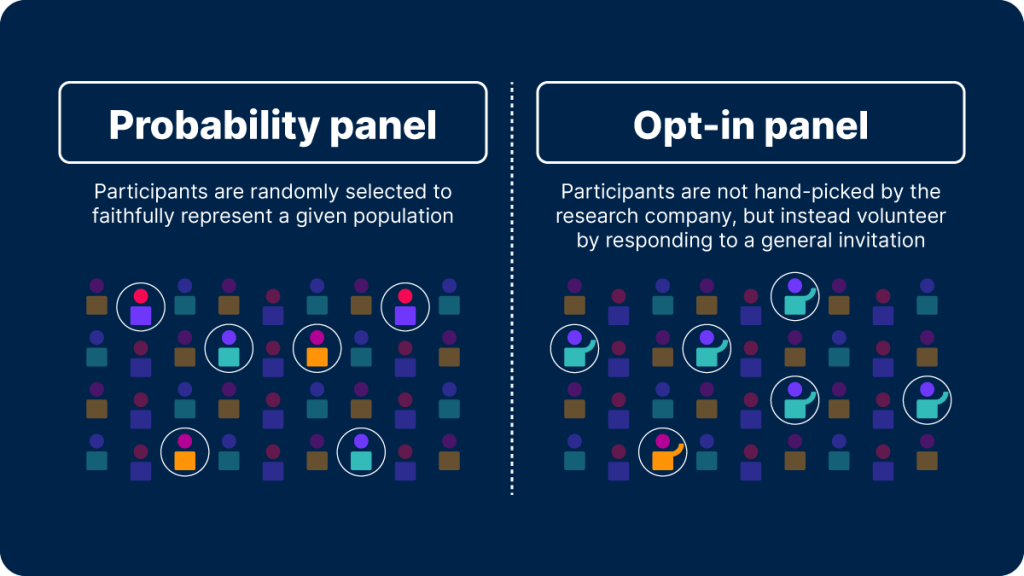
確率パネル
確率パネルの参加者は、特定の母集団(全米のテレビ視聴者や地方のラジオ市場など)を忠実に代表するように選ばれる。調査会社は、募集プロセスを管理し、長期にわたってパネルの統計的完全性を維持するために細心の注意を払います。これは、パネリストを募集し、新しいデバイスを遅滞なく登録し、世帯のサイズや構成の変化を考慮し、データが人々の行動を正確に反映することを意味します。ニールセンのTVおよびオーディオ・パネルは、確率パネルです。
オプトイン(利便性)パネル
Participants in opt-in panels volunteer by responding to a general invitation from a research company. Since only certain types of people might respond to that invitation, opt-in panels aren’t representative of any given population. However, they are extremely useful in audience measurement. They’re helpful in understanding biases in identity, used as calibration inputs to fine-tune models, and can validate and correct third-party information from big data partners. At Nielsen, opt-in panelists aren’t always actively metered, but we do use our large opt-in panel to validate third-party records from big data partners.
Probability panel data, combined with census data that speaks to the income, age and makeup of a household, gives you a statistically accurate look at who is consuming media.
確率パネルとオプトイン・パネルを併用することで、直接的なメディア消費に関するインサイトを提供し、国勢調査レベルのデータからバイアスを調整・除去し、デバイスをまたいだ視聴者のエンゲージメントを最も正確に把握することができます。
パネリストは何のために参加するのか?
受動的な参加ではなく、能動的な参加を求めるパネルもある。パネリストは、定期的なアンケートに回答したり、テレビを見ていることを確認するためにボタンを押したり、車の中でラジオを聴いたり、バーでスポーツ観戦をしたりといった、家庭外での活動を記録するための装置を身につけたりすることを求められるかもしれない。その他のパネルでは、調査会社がハードウェアやソフトウェア(「メーター」と呼ばれる)を設置し、裏でメディア利用を記録することを許可する以外に、何のコミットメントも必要としない。例えば、どんなテレビ番組を見ているか、どんなポッドキャスト、ウェブサイト、アプリを使っているかなどである。
最も正確な個人レベルのデータを取得し、その価値を最大化するためには、自動化された測定ではなく、積極的な参加が必要な場合が多い。高いデータ品質を維持するために不可欠な高い協力性を維持するために、本格的な調査会社はパネリストの体験に多大な投資を行い、あらゆる段階での摩擦を排除している。
At Nielsen, we have four different kinds of panels:
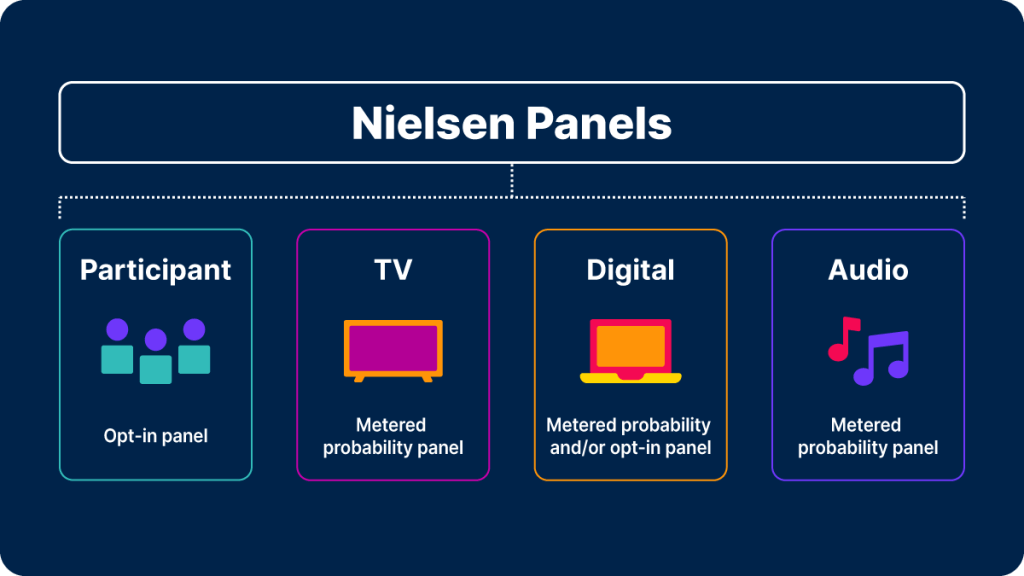
• テレビ — A probability panel that measures the who, what, how and where of TV and streaming audiences
• オーディオ — A probability panel that measures in-home and out-of-home audio consumption at the local and national level and consists of both metered and diary markets
• Digital — Depending on the market, a metered probability and/or opt-in panel that measures ad and content exposure for computers, mobile and across platforms
• 参加者 — An opt-in panel of registered, non-metered panelists to enhance our measured panel assets with features like big data calibration and identity validation
メディアのパネルデータはどのように使われているのか?
パネル・データは、消費者動向を調査する調査会社や、人口の消費習慣を監視する政府機関によって使用されることがありますが、メディア・パネル・データは、コンテンツ視聴率や広告キャンペーンのリーチと頻度を把握したいメディア企業、ブランド、広告主によって最も頻繁に使用されます。
For networks, publishers and other media sellers, panel data helps them know their audience size, habits and trends, which is then used to inform programming, pricing and content distribution strategies.
For brands, advertisers and other media buyers, panel data is used to understand who’s actually seeing their ads, which platforms their target audiences prefer, and predict how these behaviors may change over time.
ビッグデータの時代にパネルは時代遅れなのか?
You may be thinking: Do we even need panels now that we have big data from set-top boxes, smart TVs, streaming platforms, social media channels, retail media networks and everything in-between?
That’s a popular misconception.
First off, big data (like automatic content recognition {ACR} data from smart TVs) can tell us what’s playing on screen, but not who is watching, or how many friends and family might be sitting on the couch and watching too. In fact, it’s impossible to tell from big data alone whether a show or a movie is playing to an empty room. Nobody wants to pay for media without an audience.
What’s more, big data isn’t representative of the full media audience. The only way it could be is if everyone used the same technology and had access to the same content available to them. A cable company might have tens of millions of subscribers, but those viewers don’t all pay for the same channels or watch the same programs.
実際の視聴者を特定し、視聴者の人口統計学的プロフィールをピンポイントで表現する能力がなければ、ビッグデータだけに頼っている調査会社にとって、プラットフォーム、デバイス、サービスを横断して視聴者を重複排除し、全体のストーリーをまとめることは不可能だ。
両方の長所を生かすには?
はっきり言って、サンプリングや無回答の問題から生じるバイアスは、大規模なデータセットと同様に、確率パネルにも影響を与える可能性がある。しかし、適切なサイズ、細部への適切な注意、統計への鋭い理解があれば、うまく運営されたパネルは、一般人口を代表し、今日の信じられないほど多様なメディア・エコシステム全体にわたる視聴者構成の信頼できる推定値を提供する最良の方法であることに変わりはない。
では、ビッグデータはまったく役に立たないのだろうか?もちろんそんなことはない!適切なキャリブレーションとピープルベースのモデリングを行えば、ビッグデータセットは、ロングテール番組やリーチしにくいオーディエンスに対して、貴重な洞察を提供することができる。
A number of organizations, including the World Federation of Advertisers, now believe that the combination of panels and big data is the true future of audience measurement, and many research companies are hard at work developing these capabilities.
Nielsen’s Need to Know reviews the fundamentals of audience measurement and demystifies the media industry’s hottest topics. Read every article here.
注
1. Two notable early examples were the National Consumer Panel, launched by Samuel Barton in 1942 under Roosevelt’s Office of Price Administration initiative to measure household consumption of rationed goods during WWII; and the panel behind the Nielsen Radio Index, launched that same year by Arthur C. Nielsen to capture radio on/off and channel tuning activity using an ingenious mechanical device first developed at MIT: the Audimeter.