La rappresentanza e l'inclusione restano fondamentali per l'industria mediatica globale, e gli esempi di progresso continuano ad emergere. All'81esima edizione dei Golden Globe, ad esempio, sono stati premiati per la prima volta Da'Vine Joy Randolph, Ali Wong, Steven Yeun, Lily Gladstone e Ayo Edebiri per le loro performance televisive e cinematografiche. A parte alcuni esempi, tuttavia, il pubblico nero in particolare continua a volere di più, soprattutto quando si tratta di ritratti della propria comunità che siano autentici e ricchi di sfumature.
While recent hits like Queen Charlotte, The Blackening e They Cloned Tyrone portrayed diverse friend groups, story lines and genres, many Black audiences view the portrayals of their identities as one-dimensional1. At least part of that sentiment stems from the perception that on-screen urban portrayals remain far more prevalent than rural and suburban portrayals.
But we know that authenticity involves more than character setting. Dimensions of diversity are numerous, spanning well beyond skin tone and narrative location. Seventy percent of Black audiences who identify as part of the LGBTQ+ community, for example, believe they are misrepresented in media, while 81% of Afro Latinos feel misrepresented1.
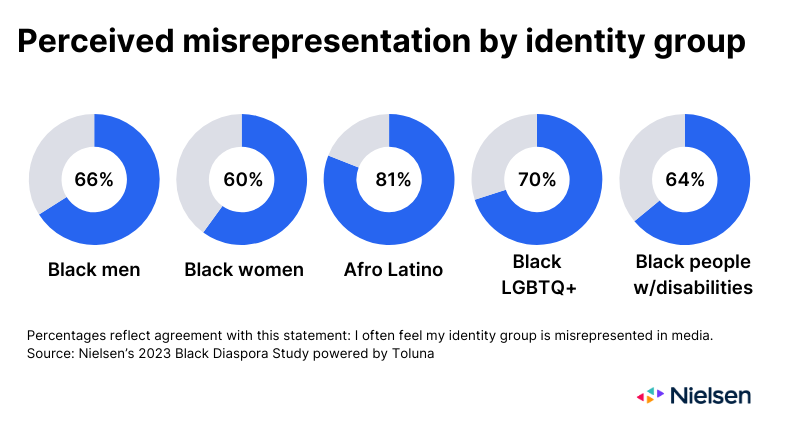
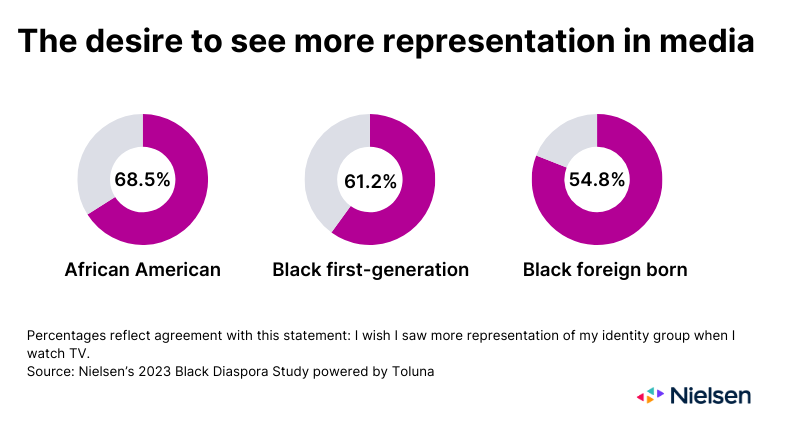
Dimensions of diversity will become even more important considerations in Black representation over time, as the U.S. Census forecasts that one-third of the Black population’s growth through 2060 will come from immigration, adding to the complexity of an already diverse audience. According to our recent Black Diaspora Study, powered by Toluna, an average of 47% of respondents from Brazil, Nigeria and South Africa say they wish they saw more of their identity group on TV.
From a content consumption perspective, the perceptions of representation among Black audiences are critical considerations for the media industry. That’s because they have considerably more media engagement than the general population. They also spend nearly 32% more time with TV each week than the general population2. The implications of this level of content engagement spans beyond creators and platforms. They are just as relevant for brands, especially as audiences continue increasing their time with ad-supported video content.
Oltre il 35% dei neri ritiene che i marchi ritraggano tutti i neri allo stesso modo nella pubblicità
Il messaggio giusto è fondamentale e un pubblico ricco di persone evidenzia l'importanza di comprendere gli individui all'interno di una comunità eterogenea. Il nostro recente studio sulla diaspora nera ha rilevato che i marchi hanno un po' di terreno da guadagnare su questo fronte. Infatti, il 35,7% dei neri americani ritiene che i marchi rappresentino sempre i neri allo stesso modo nella pubblicità, rispetto al 27,9% della popolazione generale degli Stati Uniti. La discrepanza tra il modo in cui il pubblico nero si sente rappresentato in una campagna potrebbe influire sul ROI su cui i marchi contano per alimentare la crescita.
Sappiamo che le persone vogliono vedersi nella pubblicità, ma il pubblico vuole anche che ciò che vede corrisponda a ciò che vede con i propri occhi. La rilevanza è fondamentale per il coinvolgimento su tutti i tipi di media, e il pubblico globale ha prospettive diverse su quali tipi di media abbiano la pubblicità più rilevante. Il pubblico nero in Nigeria, Regno Unito e Sudafrica desidera annunci più pertinenti nei contenuti televisivi tradizionali e in streaming, mentre il pubblico nero in Brasile esprime il maggior desiderio di annunci più pertinenti nella musica in streaming.
Sapendo che i consumatori spesso cercano marchi che sostengono cause e messaggi in cui credono, la rilevanza, almeno per molti pubblici, è arrivata a rappresentare più di una semplice promessa del marchio. Le proposte di valore relazionabili saranno sempre fondamentali, ma i consumatori neri si aspettano che i marchi sostengano le cause a cui tengono. E quando i marchi non sono all'altezza, la comunità nera - soprattutto in Nigeria, Regno Unito e Brasile - non ha paura di abbandonarli.
At its core, media is a means of connecting. The stronger the connection, the greater the engagement. Through that lens, no audience places a higher level of importance on media than Black audiences do. To maintain the engagement of this media-hungry audience, inclusion should be at the forefront of each production’s and brand campaign’s growth and development strategy in this next era of media. In an increasingly fragmenting media world, discerning audiences will be quick to move on when they land on something they don’t like.
For additional insights, download our latest Black Diverse Intelligence Series report: Il pubblico nero globale: Dare forma al futuro dei media.
Note
1Nielsen’s 2023 Black Diaspora Study powered by Toluna
2Nielsen National TV Panel; Q2 2023