In a previous Need to Know article, we examined TV media buying and how it needs to evolve to meet the demands of today’s highly fragmented TV ecosystem. The playing field is changing rapidly, and buyers need new tools to understand and reach their target audiences.
业界的当务之急是开发一种新的测量方法,将大数据的规模与基于面板测量的人口统计和统计准确性结合起来,以提高数据质量。
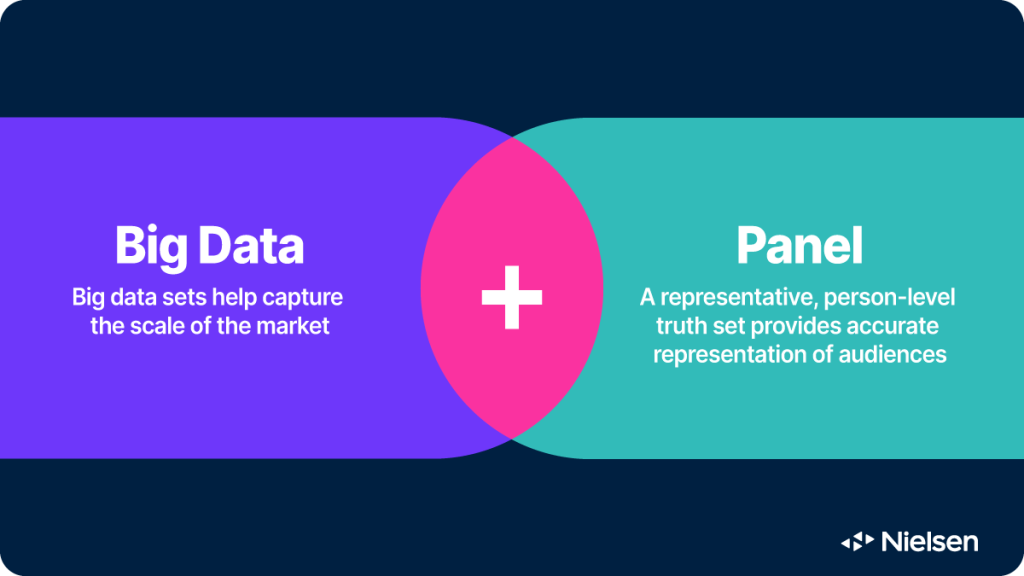
Nielsen has spent years working out the best way to combine panels and big data, developing data partnerships with key players and thoroughly testing our new methodology in collaboration with industry stakeholders. Here are three findings that convinced us that the harmonious combination of big data and panel data was indeed the future of TV measurement.
通过尼尔森黄金标准人群调查小组校准的大数据...
- 零分率在主要人群中有所下降 (SCALE)
- 平均相对误差下降 (ACCURACY)
- 标准偏差降低(稳定性)
让我们回顾一下大数据的含义以及面板与大数据的关系。
大数据和面板:更好地合作
In the TV measurement space, big data refers to return-path data (RPD) from cable and satellite set-top boxes, as well as automatic content recognition (ACR) data from internet-connected smart TVs. How big is big data? Thanks to strategic data partnerships with companies like Comcast, DirecTV, Dish Network, Roku and Vizio, Nielsen currently has access to granular data from 75 million devices (and 45 million households) in the U.S. alone.

It’s a massive dataset, but it doesn’t capture TV viewing at the individual level—only at the device level. This makes it impossible to determine whether anyone is actually watching TV when the device is on or who the viewers and co-viewers might be at any point in time. To say nothing of the millions of households that don’t own any of those devices, only stream, watch TV over the air or have very different viewing habits than big data homes.
That’s where person-level panels come in. We’ve examined why panels still matter and how they should be used as a source of truth to overcome the limitations of big data. We followed those recommendations to develop the new National and Local TV currency for media buying and selling.
例如,当我们今天在尼尔森分析RPD或ACR数据时,我们能够识别哪些设备是我们面板的一部分,并将这些家庭的调谐数据与我们的仪表捕捉到的个人收视行为进行比较。通过使用我们的面板作为真实来源,我们已经开发出了强大的方法来校准大数据,将收视分配给正确的个人,并将受众估计值投射到整个电视人群,而不仅仅是大数据数据集中的人群。
这种方法有很多好处。以下是我们迄今为止分析得出的三个突出优点。
规模:零分率在主要人群中有所下降
When big data first emerged in the TV space, the immediate reaction from the industry was that it could help address one of its most vexing problems: zero-rated programs.
数以千计的电视节目的观众人数太少,即使拥有超过 10 万名观众的面板,也无法通过基于面板的测量方法检测出来。举例来说,2023 年第一季度,广播、有线和联合电视共播出 362,168 次电视节目,其中 13.9% 的电视节目在我们的全国和地方电视面板中显示 35-49 岁的观众为零。
但是,当我们使用新的大数据 + 小组方法对这些电视广播进行检查时,我们发现只有 458 个节目没有 P35-49 级观众,占该季度所有电视广播的 0.1%。其余的都是完全合法的媒体购买选择,可能有独特的观众构成。
In other words, our enhanced measurement can eliminate virtually all cases of zero-rating for that age group, with similar results across all other traditional age targets: 99.1% for P35-49, 98.4% for P18-34, and 99.6% for P50-64.
这对媒体买家和卖家来说是双赢的:卖方有更多的广告库存可以货币化;而买方则有更多的小众受众可供选择,以达到他们的目标。
准确性:平均相对误差下降
大数据与面板数据融合过程中的一个关键环节是对每个节目应用校准因子,以便在电视台/日播节目/演示节目层面使总体观众与面板观众保持一致。人口统计和观众建模完成后,我们使用大数据对节目本身进行测量,并将测量结果与基于面板的货币进行比较,为校准因子提供依据。
与仅使用面板的解决方案相比,这样做的效果是平滑了每分钟的受众水平,并提高了受众估计的准确性。
We measured how this new Big Data + Panel calibration method performed against the existing panel-based currency in the New York designated market area (DMA) in May 2023 and found that the average relative error for audience estimates in that market decreased anywhere between 10% (for the early fringe daypart) and 25% (for primetime and late fringe).
更高的准确性意味着媒体买家和卖家可以更有信心地开始交易。
稳定性:标准偏差降低
在 2023 年 5 月的同一市场和同一月份,尼尔森研究了新货币对早 6 点新闻节目受众估计值稳定性的影响。
National broadcast and cable news programs tend to draw loyal followers day in and day out; the same is supposed to be true for local news shows, but it’s always been difficult to verify considering the size of some of our local TV panels. Local stations have struggled to understand whether day-to-day variations in audience size are the result of actual fluctuations or an artifact of panel-based measurement.
我们仔细观察了纽约地区两个独立的早间 6 点新闻节目,发现使用新货币后,一个月内受众规模的标准偏差比仅使用面板货币时低 36%,因为大数据减少了单一面板家庭的影响,从而为估算带来了稳定性。
我们增强的测量功能将如何影响您的业务?
No more zero-ratings, better accuracy and much improved stability. What’s not to like? We’ve been refining our new TV currency for years now, and now as the only accredited, Big Data + Panel solution with persons-level granularity, the media industry can trade on accurate, reliable measurement with confidence. We sincerely believe that it’s going to open a new chapter for 电视测量 and benefit all stakeholders.
To learn more about it and assess its impact on your business, please get in touch with our experts and discover the power of Big Data + Panel measurement.
Nielsen’s Need to Know reviews the fundamentals of audience measurement and demystifies the media industry’s hottest topics. Read every article here.