In a previous Need to Know article, we examined TV media buying and how it needs to evolve to meet the demands of today’s highly fragmented TV ecosystem. The playing field is changing rapidly, and buyers need new tools to understand and reach their target audiences.
Una priorità assoluta per il settore è stata lo sviluppo di una nuova misurazione in grado di combinare la scala dei big data con i dati demografici e l'accuratezza statistica delle misurazioni basate su panel per generare una migliore qualità dei dati.
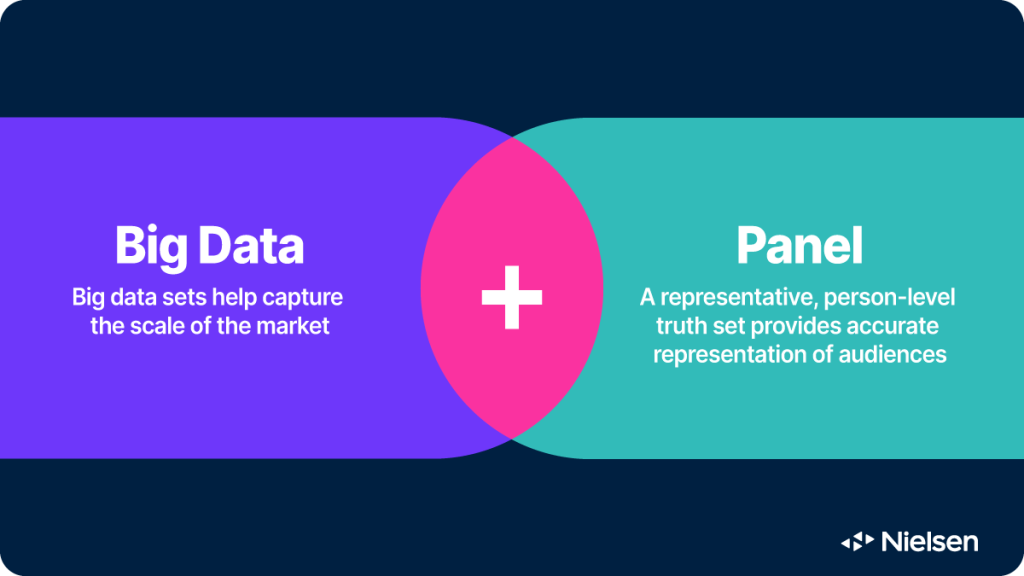
Nielsen has spent years working out the best way to combine panels and big data, developing data partnerships with key players and thoroughly testing our new methodology in collaboration with industry stakeholders. Here are three findings that convinced us that the harmonious combination of big data and panel data was indeed the future of TV measurement.
Con i grandi dati calibrati dai panel di persone Nielsen...
- Le valutazioni zero sono ridotte in tutti i principali settori demografici (SCALE)
- L'errore relativo medio diminuisce (ACCURATEZZA)
- La deviazione standard diminuisce (STABILITA')
Rivediamo cosa si intende per big data e cosa c'entrano i pannelli.
Big data e pannelli: Meglio insieme
In the TV measurement space, big data refers to return-path data (RPD) from cable and satellite set-top boxes, as well as automatic content recognition (ACR) data from internet-connected smart TVs. How big is big data? Thanks to strategic data partnerships with companies like Comcast, DirecTV, Dish Network, Roku and Vizio, Nielsen currently has access to granular data from 75 million devices (and 45 million households) in the U.S. alone.

It’s a massive dataset, but it doesn’t capture TV viewing at the individual level—only at the device level. This makes it impossible to determine whether anyone is actually watching TV when the device is on or who the viewers and co-viewers might be at any point in time. To say nothing of the millions of households that don’t own any of those devices, only stream, watch TV over the air or have very different viewing habits than big data homes.
That’s where person-level panels come in. We’ve examined why panels still matter and how they should be used as a source of truth to overcome the limitations of big data. We followed those recommendations to develop the new National and Local TV currency for media buying and selling.
Per esempio, quando oggi analizziamo i dati RPD o ACR di Nielsen, siamo in grado di identificare quali dispositivi fanno parte dei nostri panel e di confrontare i dati di sintonizzazione in quelle case con il comportamento di visione individuale catturato dai nostri meter. Utilizzando i nostri panel come fonte di verità, abbiamo sviluppato metodi solidi per calibrare i big data, assegnare le visualizzazioni alle persone giuste e proiettare le stime di audience sull'intera popolazione televisiva, non solo su quella presente nel dataset dei big data.
I vantaggi di questo approccio sono molteplici. Eccone tre che si sono distinti nelle nostre analisi fino ad oggi.
Scala: Le valutazioni zero sono ridotte in tutti i principali settori demografici
When big data first emerged in the TV space, the immediate reaction from the industry was that it could help address one of its most vexing problems: zero-rated programs.
Migliaia di programmi televisivi hanno un pubblico troppo esiguo per essere rilevato dalla misurazione basata su panel, anche con un panel di oltre 100.000 spettatori. Per fare un esempio, nel primo trimestre del 2023 ci sono state 362.168 trasmissioni televisive in onda, via cavo e in syndication, e il 13,9% di queste trasmissioni ha registrato zero spettatori di età compresa tra i 35 e i 49 anni in uno dei nostri panel televisivi nazionali e locali.
Ma quando abbiamo utilizzato la nostra nuova metodologia Big Data + Panel per esaminare quelle stesse trasmissioni, ne abbiamo trovate solo 458 senza spettatori P35-49, ovvero lo 0,1% di tutte le trasmissioni di quel trimestre. Le altre erano opzioni perfettamente legittime per l'acquisto di media, magari con composizioni di pubblico uniche.
In other words, our enhanced measurement can eliminate virtually all cases of zero-rating for that age group, with similar results across all other traditional age targets: 99.1% for P35-49, 98.4% for P18-34, and 99.6% for P50-64.
Si tratta di un vantaggio per gli acquirenti e i venditori di media: I venditori hanno più inventario pubblicitario da monetizzare e gli acquirenti hanno più opzioni con pubblici di nicchia per raggiungere i loro target.
Precisione: L'errore relativo medio diminuisce
Una parte fondamentale del processo di fusione dei big data e dei dati del panel è l'applicazione di fattori di calibrazione a ogni programma per allineare l'audience aggregata al panel a livello di stazione/parte del giorno/demo. Una volta modellati i dati demografici e i telespettatori, utilizziamo i big data per misurare se stessi e confrontiamo i risultati con quelli della nostra valutazione basata sui panel per informare i fattori di calibrazione.
Questo ha l'effetto di smussare i livelli di audience minuto per minuto e di migliorare l'accuratezza delle stime dell'audience rispetto a una soluzione basata solo sui pannelli.
We measured how this new Big Data + Panel calibration method performed against the existing panel-based currency in the New York designated market area (DMA) in May 2023 and found that the average relative error for audience estimates in that market decreased anywhere between 10% (for the early fringe daypart) and 25% (for primetime and late fringe).
Una maggiore precisione significa che gli acquirenti e i venditori di media possono iniziare a operare con maggiore sicurezza.
Stabilità: La deviazione standard diminuisce
Nello stesso mercato e per lo stesso mese di maggio 2023, Nielsen ha esaminato l'impatto della nuova valuta sulla stabilità delle stime di audience per i notiziari delle 6 del mattino.
National broadcast and cable news programs tend to draw loyal followers day in and day out; the same is supposed to be true for local news shows, but it’s always been difficult to verify considering the size of some of our local TV panels. Local stations have struggled to understand whether day-to-day variations in audience size are the result of actual fluctuations or an artifact of panel-based measurement.
Osservando da vicino due distinti notiziari delle 6 del mattino nell'area di New York, abbiamo riscontrato che la deviazione standard delle dimensioni dell'audience nel corso del mese è stata del 36% inferiore con la nuova valuta rispetto a quella dei soli panel, poiché i big data conferiscono stabilità alle stime riducendo l'impatto di un singolo panel domestico.
In che modo la nostra misurazione potenziata avrà un impatto sulla vostra attività?
No more zero-ratings, better accuracy and much improved stability. What’s not to like? We’ve been refining our new TV currency for years now, and now as the only accredited, Big Data + Panel solution with persons-level granularity, the media industry can trade on accurate, reliable measurement with confidence. We sincerely believe that it’s going to open a new chapter for Misurazione TV and benefit all stakeholders.
To learn more about it and assess its impact on your business, please get in touch with our experts and discover the power of Big Data + Panel measurement.
Nielsen’s Need to Know reviews the fundamentals of audience measurement and demystifies the media industry’s hottest topics. Read every article here.