In a previous Need to Know article, we examined TV media buying and how it needs to evolve to meet the demands of today’s highly fragmented TV ecosystem. The playing field is changing rapidly, and buyers need new tools to understand and reach their target audiences.
業界にとって最優先事項は、ビッグデータの規模とパネル・ベースの計測の人口統計学的正確性を組み合わせ、より優れたデータ品質を生み出すことができる新しい計測の開発である。
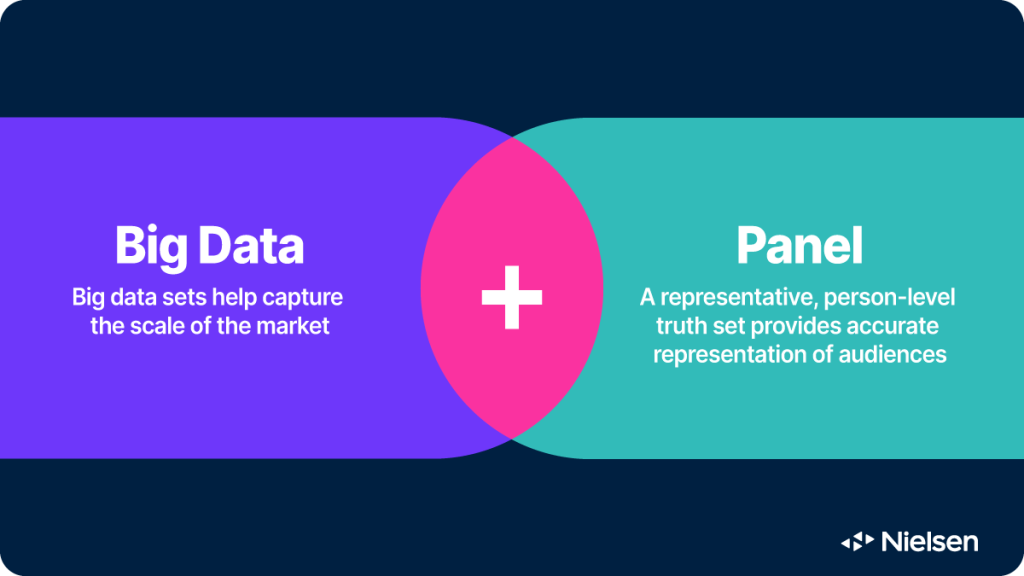
Nielsen has spent years working out the best way to combine panels and big data, developing data partnerships with key players and thoroughly testing our new methodology in collaboration with industry stakeholders. Here are three findings that convinced us that the harmonious combination of big data and panel data was indeed the future of TV measurement.
ニールセンのゴールド・スタンダード・ピープル・パネルによって調整されたビッグ・データ...
- 主要デモでゼロ評価が減少(SCALE)
- 平均相対誤差の低下(ACCURACY)
- 標準偏差の低下(STABILITY)
ここで、ビッグデータとは何か、パネルとは何かについておさらいしておこう。
ビッグデータとパネルより良い関係を築くために
In the TV measurement space, big data refers to return-path data (RPD) from cable and satellite set-top boxes, as well as automatic content recognition (ACR) data from internet-connected smart TVs. How big is big data? Thanks to strategic data partnerships with companies like Comcast, DirecTV, Dish Network, Roku and Vizio, Nielsen currently has access to granular data from 75 million devices (and 45 million households) in the U.S. alone.

It’s a massive dataset, but it doesn’t capture TV viewing at the individual level—only at the device level. This makes it impossible to determine whether anyone is actually watching TV when the device is on or who the viewers and co-viewers might be at any point in time. To say nothing of the millions of households that don’t own any of those devices, only stream, watch TV over the air or have very different viewing habits than big data homes.
That’s where person-level panels come in. We’ve examined why panels still matter and how they should be used as a source of truth to overcome the limitations of big data. We followed those recommendations to develop the new National and Local TV currency for media buying and selling.
例えば、現在ニールセンでRPDやACRのデータを分析する際、どのようなデバイスがパネルに含まれているかを特定し、それらの家庭のチューニングデータとメーターが捉えた個々の視聴行動を比較することができます。パネルを真実のソースとして使用することで、ビッグデータを校正し、正しい個人に視聴を割り当て、ビッグデータのデータセットに含まれる視聴者だけでなく、テレビ視聴者全体に視聴者推定値を投影するための強固な方法を開発しました。
このアプローチには多くの利点がある。これまでの分析で目立ったものを3つ紹介しよう。
規模:主要なデモでゼロ評価が減少
When big data first emerged in the TV space, the immediate reaction from the industry was that it could help address one of its most vexing problems: zero-rated programs.
何千ものテレビ番組が、10万人以上の視聴者からなるパネルを使っても、パネルベースの測定では検出できないほど小さな視聴者を抱えている。一例を挙げると、2023年第1四半期に放送されたテレビ番組は、放送局、ケーブルテレビ、シンジケート・テレビを合わせて362,168本であったが、そのうちの13.9%は35歳から49歳の視聴者がゼロであった。
しかし、我々の新しいビッグデータ+パネルの手法を使って同じテレビ放送を調べたところ、P35-49の視聴者がまったくいなかったのは458だけで、これは同四半期の全テレビ放送の0.1%であった。残りは、メディアバイイングにとって完全に正当な選択肢であり、おそらくユニークな視聴者構成を持つものであった。
In other words, our enhanced measurement can eliminate virtually all cases of zero-rating for that age group, with similar results across all other traditional age targets: 99.1% for P35-49, 98.4% for P18-34, and 99.6% for P50-64.
これは、メディアの買い手と売り手にとってWin-Winの関係だ:売り手は収益化できる広告在庫が増え、買い手はターゲットにリーチできるニッチなオーディエンスの選択肢が増える。
精度:平均相対誤差低下
ビッグデータとパネル・データを融合させるプロセスの重要な部分は、視聴者総数を放送局/デイパート/デモ・レベルのパネルと一致させるために、各番組にキャリブレーション係数を適用することである。人口統計と視聴者のモデル化が完了したら、ビッグデータを使ってそれ自体を測定し、その結果をパネル・ベースの通貨から得られた結果と比較して、キャリブレーション係数を決定します。
これは、分単位の観客数を平滑化する効果があり、パネルのみのソリューションと比較して観客数の推定精度を向上させる。
We measured how this new Big Data + Panel calibration method performed against the existing panel-based currency in the New York designated market area (DMA) in May 2023 and found that the average relative error for audience estimates in that market decreased anywhere between 10% (for the early fringe daypart) and 25% (for primetime and late fringe).
精度が向上するということは、メディアの買い手と売り手がより自信を持って取引を開始できるということだ。
安定性:標準偏差の減少
ニールセンは、2023年5月の同市場と同月において、午前6時のニュース番組の視聴者数推定値の安定性に対する新通貨の影響を調査した。
National broadcast and cable news programs tend to draw loyal followers day in and day out; the same is supposed to be true for local news shows, but it’s always been difficult to verify considering the size of some of our local TV panels. Local stations have struggled to understand whether day-to-day variations in audience size are the result of actual fluctuations or an artifact of panel-based measurement.
ニューヨーク地区の午前6時からの2つのニュース番組を詳細に見てみると、1ヶ月間の視聴者数の標準偏差は、パネルのみの通貨よりも新しい通貨の方が36%低かった。
私たちの強化された測定は、御社のビジネスにどのような影響を与えるのでしょうか?
No more zero-ratings, better accuracy and much improved stability. What’s not to like? We’ve been refining our new TV currency for years now, and now as the only accredited, Big Data + Panel solution with persons-level granularity, the media industry can trade on accurate, reliable measurement with confidence. We sincerely believe that it’s going to open a new chapter for テレビ測定 and benefit all stakeholders.
To learn more about it and assess its impact on your business, please get in touch with our experts and discover the power of Big Data + Panel measurement.
Nielsen’s Need to Know reviews the fundamentals of audience measurement and demystifies the media industry’s hottest topics. Read every article here.