Have you ever received an ad that felt incredibly specific? One that seems to understand exactly what stage of life you’re in and the kind of items you’re looking to buy? That is advanced audience targeting at work.
请跟随我们一起了解什么是高级受众、他们为什么重要以及他们如何改变广告世界。
什么是高级观众?
In traditional media spaces, the standard demographic filters used to understand and reach audiences has been age and gender. Advanced audiences can go well beyond these basic demos.
高级受众(有时也称为自定义受众)是营销人员用来根据人们的居住地、购买或打算购买的商品、收入多少、消费的媒体、所属的社区等将他们归类的消费者细分市场。营销人员将这些受众名单带入广告平台,以便在那里向他们发送特定的信息。
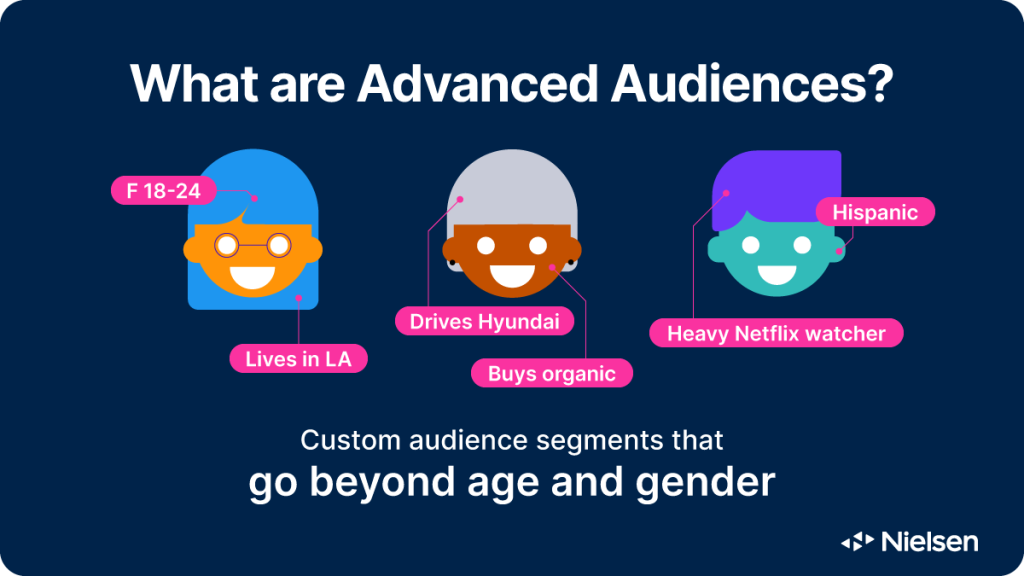
这样做的目的是通过缩小收件人的范围,使您的营销活动更具针对性,从而更有可能产生共鸣。您只需联系那些可能会关心您所销售产品的人,就能提高效率并减少浪费,而且您还能准确了解营销活动在这些群体中的效果。您在大规模覆盖方面所牺牲的一切,都将在相关性的提高中得到弥补。
高级受众细分是通过第一、第二或第三方数据,或三者的某种组合建立起来的,我们将在下一节介绍。
有了高级受众列表后,您就可以建立相似受众,根据他们的共同点来扩展您的初始群组。例如,如果初始高级受众列表中的每个人都关注宠物并使用 TikTok,那么相似受众就会包括同样关注宠物并使用 TikTok 的人。
创建高级受众需要什么?
高级受众听起来不错,对吗?现在,让我们来看看如何建立高级受众。
第一步也是最重要的一步是确保数据安全。
第一方数据
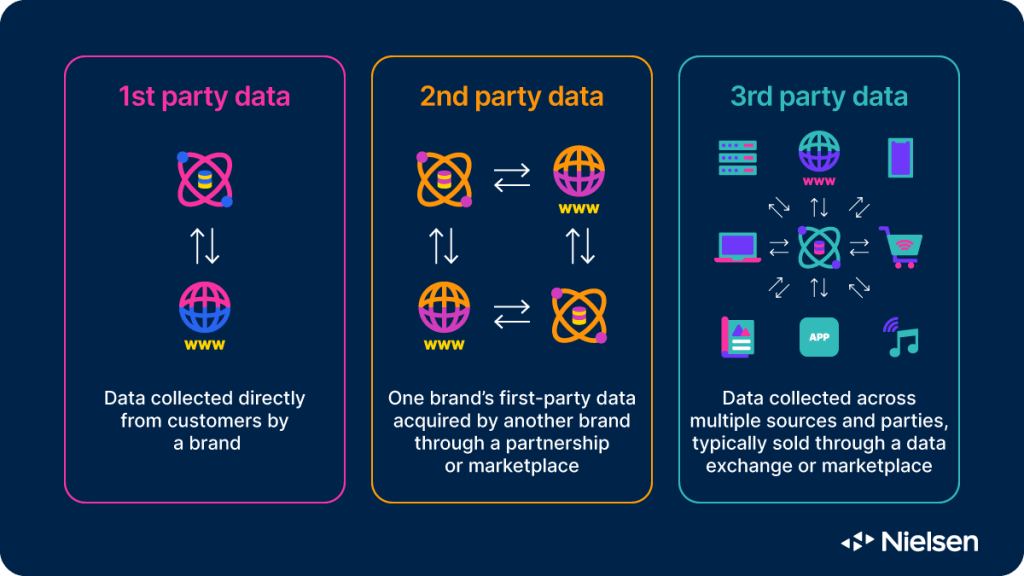
第一方数据是品牌直接从消费者那里收集到的受众信息。
Brands with the ability to collect their own audience data have an upper hand. Since it’s controlled by the brand and gathered straight from the source (in this case the audience), brands are able to easily expand what information gets captured with every channel interaction, new purchase, survey response or chatbot conversation.
The value of first-party data is exactly why so many brands create incentives for consumers to engage within their ecosystems. Sign up and get 20% off your next purchase. Create an account and see your personalized list of recommendations. Login to track your order delivery.
第二方数据
当然,并非每个品牌都能访问第一方数据。可能很难说服大众登录汽水供应商的网站订购下一包 12 瓶装汽水。这些品牌可能会依赖第二方数据,即通过合作获得的另一家公司的第一方数据。
第三方数据
第一方和第二方数据是直接从受众那里收集的,而第三方数据可能来自多个来源,任何人都可以购买。这也是受 cookie 丢失影响最直接的数据池,迫使数据提供商寻找可靠的替代方法,以数字方式识别受众。
通过将尼尔森专有的受众数据(我们拥有数以万计的高级受众细分市场)与来自合作伙伴的第一方数据相结合,尼尔森帮助品牌更全面地了解其理想消费者,并增强其营销活动的定位能力。
洞察力的好坏取决于其所依据的数据。由于第三方数据是外部收集的,因此品牌应优先考虑与可信赖的合作伙伴合作,因为他们能够证明所提供数据的准确性。
获得受众数据后,您就可以创建高级受众列表,并将其上传到各个平台,从而开始定位您的广告创意。虽然在大多数数字平台上,这是一个相对简单的标准化流程,但其他渠道正在迎头赶上。
哪里可以使用高级受众?
Advanced audience targeting first became a thing online thanks to the level of detail our digital footprints leave behind. Through digital identifiers, like usernames and browsing histories, marketers are able to tap into rich levels of consumer insight: who they are, what they want to consume and what they do after seeing an ad. All of these inputs help marketers create resonant campaigns for groups as niche as their data allows—informing everything from the creative to the timing and placement. It also helped digital platforms and publishers prove their ability to reach the exact audiences their clients cared about.
Traditional media like broadcast and cable may have unbeatable reach, but digital media is all about precision. At least that’s been the historical trade-off. But as the world has gone digital, there are new and heightened expectations for all channels to support the same level of audience addressability and performance accountability.
In the past decade, traditional media have carved out new outlets to dynamically address advertising to advanced audiences, like connected TV (CTV), free, ad-supported TV (FAST) channels and data-driven linear1. Still, there are foundational differences in how readily these channels can support planning and measuring against niche audience segments.
The next phase of advanced audiences will be ensuring standardized utility no matter the medium. This will require system overhauls to prioritize interoperability2— with the end goal being that the audience defined is the audience reached.
尼尔森的高级受众是如何工作的?
支持这一互操作性愿景是尼尔森战略的核心。我们清楚地认识到,分散的媒体环境会给媒体行业的所有各方带来困扰。更难接触到特定受众,也更难管理他们看到您的活动的频率。由于一切都被归结为渠道的具体情况,全面规划和激活感觉是不可能的。
But what if traditional media consistently operated with the same level of insight and personalization as digital? What if you could bring your own audiences to every platform and use them for planning, measurement and optimization?
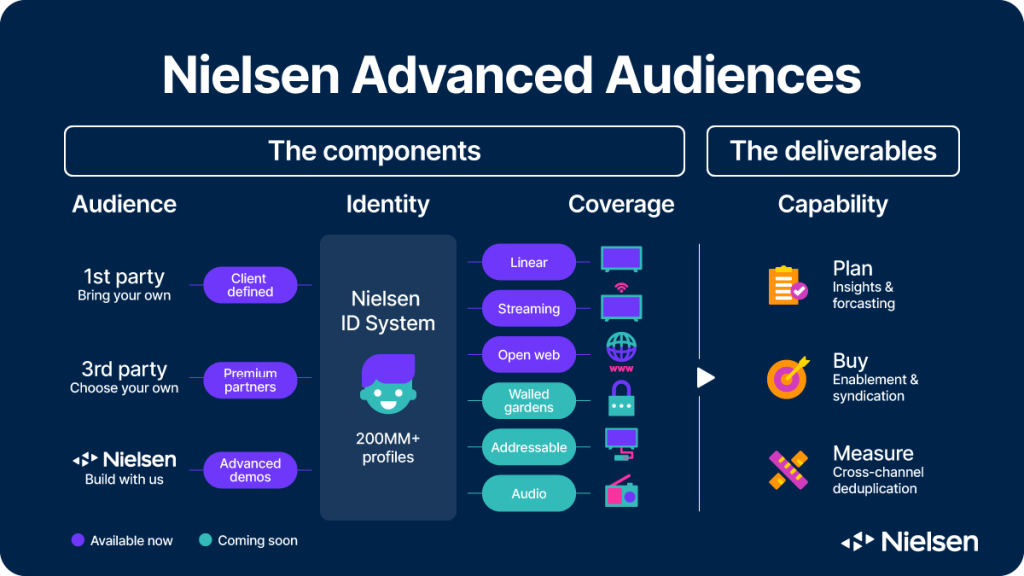
Within the Nielsen ecosystem, you’re able to bring your own IDs or choose from audience segments developed from our cross-channel big data sets calibrated by gold-standard people panels. All audience data then goes through the Nielsen Identity System to ensure a deduplicated view of the audience across all screens and channels. What’s more, you’re able to reuse these audiences across all integrated Nielsen products and ensure audiences definitions are consistent across the entire user journey. Using the same defined audience, you’re able to build your media plans based on tailored insights and forecasting, purchase media, and get a deduplicated view of how well you reached your audience across channels.
根据您所处的地理位置,尼尔森可以提供所有这些服务。但我们才刚刚起步。高级受众现在是这个勇敢的广告新世界的中心,尼尔森将帮助您在这个世界中茁壮成长。
Nielsen’s Need to Know reviews the fundamentals of audience measurement and demystifies the media industry’s hottest topics. Read every article here.
说明
1Data-driven linear is a process marketers use to allocate linear TV programming spend against demos beyond age and gender.
2Interoperability, in this instance, is when different technological systems interact with each other seamlessly. For example, being able to send and receive emails across all providers is interoperability at work.