Have you ever received an ad that felt incredibly specific? One that seems to understand exactly what stage of life you’re in and the kind of items you’re looking to buy? That is advanced audience targeting at work.
アドバンストオーディエンスとは何か、なぜ重要なのか、そしてどのように広告の世界を変えようとしているのかについて解説します。
上級観客とは?
In traditional media spaces, the standard demographic filters used to understand and reach audiences has been age and gender. Advanced audiences can go well beyond these basic demos.
アドバンストオーディエンスは、カスタムオーディエンスと呼ばれることもあり、マーケターが消費者セグメントを使用して、住んでいる場所、購入するもの、または購入する意図のあるもの、年収、消費するメディア、所属しているコミュニティなどに基づいて人々をグループ化したものです。マーケティング担当者は、これらのオーディエンスリストを広告プラットフォームに持ち込み、特定のメッセージングで彼らにリーチできるようにする。
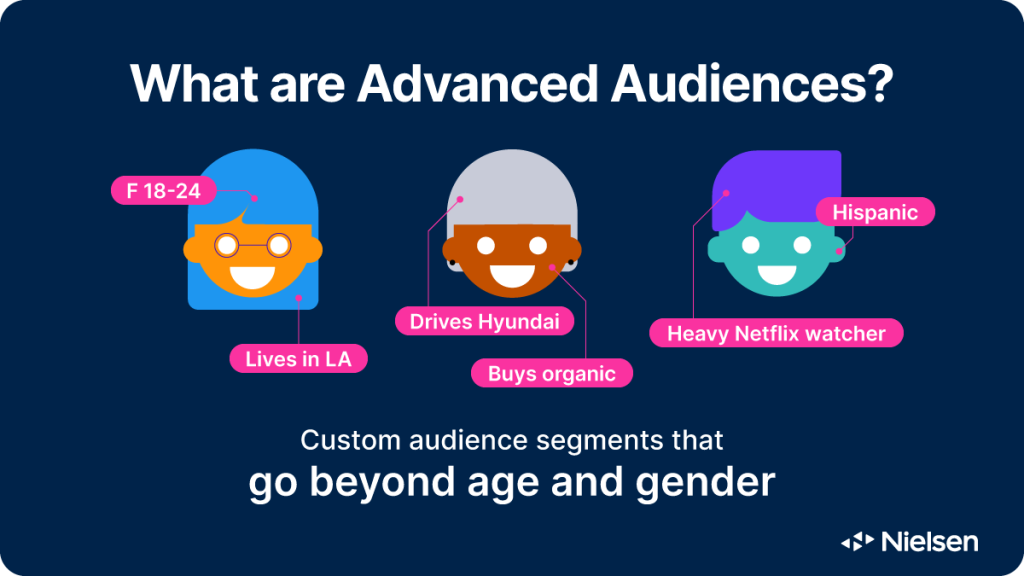
受信者のグループを絞り込むことで、キャンペーンをハイパーターゲティングすることができ、より反響を呼ぶことができるというものです。ニールセンについて また、これらのグループ内でのキャンペーンの成果を正確に把握することもできます。大量のリーチを犠牲にしても、関連性の向上で補うことができる。
高度なオーディエンスセグメントは、ファーストデータ、セカンドデータ、サードパーティデータ、または次のセクションで説明する3つの組み合わせから構築されます。
高度なオーディエンスリストができたら、共通点に基づいて初期グループを拡張するそっくりオーディエンスを構築できます。例えば、最初の上級オーディエンスリストの全員がニールセンについて ペットを大切にし、TikTokを使用している場合、そっくりオーディエンスには、ニールセンについて ペットを大切にし、TikTokを使用している人も含まれます。
高度なオーディエンスを作るには何が必要か?
先進的な視聴者というのは、素晴らしい響きでしょう?では、実際にどのように構築するのかを見てみましょう。
最初の、そして最も重要なステップは、データを保護することだ。
ファースト・パーティ・データ
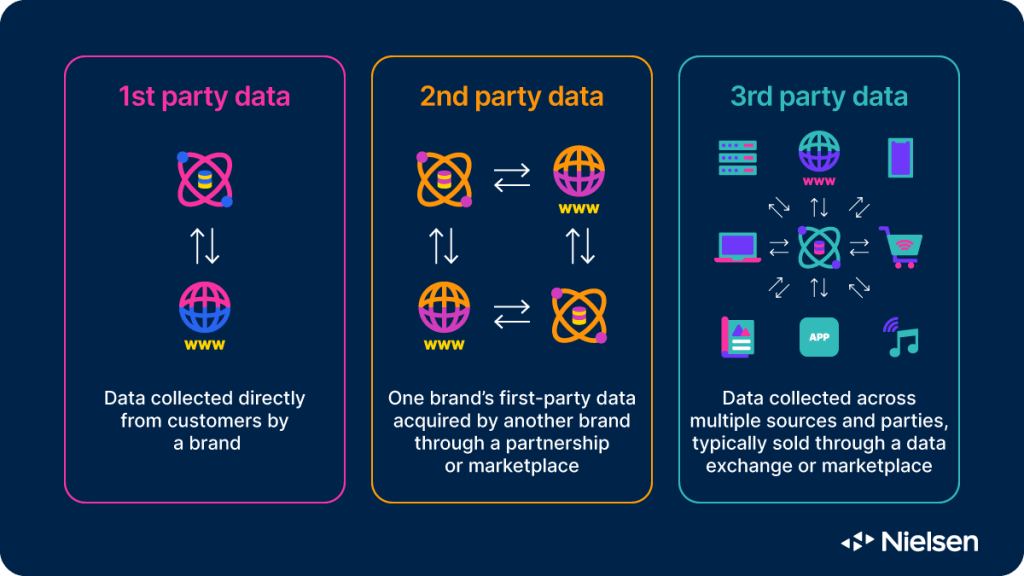
ファーストパーティデータとは、ブランドが消費者から直接収集したオーディエンス情報である。
Brands with the ability to collect their own audience data have an upper hand. Since it’s controlled by the brand and gathered straight from the source (in this case the audience), brands are able to easily expand what information gets captured with every channel interaction, new purchase, survey response or chatbot conversation.
The value of first-party data is exactly why so many brands create incentives for consumers to engage within their ecosystems. Sign up and get 20% off your next purchase. Create an account and see your personalized list of recommendations. Login to track your order delivery.
セカンド・パーティ・データ
もちろん、すべてのブランドがファーストパーティデータにアクセスできるわけではない。炭酸飲料メーカーのウェブサイトにログインして、次の12本パックを注文するよう一般消費者を説得するのは難しいかもしれない。このようなブランドは、セカンドパーティデータ(提携を通じて取得した他社のファーストパーティデータ)に頼るかもしれない。
第三者データ
ファーストパーティデータとセカンドパーティデータがオーディエンスから直接収集されるのに対して、サードパーティデータは複数のソースから収集され、誰でも購入することができます。これはまた、クッキーの喪失によって最も直接的に影響を受けるデータプールであり、データプロバイダーはオーディエンスをデジタル的に識別するための信頼できる代替手段を見つけなければなりません。
ニールセン独自のオーディエンスデータ(ニールセンは何万もの高度なオーディエンスセグメントを持っています)とパートナーからのファーストパーティデータを組み合わせることで、ニールセンはブランドが理想的な消費者をより包括的に把握し、キャンペーンターゲティングの能力を磨くのを支援します。
インサイトは、その基礎となるデータがあってこそのものだ。サードパーティのデータは外部で収集されるため、ブランドは、提供するデータの正確性を証明できる信頼できるパートナーと協力することを優先すべきである。
オーディエンスデータを手に入れたら、高度なオーディエンスリストを作成し、プラットフォーム全体にアップロードして、キャンペーンクリエイティブのターゲティングを開始することができます。これは、ほとんどのデジタルプラットフォームで比較的簡単で標準化されたプロセスですが、他のチャネルはキャッチアップしています。
アドバンスド・オーディエンスはどこで使えるのか?
Advanced audience targeting first became a thing online thanks to the level of detail our digital footprints leave behind. Through digital identifiers, like usernames and browsing histories, marketers are able to tap into rich levels of consumer insight: who they are, what they want to consume and what they do after seeing an ad. All of these inputs help marketers create resonant campaigns for groups as niche as their data allows—informing everything from the creative to the timing and placement. It also helped digital platforms and publishers prove their ability to reach the exact audiences their clients cared about.
Traditional media like broadcast and cable may have unbeatable reach, but digital media is all about precision. At least that’s been the historical trade-off. But as the world has gone digital, there are new and heightened expectations for すべて channels to support the same level of audience addressability and performance accountability.
In the past decade, traditional media have carved out new outlets to dynamically address advertising to advanced audiences, like connected TV (CTV), free, ad-supported TV (FAST) channels and data-driven linear1. Still, there are foundational differences in how readily these channels can support planning and measuring against niche audience segments.
The next phase of advanced audiences will be ensuring standardized utility no matter the medium. This will require system overhauls to prioritize interoperability2— with the end goal being that the audience defined is the audience reached.
ニールセンのアドバンスト・オーディエンスはどのように機能していますか?
この相互運用性のビジョンをサポートすることが、ニールセンの戦略の中心です。私たちは、断片化されたメディア環境がメディア業界のあらゆる側面に頭痛の種をもたらすことを痛感しています。特定のオーディエンスにリーチし、キャンペーンを目にする頻度を管理することが難しくなります。包括的なプランニング とアクティベーションは、すべてがチャネルの特定にまで落とし込まれるため、不可能に感じられます。
But what if traditional media consistently operated with the same level of insight and personalization as digital? What if you could bring your own audiences to every platform and use them for planning, measurement and optimization?
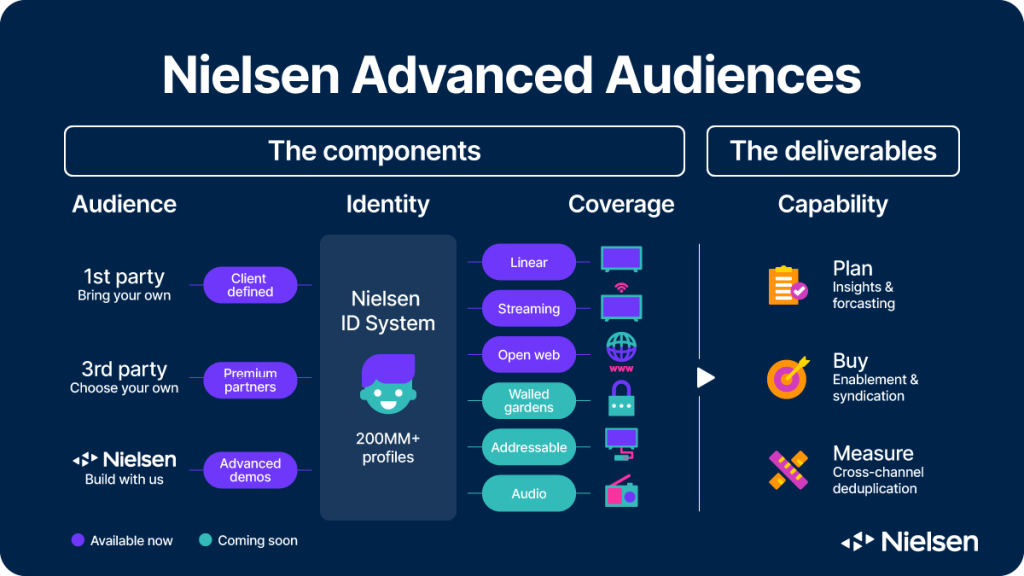
Within the Nielsen ecosystem, you’re able to bring your own IDs or choose from audience segments developed from our cross-channel big data sets calibrated by gold-standard people panels. All audience data then goes through the Nielsen Identity System to ensure a deduplicated view of the audience across all screens and channels. What’s more, you’re able to reuse these audiences across all integrated Nielsen products and ensure audiences definitions are consistent across the entire user journey. Using the same defined audience, you’re able to build your media plans based on tailored insights and forecasting, purchase media, and get a deduplicated view of how well you reached your audience across channels.
世界のどこにいるかにもよるが、ニールセンを使えば、これらすべてが今日から利用できる。しかし、ニールセンはまだ始まったばかりです。先進的なオーディエンスは今、この勇敢で新しい広告の世界の中心にあり、ニールセンはこの世界で成功するお手伝いをします。
Nielsen’s Need to Know reviews the fundamentals of audience measurement and demystifies the media industry’s hottest topics. Read every article here.
備考
1Data-driven linear is a process marketers use to allocate linear TV programming spend against demos beyond age and gender.
2Interoperability, in this instance, is when different technological systems interact with each other seamlessly. For example, being able to send and receive emails across all providers is interoperability at work.