第 66 届欧洲电视歌唱大赛已经拉开帷幕,如果往年的情况属实,那么 2022 年的收视率将再创新高。但与此同时,这项国际音乐比赛也能让人们从观众投票选出的获奖歌曲的情绪中洞察观众的情感。
In addition to boasting seasons that have attracted more than 180 million viewers each year for the last seven years1, Eurovision’s international audience of music enthusiasts eagerly look forward to rooting for their favorite artists—and discovering new music.
And with the variety of music being presented at this year’s contest, audiences will be able to find a song to suit virtually every mood—because the performers showcase more moods with each new year of competition. According to Gracenote Global Music Data Sonic Descriptors sonic mood analysis of previous Eurovision contests, recent Eurovision winners have displayed far more emotional range than their predecessors. The 40 songs presented at this year’s contest represent 15 different primary moods. And the last 15 winners have represented 12 primary moods, while only 11 moods were represented among the winners of the entire first 40 years of the competition.
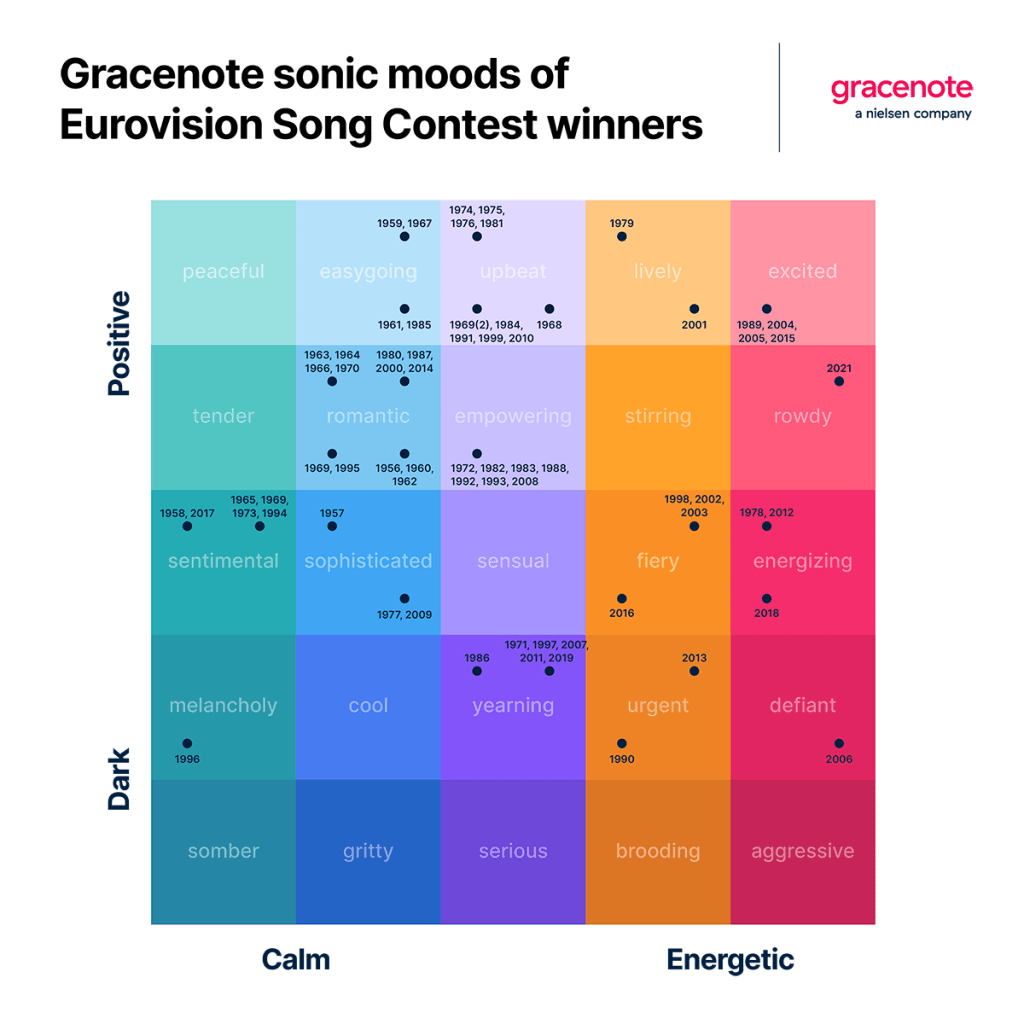
The recent uptick in emotional diversity isn’t surprising—consumers are increasingly looking for experiences that engage with them as individuals, and creators are rushing to fill the gap. American television, for instance, now features 817,000 unique program titles across traditional TV and streaming services, compared with just over 646,000 titles in 20192. For musicians and streaming services looking to reach and engage new audiences, Eurovision trends can be a finger on the pulse of global audiences and their moods.
根据今年的评选结果,观众正在寻找能让他们振奋和舒缓情绪的表演者。入围决赛的 20 首歌曲(占总数的一半)都表现出较强的活力,尽管这一类别的获奖作品并不多见。另外七首歌曲的风格较为平和,其中包括来自意大利和荷兰的参赛曲目,这也是今年大赛的两大热门获奖曲目。这与往届大赛的趋势不同,但也反映了近期消费者情绪的变化。
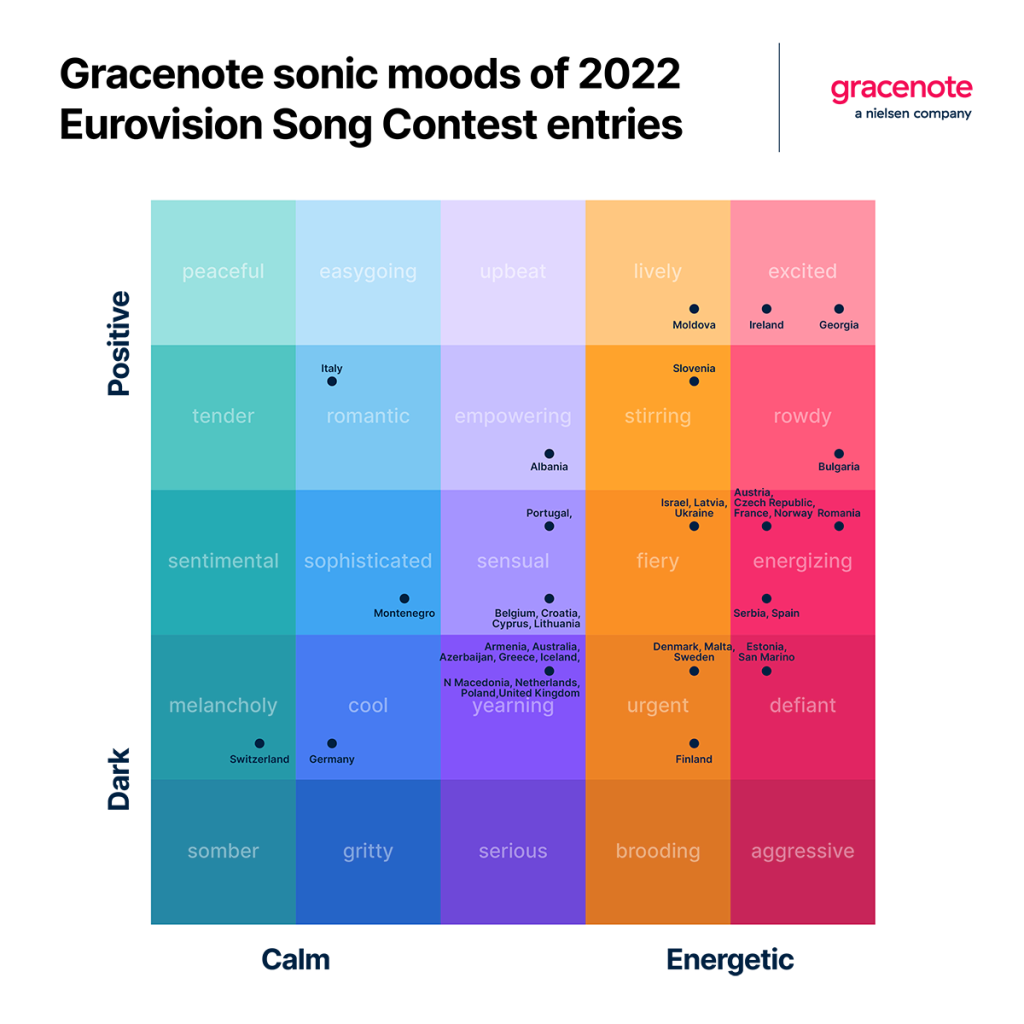
Faced with mounting supply chain woes, increasing inflation and the war in Ukraine, consumer confidence is at its lowest since the pandemic3. It’s no wonder audiences are looking for music that uplifts and reassures them. And Eurovision artists are meeting the moment.
Contrast this year’s trends with last year’s winner: “Zitti e Buoni,” a song classified as rowdy—the first time such a mood has won the competition. At the time of last year’s contest, many countries were lifting their COVID-related restrictions, and consumer confidence in Europe was its highest since October 20183. Americans echoed this sentiment, as a Nielsen custom consumer sentiment study found that in June of 2021, 90% of consumers said they were “ready to go” and get back to normal. Before the omicron spike later in the year, audiences were enthusiastic about emerging from over a year behind doors—and the choice of winner reflects their eagerness.
The benefits of striking the right chord with audiences don’t stop when the contest ends. And much like we see in other high-stakes competitions, Eurovision artists often see success far outside the competition. Out of 68 winning Eurovision songs, 46 have ascended to Billboard’s Top 100 U.K. Singles Chart4. And the 1976 winner, Brotherhood of Man’s “Save Your Kisses For Me,” spent 16 weeks on the chart, six of which were in the No. 1 spot.
能够从理解和预测听众情绪中获益的不仅仅是艺术家。流媒体音乐服务可以利用声波情绪数据创建更丰富的播放列表和电台,让听众接触到更多不同风格的音乐和艺术家,而他们自己可能还没有发现这些音乐和艺术家。
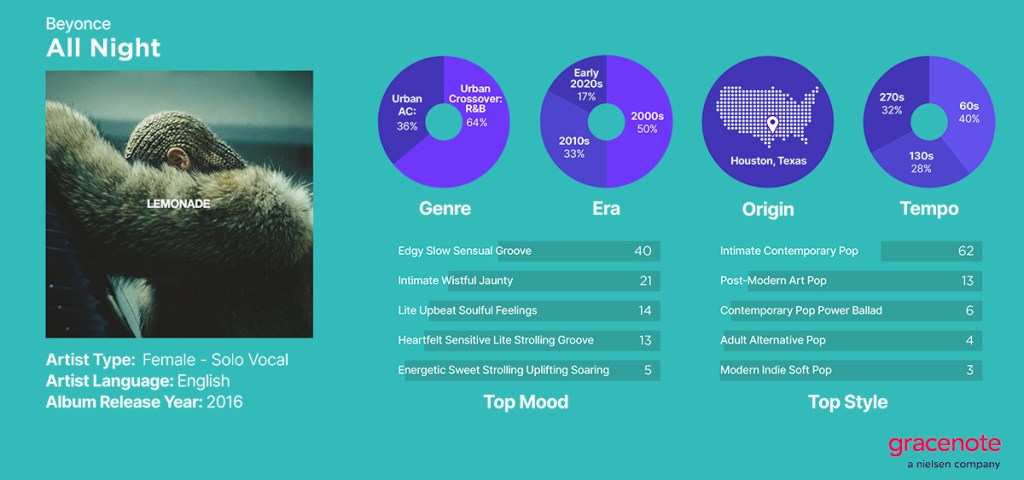
让受众轻松找到他们喜欢的新歌和乐队是关键所在。在音频内容中应用超详细的元描述(如情绪)有助于在流派、情绪、时代和节奏之间建立联系,从而创建更完整的听众档案。这些数据可实现细致入微的发现路径,并提供符合听众当前口味的音频推荐,同时为他们提供精心策划的新选择。
说明
- 欧洲广播联盟
- Gracenote 全球视频数据,2022 年 2 月
- 经济合作与发展组织(经合组织)
- 广告牌