유로비전 송 콘테스트의 66번째 시즌이 시작되었으며, 지난 몇 년간의 전례에 비추어 볼 때 2022년은 또 한 번 시청률을 강타할 것으로 예상됩니다. 그러나 동시에 이 국제적인 음악 경연 대회는 투표를 통해 우승 곡의 분위기를 통해 관객의 감정에 대한 통찰력을 제공하기도 합니다.
In addition to boasting seasons that have attracted more than 180 million viewers each year for the last seven years1, Eurovision’s international audience of music enthusiasts eagerly look forward to rooting for their favorite artists—and discovering new music.
And with the variety of music being presented at this year’s contest, audiences will be able to find a song to suit virtually every mood—because the performers showcase more moods with each new year of competition. According to Gracenote Global Music Data Sonic Descriptors sonic mood analysis of previous Eurovision contests, recent Eurovision winners have displayed far more emotional range than their predecessors. The 40 songs presented at this year’s contest represent 15 different primary moods. And the last 15 winners have represented 12 primary moods, while only 11 moods were represented among the winners of the entire first 40 years of the competition.
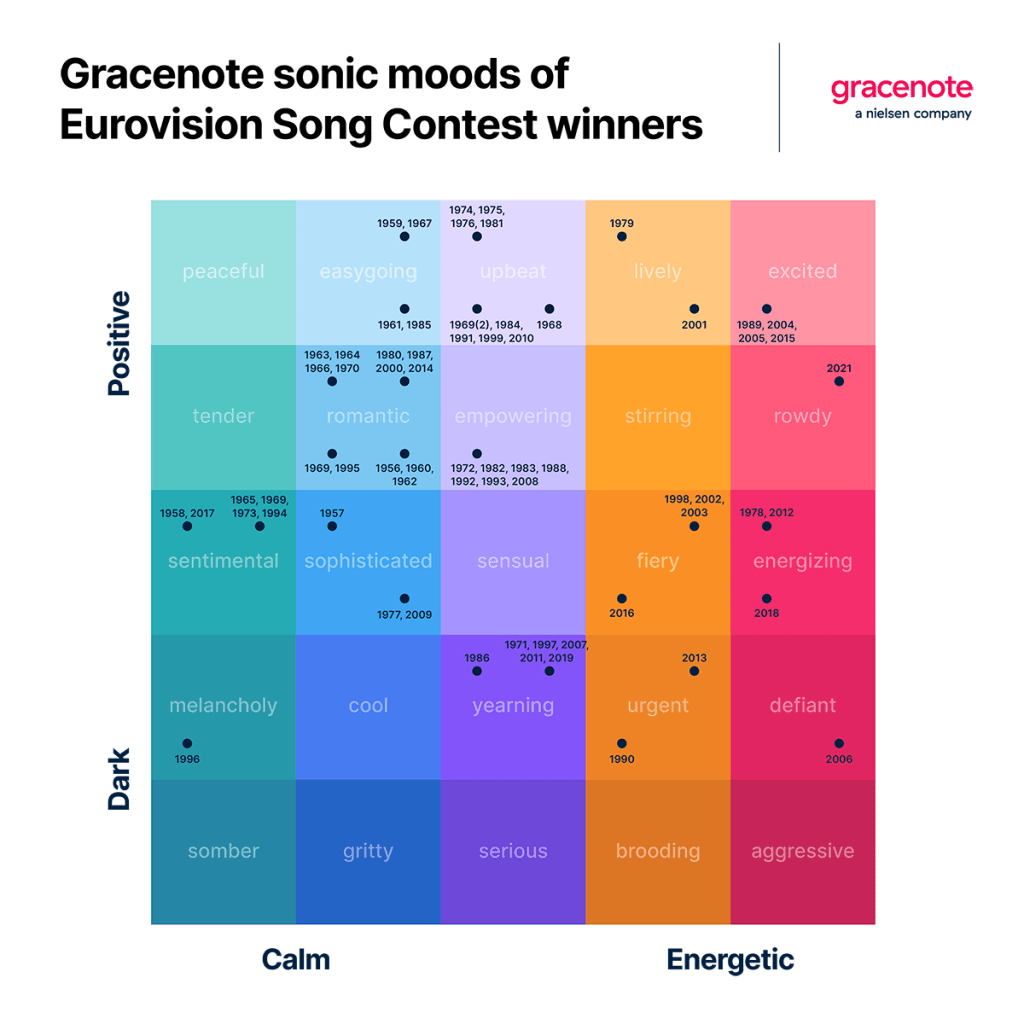
The recent uptick in emotional diversity isn’t surprising—consumers are increasingly looking for experiences that engage with them as individuals, and creators are rushing to fill the gap. American television, for instance, now features 817,000 unique program titles across traditional TV and streaming services, compared with just over 646,000 titles in 20192. For musicians and streaming services looking to reach and engage new audiences, Eurovision trends can be a finger on the pulse of global audiences and their moods.
올해의 선택에 따르면 관객들은 활력을 불어넣고 마음을 달래줄 공연자를 찾고 있습니다. 이 부문은 수상작이 많지 않은 분야임에도 불구하고 최종 후보작의 절반에 해당하는 20곡이 보다 활기찬 분위기를 풍겼습니다. 올해 콘테스트 우승 후보였던 이탈리아와 네덜란드의 출품작을 포함해 7개의 출품작이 차분한 분위기의 곡을 선보였습니다. 이는 이전 콘테스트의 트렌드와 달리 최근 소비자 정서의 변화를 반영한 결과입니다.
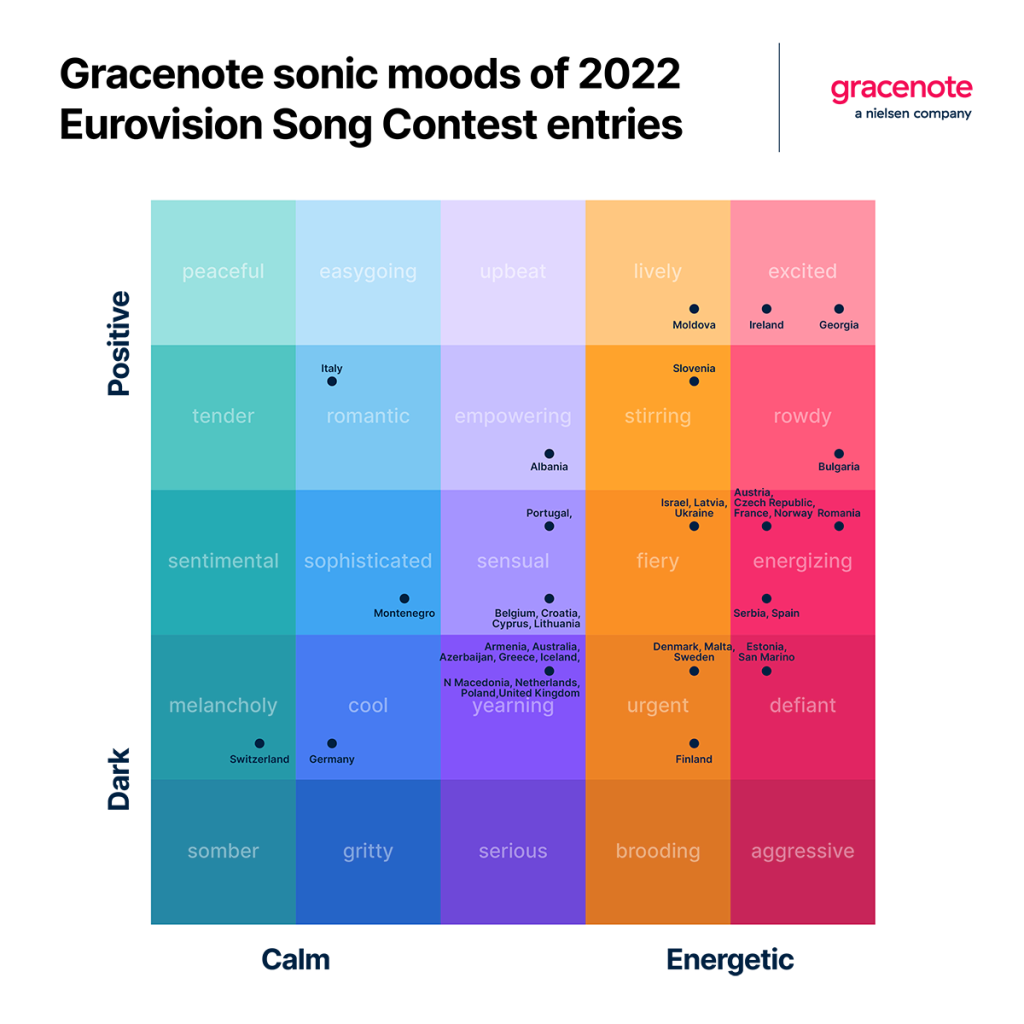
Faced with mounting supply chain woes, increasing inflation and the war in Ukraine, consumer confidence is at its lowest since the pandemic3. It’s no wonder audiences are looking for music that uplifts and reassures them. And Eurovision artists are meeting the moment.
Contrast this year’s trends with last year’s winner: “Zitti e Buoni,” a song classified as rowdy—the first time such a mood has won the competition. At the time of last year’s contest, many countries were lifting their COVID-related restrictions, and consumer confidence in Europe was its highest since October 20183. Americans echoed this sentiment, as a Nielsen custom consumer sentiment study found that in June of 2021, 90% of consumers said they were “ready to go” and get back to normal. Before the omicron spike later in the year, audiences were enthusiastic about emerging from over a year behind doors—and the choice of winner reflects their eagerness.
The benefits of striking the right chord with audiences don’t stop when the contest ends. And much like we see in other high-stakes competitions, Eurovision artists often see success far outside the competition. Out of 68 winning Eurovision songs, 46 have ascended to Billboard’s Top 100 U.K. Singles Chart4. And the 1976 winner, Brotherhood of Man’s “Save Your Kisses For Me,” spent 16 weeks on the chart, six of which were in the No. 1 spot.
아티스트만이 청중의 기분을 이해하고 예측함으로써 이점을 얻을 수 있는 것은 아닙니다. 스트리밍 음악 서비스는 음향 무드 데이터를 사용하여 더 다양한 아티스트가 등장하는 더 풍부한 재생 목록과 방송국을 만들어 청취자에게 스스로 발견하지 못한 다양한 스타일의 음악과 아티스트를 노출할 수 있습니다.
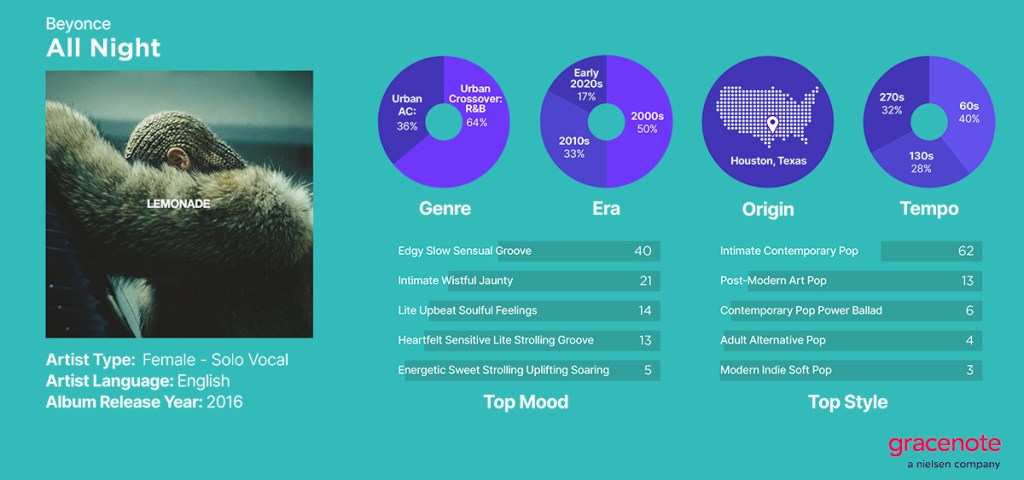
청중이 좋아할 만한 새로운 노래와 밴드를 쉽게 찾을 수 있도록 하는 것이 핵심입니다. 오디오 콘텐츠에 무드와 같은 매우 상세한 메타 설명을 적용하면 장르, 분위기, 시대, 템포 간의 연관성을 파악하여 보다 완벽한 청취자 프로필을 만들 수 있습니다. 이 데이터는 미묘한 검색 경로를 가능하게 하고 청취자의 현재 취향에 맞는 오디오 추천을 제공하는 동시에 신중하게 선별된 새로운 옵션을 제공합니다.
참고
- 유럽 방송 연합
- 그레이스노트 글로벌 비디오 데이터, 2022년 2월
- 경제협력개발기구(OECD)
- 빌보드