Musim ke-66 Kontes Lagu Eurovision telah tiba, dan jika tahun-tahun sebelumnya menjadi indikasi, tahun 2022 akan menjadi tahun yang sangat menarik dalam hal jumlah penonton. Namun di saat yang sama, kompetisi musik internasional ini juga memberikan wawasan tentang emosi penonton-melalui suasana hati dari lagu-lagu yang mereka pilih untuk menang.
In addition to boasting seasons that have attracted more than 180 million viewers each year for the last seven years1, Eurovision’s international audience of music enthusiasts eagerly look forward to rooting for their favorite artists—and discovering new music.
And with the variety of music being presented at this year’s contest, audiences will be able to find a song to suit virtually every mood—because the performers showcase more moods with each new year of competition. According to Gracenote Global Music Data Sonic Descriptors sonic mood analysis of previous Eurovision contests, recent Eurovision winners have displayed far more emotional range than their predecessors. The 40 songs presented at this year’s contest represent 15 different primary moods. And the last 15 winners have represented 12 primary moods, while only 11 moods were represented among the winners of the entire first 40 years of the competition.
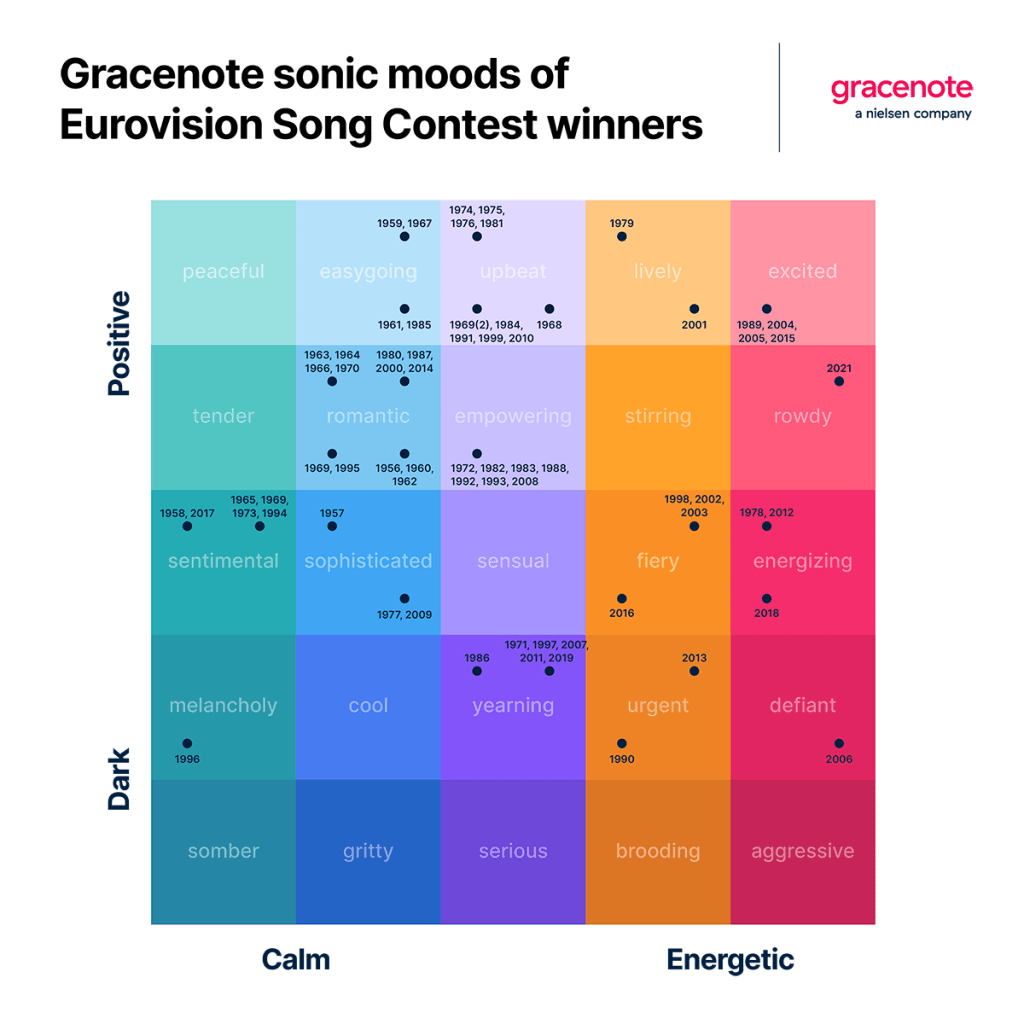
The recent uptick in emotional diversity isn’t surprising—consumers are increasingly looking for experiences that engage with them as individuals, and creators are rushing to fill the gap. American television, for instance, now features 817,000 unique program titles across traditional TV and streaming services, compared with just over 646,000 titles in 20192. For musicians and streaming services looking to reach and engage new audiences, Eurovision trends can be a finger on the pulse of global audiences and their moods.
Dan menurut pilihan tahun ini, para penonton mencari penampil yang memberikan energi dan menenangkan mereka. Dua puluh finalis lagu-setengah dari seluruh peserta-memiliki suasana hati yang lebih energik, meskipun kategori ini kurang umum untuk menjadi pemenang. Tujuh entri tambahan menampilkan suasana hati yang lebih tenang, termasuk kiriman dari Italia dan Belanda-dua negara yang menjadi favorit untuk memenangkan kontes tahun ini. Hal ini berlawanan dengan tren kontes sebelumnya, tetapi mencerminkan perubahan sentimen konsumen baru-baru ini.
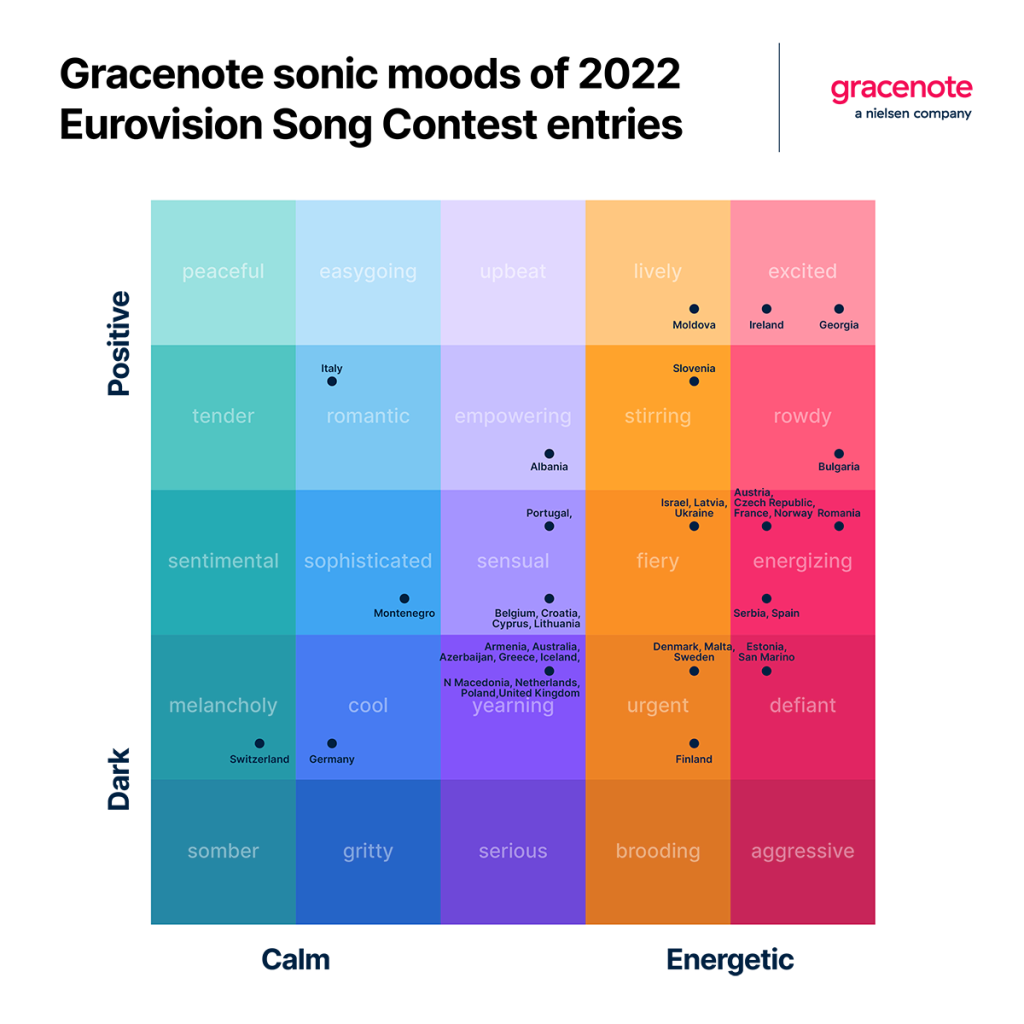
Faced with mounting supply chain woes, increasing inflation and the war in Ukraine, consumer confidence is at its lowest since the pandemic3. It’s no wonder audiences are looking for music that uplifts and reassures them. And Eurovision artists are meeting the moment.
Contrast this year’s trends with last year’s winner: “Zitti e Buoni,” a song classified as rowdy—the first time such a mood has won the competition. At the time of last year’s contest, many countries were lifting their COVID-related restrictions, and consumer confidence in Europe was its highest since October 20183. Americans echoed this sentiment, as a Nielsen custom consumer sentiment study found that in June of 2021, 90% of consumers said they were “ready to go” and get back to normal. Before the omicron spike later in the year, audiences were enthusiastic about emerging from over a year behind doors—and the choice of winner reflects their eagerness.
The benefits of striking the right chord with audiences don’t stop when the contest ends. And much like we see in other high-stakes competitions, Eurovision artists often see success far outside the competition. Out of 68 winning Eurovision songs, 46 have ascended to Billboard’s Top 100 U.K. Singles Chart4. And the 1976 winner, Brotherhood of Man’s “Save Your Kisses For Me,” spent 16 weeks on the chart, six of which were in the No. 1 spot.
Artis bukanlah satu-satunya yang dapat memperoleh manfaat dari memahami dan mengantisipasi suasana hati pendengar. Layanan musik streaming dapat menggunakan data suasana hati sonik untuk membuat daftar putar dan stasiun yang lebih kaya yang menampilkan lebih banyak artis yang mengekspos pendengar pada gaya musik dan artis yang berbeda yang mungkin tidak mereka temukan sendiri.
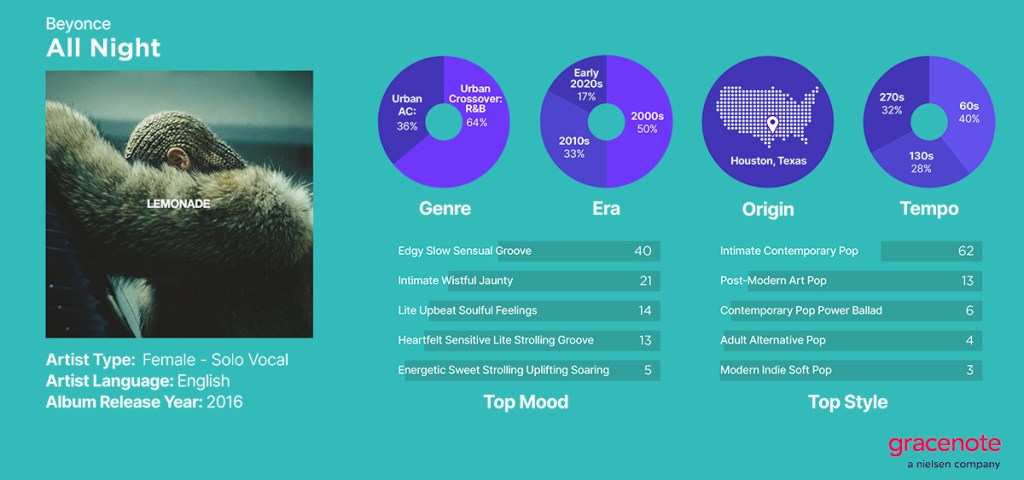
Memudahkan pendengar untuk menemukan lagu dan band baru yang mereka sukai adalah kuncinya. Menerapkan deskripsi meta yang sangat terperinci, seperti suasana hati, pada konten audio membantu menarik hubungan antara genre, suasana hati, era, dan tempo untuk menciptakan profil pendengar yang lebih lengkap. Data ini memungkinkan jalur penemuan yang bernuansa dan menawarkan rekomendasi audio yang sesuai dengan selera pendengar saat ini sambil memberikan pilihan baru yang dikurasi dengan cermat.
Catatan
- Uni Penyiaran Eropa (European Broadcasting Union)
- Data Video Global Gracenote, Februari 2022
- Organisasi untuk Kerja Sama Ekonomi dan Pembangunan (OECD)
- Billboard