A 66ª temporada do Festival Eurovisão da Canção chegou e, se os anos anteriores servirem de indicação, 2022 será mais um grande sucesso em termos de audiência. Mas, ao mesmo tempo, a competição internacional de música também oferece uma visão das emoções do público, por meio do humor das músicas que eles votam para ganhar.
In addition to boasting seasons that have attracted more than 180 million viewers each year for the last seven years1, Eurovision’s international audience of music enthusiasts eagerly look forward to rooting for their favorite artists—and discovering new music.
And with the variety of music being presented at this year’s contest, audiences will be able to find a song to suit virtually every mood—because the performers showcase more moods with each new year of competition. According to Gracenote Global Music Data Sonic Descriptors sonic mood analysis of previous Eurovision contests, recent Eurovision winners have displayed far more emotional range than their predecessors. The 40 songs presented at this year’s contest represent 15 different primary moods. And the last 15 winners have represented 12 primary moods, while only 11 moods were represented among the winners of the entire first 40 years of the competition.
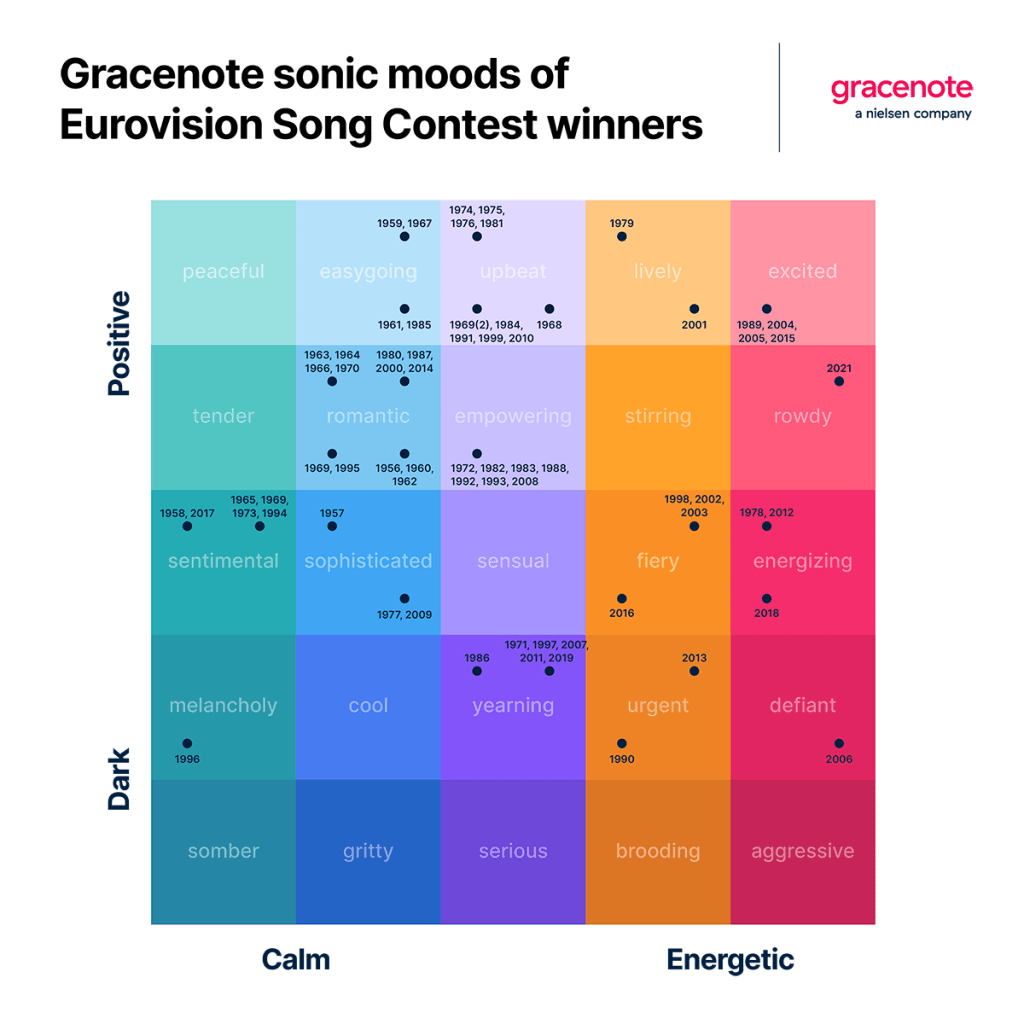
The recent uptick in emotional diversity isn’t surprising—consumers are increasingly looking for experiences that engage with them as individuals, and creators are rushing to fill the gap. American television, for instance, now features 817,000 unique program titles across traditional TV and streaming services, compared with just over 646,000 titles in 20192. For musicians and streaming services looking to reach and engage new audiences, Eurovision trends can be a finger on the pulse of global audiences and their moods.
E, de acordo com as escolhas deste ano, o público está procurando artistas que o energizem e o acalmem. Vinte músicas finalistas - metade do campo - apresentam um clima mais enérgico, apesar de essa categoria ser uma vencedora menos comum. Outras sete inscrições apresentam um clima mais calmo, incluindo inscrições da Itália e da Holanda - dois favoritos para vencer o concurso este ano. Isso contraria a tendência dos concursos anteriores, mas reflete uma mudança recente no sentimento do consumidor.
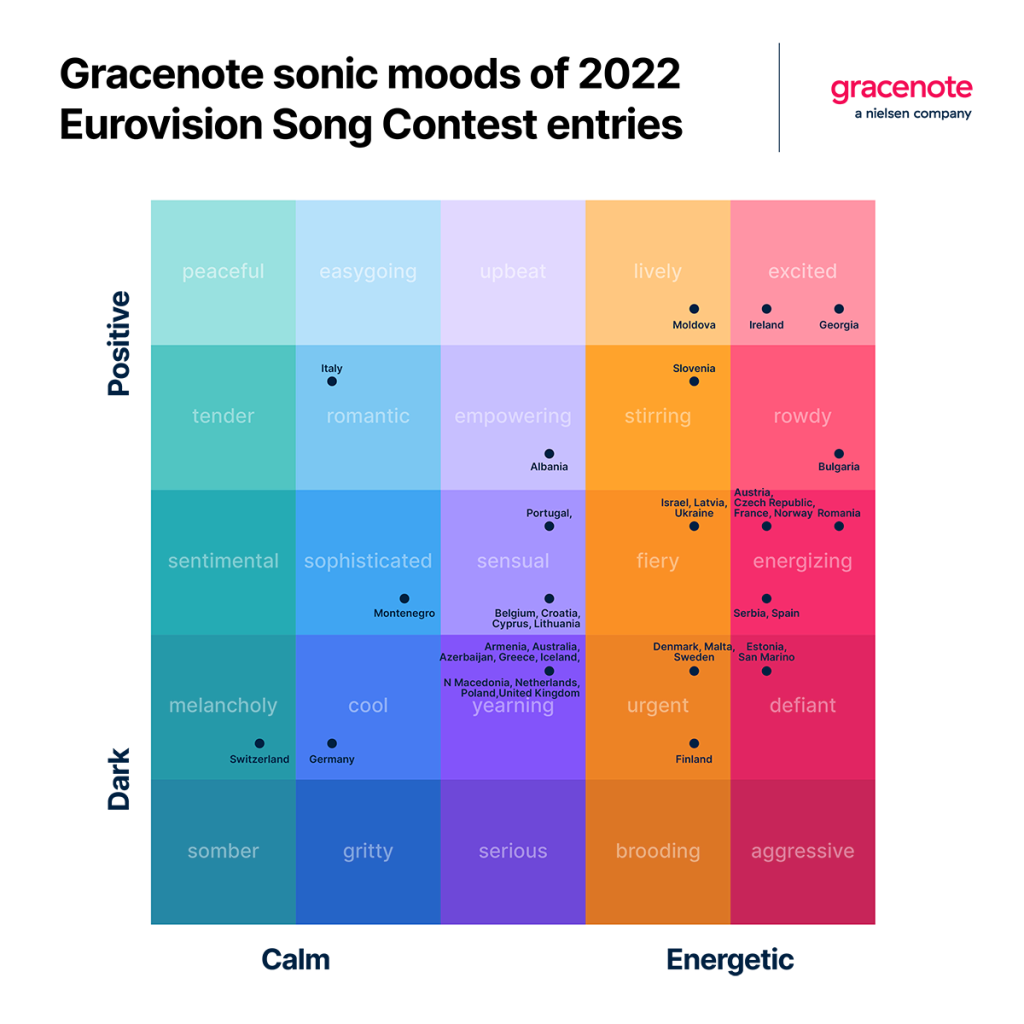
Faced with mounting supply chain woes, increasing inflation and the war in Ukraine, consumer confidence is at its lowest since the pandemic3. It’s no wonder audiences are looking for music that uplifts and reassures them. And Eurovision artists are meeting the moment.
Contrast this year’s trends with last year’s winner: “Zitti e Buoni,” a song classified as rowdy—the first time such a mood has won the competition. At the time of last year’s contest, many countries were lifting their COVID-related restrictions, and consumer confidence in Europe was its highest since October 20183. Americans echoed this sentiment, as a Nielsen custom consumer sentiment study found that in June of 2021, 90% of consumers said they were “ready to go” and get back to normal. Before the omicron spike later in the year, audiences were enthusiastic about emerging from over a year behind doors—and the choice of winner reflects their eagerness.
The benefits of striking the right chord with audiences don’t stop when the contest ends. And much like we see in other high-stakes competitions, Eurovision artists often see success far outside the competition. Out of 68 winning Eurovision songs, 46 have ascended to Billboard’s Top 100 U.K. Singles Chart4. And the 1976 winner, Brotherhood of Man’s “Save Your Kisses For Me,” spent 16 weeks on the chart, six of which were in the No. 1 spot.
Os artistas não são os únicos que podem se beneficiar da compreensão e da antecipação do humor do público. Os serviços de streaming de música podem usar dados de humor sônico para criar listas de reprodução e estações mais ricas, com uma variedade maior de artistas que expõem os ouvintes a diferentes estilos de música e artistas que eles talvez não tenham descoberto por conta própria.
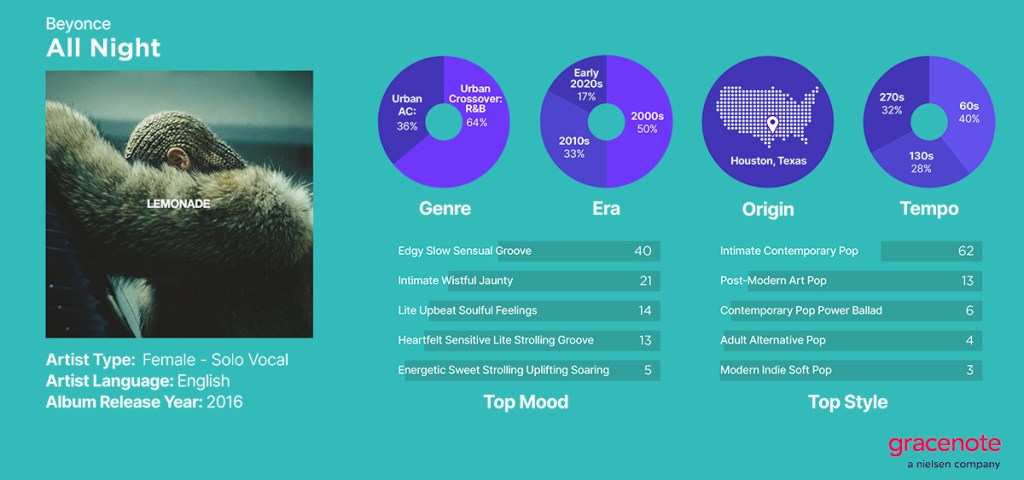
Facilitar para o público a descoberta de novas músicas e bandas que ele vai adorar é fundamental. A aplicação de metadescrições hiperdetalhadas, como humor, ao conteúdo de áudio ajuda a estabelecer conexões entre gênero, humor, época e ritmo para criar um perfil de ouvinte mais completo. Esses dados permitem caminhos de descoberta diferenciados e oferecem recomendações de áudio que se alinham com o gosto atual do ouvinte e, ao mesmo tempo, oferecem a ele novas opções cuidadosamente selecionadas.
Notas
- União Europeia de Radiodifusão
- Dados de vídeo globais da Gracenote, fevereiro de 2022
- Organização para Cooperação e Desenvolvimento Econômico (OECD)
- Billboard