在过去的十多年里,全球对 LGBTQ+ 群体的态度发生了巨大的变化,LGBTQ+ 受众对内容的选择比以往任何时候都要多,他们对所选择的品牌也有了更多的社会意识。对于广告商来说,要想在不断壮大的 LGBTQ+ 群体中取得进展,并获得他们的购买力,包容性就是一切。
While there has been significant progress in representation the past 20 years, one group still struggling to see themselves in advertising is the Black LGBTQ+ community. Nielsen’s 2022 report on Black inclusion in media found that only 9% of U.S. advertising is directed toward content inclusive of Black LGBTQ+ talent. And subgroups of the LGBTQ+ community are seeing the largest lack of inclusion. Representation of gender non-binary identities, for example, is seen as the least inclusive among advertising with 88% of Black LGBTQ+ people ranking this as non-inclusive compared to 81% overall1.
这种代表性上的差距为广告商提供了一个与黑人 LGBTQ+ 消费者建立联系的重要机会,因为他们比一般人更愿意接受品牌根据他们的性取向和/或性别认同将他们作为目标消费者。
To connect with Black LGBTQ+ audiences, advertisers need to focus on inclusion, but that inclusion needs to be authentic to be effective. Yet, advertisers are missing the mark when it comes to accurate, intersectional representation. According to Nielsen’s 2022 International LGBTQ+ Report, 54% of Black LGBTQ+ people say avoiding stereotyping is the number one way to improve inclusivity in content—higher than both LGBTQ+ respondents (50%) and total respondents (45%)—signaling that the community feels overly-stereotyped by advertisers today.
We recently spoke with Myles Worthington, Founder and CEO of WORTHI, for a more in-depth discussion about the importance of Black LGBTQ+ inclusivity in media.
Advertisers looking to create more personal connections with Black LGBTQ+ consumers should partner with members of the community, and many are reaching out to social media influencers to be the face of their campaigns. And when it comes to influencers, Black LGBTQ+ consumers want involvement—21% of Black LGBTQ+ people cite commitment to the community and social responsibility as the most relevant attribute they look for in an influencer, outpacing total respondents (17.8%) and LGBTQ+ respondents overall (19.8%)1.
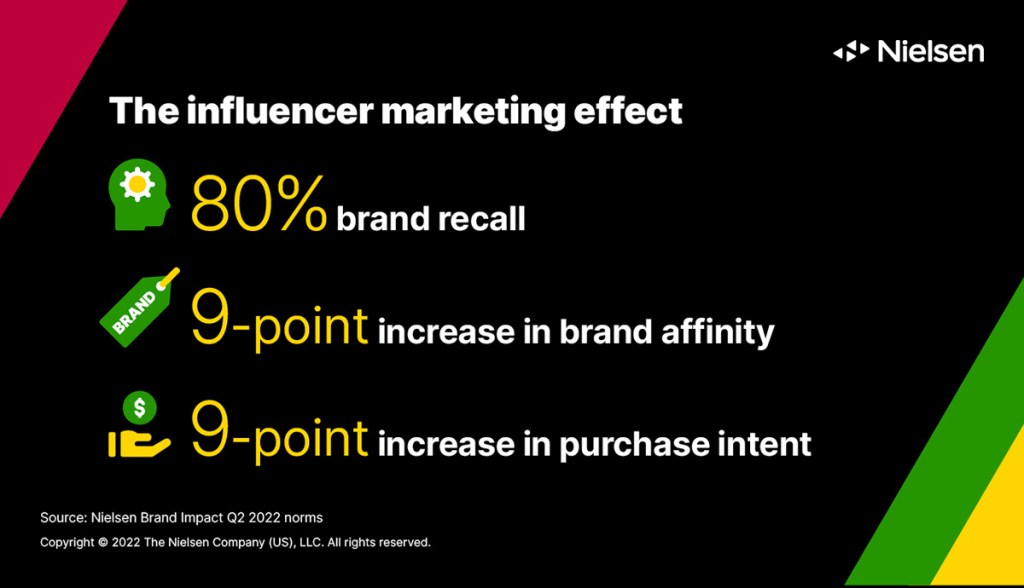
Finding and partnering with the right influencer can increase more than your follower count and video views. According to the 2021 Nielsen Trust in Advertising study, 71% of consumers trust advertising, opinions and product placements from influencers, and influencers drive 80% brand recall and a 9-point increase in both brand affinity and purchase intent relative to consumers who did not see the influencer ads2.
When done right, the strategy is especially impactful with Black audiences—Black adults were 71% more likely to buy products endorsed by influencers on social media3.
对于黑人消费者来说,增强包容性和真实性可以提高忠诚度。尼尔森 2022 年的一项身份和代表性研究发现,40% 的黑人受访者更倾向于购买那些在广告内容中出现其身份群体成员的品牌的产品。注重真实黑人体验和放大黑人声音的品牌可以成为消费者信赖的来源--当他们想要购买时,他们会记住这个品牌。
For additional insights, download Amplifying Black voices in media: Creating informed, thoughtful and authentic experiences.
说明
- 尼尔森国际 LGBTQ+ 包容性媒体认知研究,2022 年
- 尼尔森品牌影响力 2022 年第二季度标准
- 尼尔森 Scarborough USA+ 2022 第 1 版,消费者观点