没有什么比消费支出更能体现美国人的韧性了。在与新型冠状病毒(COVID-19)共同生活了八个月之后,大多数美国成年人已经准备好戴上口罩,离开家,重新过上不受危机影响的生活--尽管是安全的生活。
With so much information now available about ways to safeguard against infection, a consumer lifestyle survey conducted in October by Nielsen Audio found that 53% of Americans believe life is starting to normalize, they are more likely to resume typical activities and are starting to shop more as restrictions permit. That doesn’t mean, however, that these consumers are disregarding health and safety. The study also found that the people who are ready to get out also feel more confident about avoiding risk and staying safe when they leave their homes.
Consumer sentiment about resuming spending is in line with recent data from the U.S. Bureau of Economic Analysis (BEA), which indicated $201.4 billion in consumer spending growth in September. While consumer spending accounts for two-thirds of the country’s economic activity, it’s also a huge part of getting back to normal routines.
It’s worth noting that the more than $3 trillion in federal pandemic relief played a big role in driving this year’s third-quarter economic growth. Despite the depletion of that stimulus, the U.S. unemployment rate, as reported by the Bureau of Labor Statistics, has been trending downward since peaking at 14.7% in April. The most recent addition of 661,000 nonfarm jobs in September cut the unemployment rate to 7.9%.
尽管最近美国的 COVID-19 新病例有所增加,但美国人的消费情绪仍然是世界上最高的,第二季度的消费者信心指数(根据谘商会的报告)为 102(比 100 的基线高出 2 个指数点)。全国商业限制的放宽、消费者略显乐观的心态、对如何保持健康的更多了解,或许还有一点 "小屋热",这些因素影响了大多数美国人开始在非必需品上消费,包括户外餐饮、非食品零售和旅游。
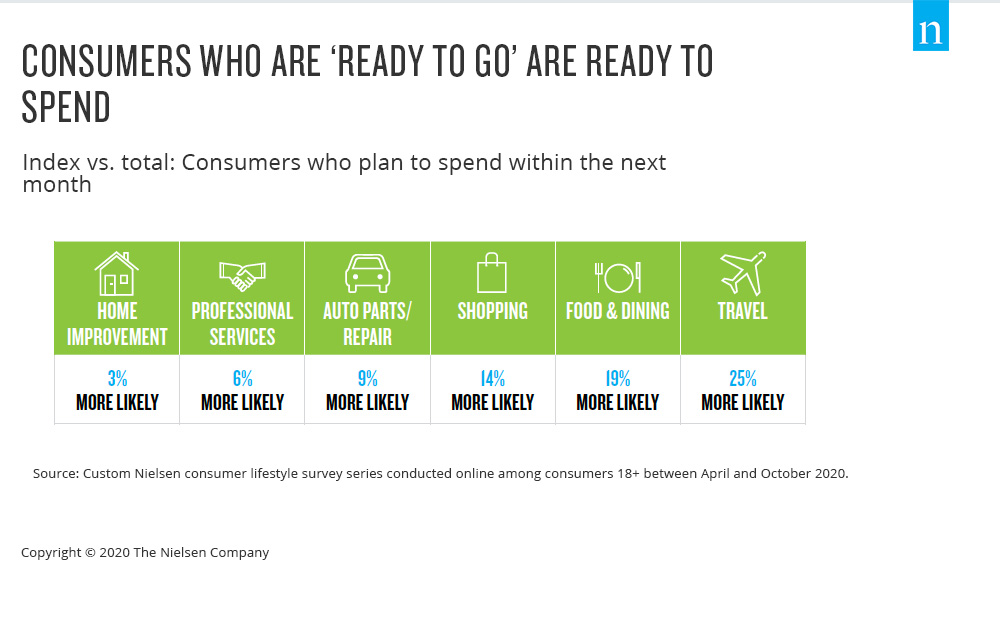
Notably, advertisers aren’t blind to the increased consumer spending, and many big advertisers have re-configured and jump-started their marketing efforts for life in the new normal. While many large advertisers benefit from being in health and e-commerce categories, such as P&G and Amazon, Digiday recently reported increased marketing initiatives from Volkswagen, Expedia and General Motors.
As these, and other, advertisers plan through the final two months of 2020 and into 2021, they will need to consider their prime audience—especially those more likely to spend on non-essentials. Importantly, that means understanding the best ways to reach these consumers. And despite everything that has taken place in 2020, the 53% of Americans who are ready to get back to their lives are heavy AM/FM radio listeners. They’re also a prime target audience for advertisers, as they are more likely to be between 25 and 54, have kids and earn more than $100,000 per year. They’re also more likely to work away from the home (thus the heavy radio listening). And contrary to what you’d expect when many people are staying close to home, heavy radio listeners have been actively driving (and listening) throughout the year. The time they’ve spent in their vehicles, however, has steadily risen since April.
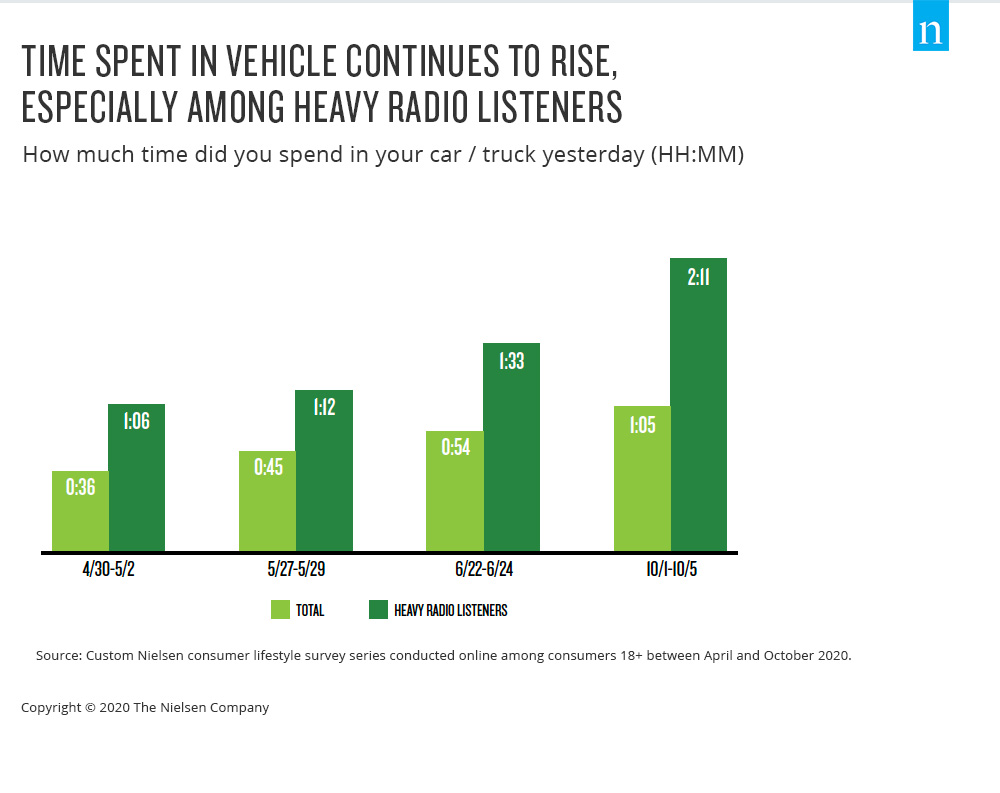
除了比普通消费者收听更多的广播外,重度广播听众还更有可能计划扩大他们的非必要支出。例如,他们购买电器等大件商品的可能性要高出 48%,他们光顾汽车或卡车经销商的可能性要高出 45%。在大流行期间购买汽车(及相关广告),虽然有点违反直觉,但在行业分析师所说的大流行诱发需求的影响下,已经开始反弹。麦肯锡和益普索的研究发现,与公共交通相比,消费者认为私家车是安全的空间。极低的汽车贷款利率,以及因减少假期和娱乐活动而节省的费用,也在鼓励人们购买新车。
重要的是,并非所有的广播收听都是在户外进行的。虽然 3 月至 10 月间近 70% 的广播收听发生在户外,但家庭收听率保持稳定--对于一种被许多人等同于通勤的媒体来说,这可能比预期的要高。尼尔森 PPM 数据显示,在此期间,18 岁及以上人群的家庭收听率在 29% 到 42% 之间。因此,这里的重要启示是,在众多关于向流媒体转变的头条新闻中,广播及其听众代表了美国的韧性和前进的愿望。
For additional information, download our recent On the Road to Recovery with AM/FM Radio report.