個人消費ほどアメリカ人の回復力を示すものはない。過去8ヶ月間、新型コロナウイルス(COVID-19)と隣り合わせの生活を送ってきた米国の成人の大多数は、マスクをして家を出て、危機的状況でも支障のないライフスタイルに戻る準備ができている。
With so much information now available about ways to safeguard against infection, a consumer lifestyle survey conducted in October by Nielsen Audio found that 53% of Americans believe life is starting to normalize, they are more likely to resume typical activities and are starting to shop more as restrictions permit. That doesn’t mean, however, that these consumers are disregarding health and safety. The study also found that the people who are ready to get out also feel more confident about avoiding risk and staying safe when they leave their homes.
Consumer sentiment about resuming spending is in line with recent data from the U.S. Bureau of Economic Analysis (BEA), which indicated $201.4 billion in consumer spending growth in September. While consumer spending accounts for two-thirds of the country’s economic activity, it’s also a huge part of getting back to normal routines.
It’s worth noting that the more than $3 trillion in federal pandemic relief played a big role in driving this year’s third-quarter economic growth. Despite the depletion of that stimulus, the U.S. unemployment rate, as reported by the Bureau of Labor Statistics, has been trending downward since peaking at 14.7% in April. The most recent addition of 661,000 nonfarm jobs in September cut the unemployment rate to 7.9%.
米国では最近、COVID-19の新規感染者が増加しているにもかかわらず、米国人の消費者心理は依然として世界最高水準にあり、第2四半期の消費者信頼感指数(コンファレンス・ボード発表)は102(基準値100を2指数ポイント上回る)を記録した。全国的なビジネス規制の緩和、消費者のわずかながら楽観的な考え方、健康維持のためのより良い理解(ニールセンについて )、そしておそらく山小屋フィーバーが相まって、アメリカ人の大多数は、家庭外での食事、非食品小売、旅行など、必需品以外への支出を開始した。
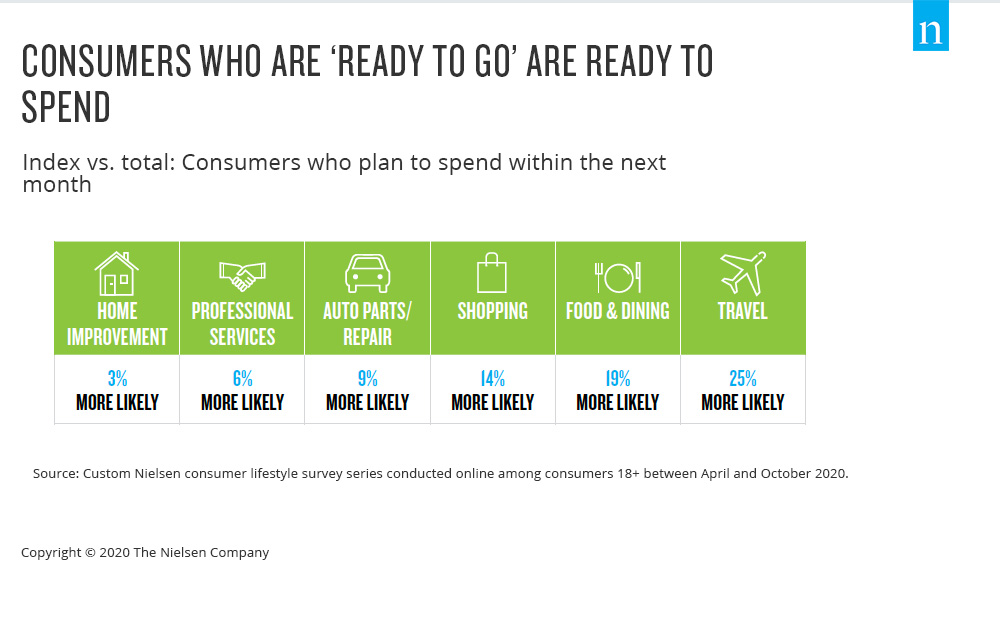
Notably, advertisers aren’t blind to the increased consumer spending, and many big advertisers have re-configured and jump-started their marketing efforts for life in the new normal. While many large advertisers benefit from being in health and e-commerce categories, such as P&G and Amazon, Digiday recently reported increased marketing initiatives from Volkswagen, Expedia and General Motors.
As these, and other, advertisers plan through the final two months of 2020 and into 2021, they will need to consider their prime audience—especially those more likely to spend on non-essentials. Importantly, that means understanding the best ways to reach these consumers. And despite everything that has taken place in 2020, the 53% of Americans who are ready to get back to their lives are heavy AM/FM radio listeners. They’re also a prime target audience for advertisers, as they are more likely to be between 25 and 54, have kids and earn more than $100,000 per year. They’re also more likely to work away from the home (thus the heavy radio listening). And contrary to what you’d expect when many people are staying close to home, heavy radio listeners have been actively driving (and listening) throughout the year. The time they’ve spent in their vehicles, however, has steadily risen since April.
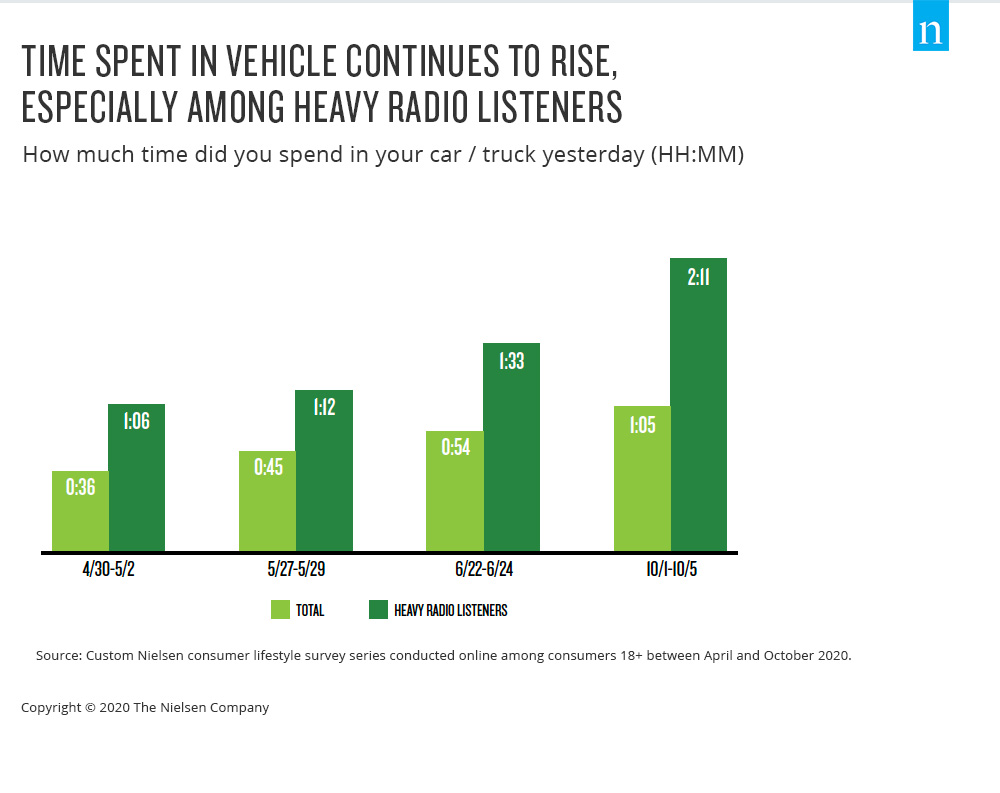
平均的な消費者よりも多くのラジオを聴いていることに加え、ラジオのヘビーリスナーは、プランニング 、不要不急の支出を拡大する可能性がはるかに高い。例えば、家電製品のような大きな買い物をする可能性は48%高く、自動車やトラックのディーラーを訪れる可能性は45%高い。パンデミック時の自動車購入(および関連広告)は、やや直感に反するが、業界アナリストがパンデミック誘発需要と呼ぶものの影響で回復し始めている。マッキンゼーとイプソスの調査によると、消費者は公共交通機関と比較して自家用車を安全な空間と見なしている。また、自動車ローン金利が非常に低いことや、休暇や娯楽を減らすことによる節約効果も、新たな自動車購入を後押ししている。
重要なのは、すべてのラジオ聴取が自宅外で行われているわけではないということだ。3月から10月にかけてのラジオ聴取者の70%近くは自宅外で聴取していたが、自宅内での聴取は安定しており、多くの人が通勤と同じと考えるメディアとしては、予想以上に高い聴取率であった。ニールセンPPMのデータによると、この期間の18歳以上の家庭内聴取率は29%から42%であった。つまり、ここでの大きな収穫は、ストリーミングへのシフトが多くの見出し(ニールセンについて )を飾る中、ラジオとそのリスナーはアメリカの回復力と前進への願望を表しているということだ。
For additional information, download our recent On the Road to Recovery with AM/FM Radio report.