소비자 지출만큼 미국인의 회복력을 잘 보여주는 것은 없습니다. 그리고 지난 8개월 동안 신종 코로나바이러스(코로나19)와 함께 생활한 미국 성인의 대다수는 마스크를 착용하고 집을 떠나 위기의 영향을 받지 않는 일상으로 돌아갈 준비가 되어 있습니다(안전하긴 하지만).
With so much information now available about ways to safeguard against infection, a consumer lifestyle survey conducted in October by Nielsen Audio found that 53% of Americans believe life is starting to normalize, they are more likely to resume typical activities and are starting to shop more as restrictions permit. That doesn’t mean, however, that these consumers are disregarding health and safety. The study also found that the people who are ready to get out also feel more confident about avoiding risk and staying safe when they leave their homes.
Consumer sentiment about resuming spending is in line with recent data from the U.S. Bureau of Economic Analysis (BEA), which indicated $201.4 billion in consumer spending growth in September. While consumer spending accounts for two-thirds of the country’s economic activity, it’s also a huge part of getting back to normal routines.
It’s worth noting that the more than $3 trillion in federal pandemic relief played a big role in driving this year’s third-quarter economic growth. Despite the depletion of that stimulus, the U.S. unemployment rate, as reported by the Bureau of Labor Statistics, has been trending downward since peaking at 14.7% in April. The most recent addition of 661,000 nonfarm jobs in September cut the unemployment rate to 7.9%.
최근 미국에서 코로나19 신규 확진자가 증가했음에도 불구하고 미국인들의 소비자 심리는 여전히 세계에서 가장 높은 수준이며, 2분기 소비자 신뢰지수(컨퍼런스 보드 발표)는 102(기준선 100보다 2지수 포인트 높은 수준)를 기록했습니다. 미국 전역의 사업 제한 완화, 소비자들의 다소 낙관적인 사고방식, 건강을 유지하는 방법에 대한 이해도 향상, 그리고 약간의 기내식 열풍이 결합되어 대다수의 미국인들이 외식과 비식품 소매업, 여행 등 비필수적인 지출을 시작하게 된 것으로 보입니다.
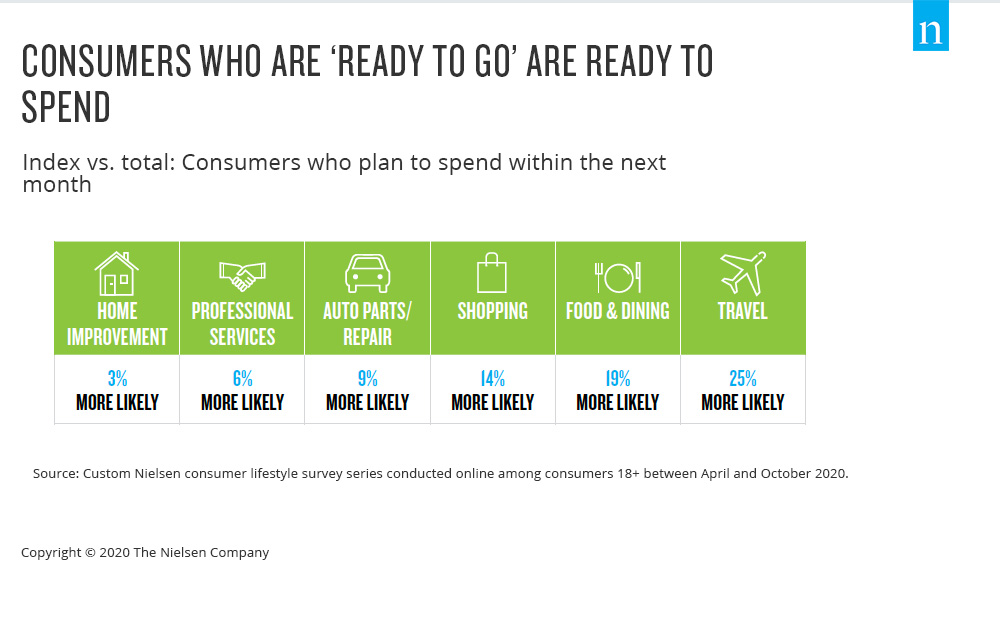
Notably, advertisers aren’t blind to the increased consumer spending, and many big advertisers have re-configured and jump-started their marketing efforts for life in the new normal. While many large advertisers benefit from being in health and e-commerce categories, such as P&G and Amazon, Digiday recently reported increased marketing initiatives from Volkswagen, Expedia and General Motors.
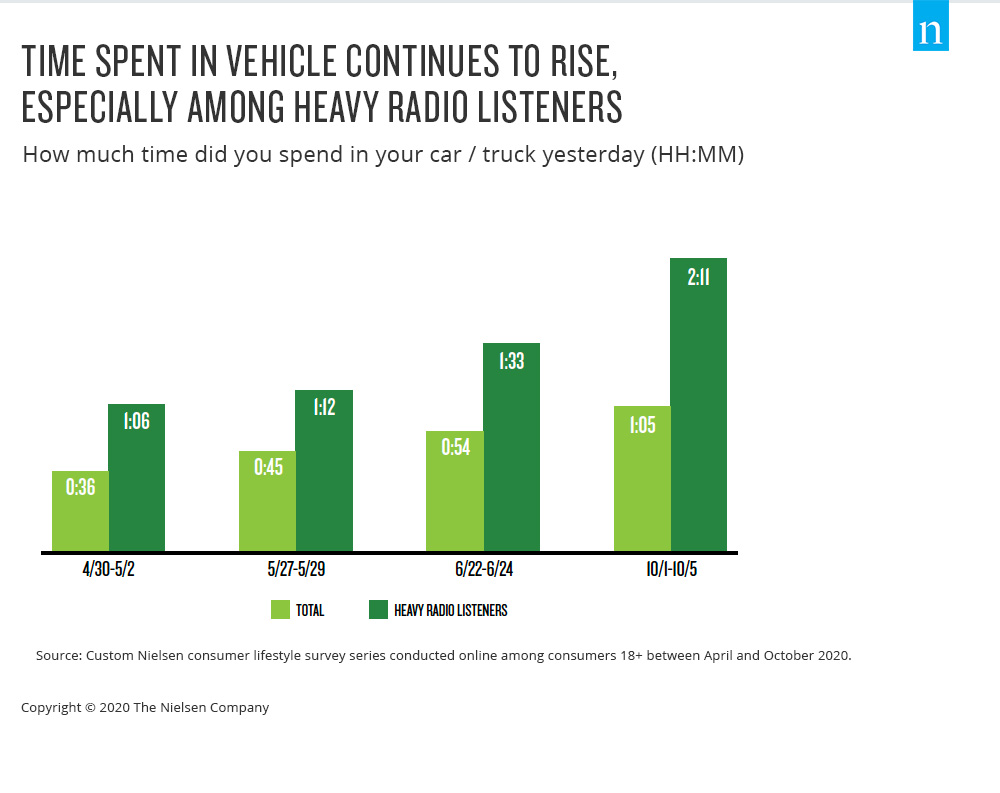
As these, and other, advertisers plan through the final two months of 2020 and into 2021, they will need to consider their prime audience—especially those more likely to spend on non-essentials. Importantly, that means understanding the best ways to reach these consumers. And despite everything that has taken place in 2020, the 53% of Americans who are ready to get back to their lives are heavy AM/FM radio listeners. They’re also a prime target audience for advertisers, as they are more likely to be between 25 and 54, have kids and earn more than $100,000 per year. They’re also more likely to work away from the home (thus the heavy radio listening). And contrary to what you’d expect when many people are staying close to home, heavy radio listeners have been actively driving (and listening) throughout the year. The time they’ve spent in their vehicles, however, has steadily risen since April.
라디오를 많이 듣는 사람들은 일반 소비자보다 라디오를 더 많이 듣는 것 외에도 비필수적인 지출을 늘릴 계획이 있을 가능성이 훨씬 더 높습니다. 예를 들어, 이들은 가전제품과 같은 주요 구매를 할 가능성이 48% 더 높고, 자동차 또는 트럭 대리점을 방문할 가능성이 45% 더 높습니다. 팬데믹 기간 동안의 자동차 구매(및 관련 광고)는 다소 직관적이지 않지만, 업계 분석가들이 팬데믹으로 인한 수요라고 부르는 수요에 힘입어 반등하기 시작했습니다. 맥킨지와 입소스의 연구에 따르면 소비자들은 대중교통과 비교했을 때 개인 차량을 안전한 공간으로 인식하고 있는 것으로 나타났습니다. 매우 낮은 자동차 할부 금리와 휴가 및 엔터테인먼트 감소로 인한 비용 절감도 새로운 자동차 구매를 장려하고 있습니다.
중요한 것은 모든 라디오 청취가 집 밖에서 이루어지는 것은 아니라는 점입니다. 3월부터 10월까지 라디오 청취의 거의 70%가 집 밖에서 이루어졌지만, 집 안에서의 청취는 꾸준히 유지되었으며, 많은 사람들이 출퇴근길과 동일시하는 매체의 경우 예상보다 높은 수치를 보였습니다. 닐슨 PPM 데이터에 따르면 이 기간 동안 18세 이상 인구의 가정 내 청취율은 29%에서 42% 사이였습니다. 따라서 여기서 중요한 점은 스트리밍으로의 전환에 대한 많은 헤드라인 속에서 라디오와 그 청취자들은 미국의 회복력과 앞으로 나아가고자 하는 열망을 대표한다는 것입니다.
For additional information, download our recent On the Road to Recovery with AM/FM Radio report.