あなたが自分の物語を語らなければ、他の誰かが語るだろう。中東/北アフリカ(MENA)の人々にとって、メディアで目にするストーリーに関しては、これは実に難しい課題であった。ニールセンのデータによれば、1,500の放送、ケーブル、ストリーミングのテレビ番組において、MENA出身者のスクリーン上での存在感はわずか2.5%にすぎない。しかし、このグループを過小評価しているのはメディアだけではない。実際、アメリカの国勢調査はいまだにMENAの人々を白人として分類しており、MENAの人々の数が少ないため、リソースを得るためにさらに戦わなければならないのだ。では、メディア業界は、画面上のMENAの表現を増やし、彼らの経験(ニールセンについて )をより正確に伝えるために何ができるだろうか?
To explore some ideas and opportunities, we spoke with Dr. Evelyn Alsultany, Associate Professor, Department of American Studies and Ethnicity at University of Southern California, and educational consultant for the MENA Arts Advocacy Coalition (MAAC), an organization that advocates for greater visibility of Middle Eastern, North African, and South Asian talent in Hollywood.
「私たちは、アラブ人、イラン人、イスラム教徒、そしてもちろん他の多くのグループをステレオタイプ化するイメージやストーリーをたくさん消費してきた。その弊害は1つのストーリーにあるのではなく、その繰り返しやイメージの多様性の欠如にある。その結果、ステレオタイプが集団全体を代表するようになり、人間性を奪ってしまうのだ。"
エブリン・アルスルタニー博士
Q: From 2019-2021, Nielsen data shows that the genres where MENA talent is most often seen are biographies, action sports and dark comedies. From your research/experience, what stories about MENA culture are being told on screen? Are there stereotypes or accurate representation/depictions?
A: ハリウッド映画やテレビ番組は "単なる娯楽 "ではありません。ステレオタイプなイメージや歴史的に繰り返されてきたことは、アラブ人やイスラム教徒に害を及ぼす政策の支持に影響を与えます。それらは多大な影響と結果をもたらします。ニールセンについて MAACは2017年、エンターテインメント業界におけるMENAを新たな多様性カテゴリーとして認知度を高め、このコミュニティが認知されるのを助け、ニールセンなどの企業がスクリーン上のMENAの表現がどのようなものかを適切に測定できるようにした。しかし、それでもまだ足りない。
There have been some notable changes over the last two or three decades. After 9/11, there was an increase in “good” Arab and Muslim characters in TV shows like 24, 祖国 そして Jack Ryan. However, these characters appeared as U.S. patriots who either worked for the FBI or CIA or who were willing to fight and die for the U.S. to prove their patriotism. It is an improvement over portrayals as terrorists but it is nonetheless a very limiting character that defines Arabs and Muslims as “good” or “bad” in relation to terrorism and in relation to a very narrow conception of patriotism.
Q:ストリーミングやデジタルプラットフォームのコンテンツが増えるにつれ、MENAの文化や人々をスクリーンで目にする機会は増えていますか?
ほとんどの人がネットワークテレビで同じ番組を観ていた時代から、ストリーミングサービスを通じてこれほど幅広い番組が提供されるようになった。また、米国以外の作品にアクセスする機会も増えた。私たちが消費するMENAの人々のイメージを多様化することで、ここには多くの可能性がある。
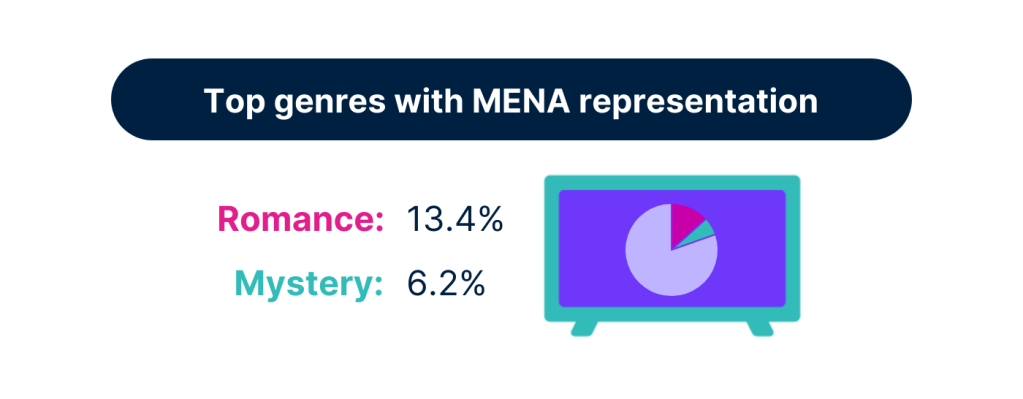
Historically,non-Arabs would play Arab roles and would use costumes and accents to convey Arabness. Anthony Quinn, who was Mexican, played Arab characters in several movies: The Road to Morocco, Lawrence of Arabia (1962), and Lion of the Desert (1981). As recently as 2014 and 2016, Gerard Butler was in Gods of Egypt, and both Christian Bale and Joel Edgerton in Exodus: Gods and Kings were all painted brown to play MENA Characters. Most of the roles left available for MENA actors over the last two decades have been stereotypical characters. Even when MENA talent is present, there is still a need to expand the stories that are told about them. Nielsen’s Gracenote Inclusion Analytics data shows that romance was the top genre where MENA talent appeared on screen in 2021—almost twice more than in mystery, which is the genre with the second highest MENA share of screen. And when we look at the programs under the romance genre, 40% is in Spanish-language novelas, which is limited to the Spanish audience.
Luckily, we have content creators like Ramy and Nasim Pedrad helping to change the landscape. But we need more streamers and networks to buy MENA content from MENA creators and put it on air. With TV more global than ever, there is a market for it. We’ve seen a concerted and notable effort in Hollywood to expand and improve representations especially in response to the Muslim Travel Ban proposed in 2015. As a result, we saw an increase in representations of Muslims outside of terrorism. It is quite refreshing. These include CBS’ FBI, Fox’s 9-1-1: Lonestar, the CW’s DC Legends of Tomorrow, Freeform’s The Bold Type, NBC’s Transplant, Hulu’s Ramy, Peacock’s We Are Lady Parts, and most recently Disney+ Moon Knight. These shows have been impacting the MENA audience in moving ways for their accurate and thoughtful representation.
Q:変化を促すために、他に何ができるでしょうか?
最も効果的なアプローチは、瞬間的な危機ではなく、表象の歴史を是正しようとするものである。
エブリン・アルスルタニー博士
Over the last five years, some wonderful resources have emerged to support Hollywood in diversifying representations. The MENA Arts Advocacy Coalition, MAAC, works to educate the industry at large on the underrepresentation of MENA in entertainment and has created a database of MENA and South Asian creatives to connect emerging and established talent from these regions to the industry. The WGA launched a Middle Eastern Writers Committee to create awareness for MENA Writers, and SAG-AFTRA recently created a National MENA Committee to advocate for performers.
But devising effective solutions requires developing a fuller understanding of the problem. The problem is not one movie or TV show, but how a history of stereotypical representations has constructed negative meanings about Arabs (and Muslims) that have real world consequences. The problem is that MENA performers have been portrayed as terrorists so many times that it has come to represent the entire community of 300 million people. Therefore, we need to encourage streamers and networks to invest in MENA talent and hire MENA writers.
私たちは、イスラム教徒入国禁止のように、問題が再燃したときや危機的状況に陥ったときに解決しようとする傾向がある。しかし、最も効果的なアプローチは、瞬間的な危機ではなく、表象の歴史を正そうとするものである。