随着 12 月 3 日 "国际残疾人日 "的临近,品牌、广告商和媒体平台在多元化营销方面面临着不断变化的形势。随着政治、经济和社会动态的不断变化,对受众(包括残疾人)的理解需要精确和细致。考虑到许多人的交叉身份,这一点尤为重要。让我们来看看这个经常被忽视的群体的期望、需求和经济潜力,为品牌突出真实和交叉包容的战略机遇。
驾驭多元化营销新格局
最近的美国大选凸显了一个日益增长的事实:与受众建立联系意味着超越表面的人口统计,了解复杂、交叉的身份。残疾人不仅具有独特的视角,还与其他群体存在交叉,包括不同的种族、性别、性取向和社会经济背景。例如,一位身体残疾的年轻拉丁裔女性可能与一位听力残疾的年长白人男性退伍军人有着不同的媒体偏好和购买行为。
能够利用精确的多维数据与这些不同的体验建立联系的品牌,能够很好地建立有意义的关系。
代表权比以往任何时候都重要
Gaps in disability representation remain stark, especially when intersectionality is considered. Overall, disabled individuals make up 26% of the U.S. population, but represented only 5.9% of the time on TV screens in 2024—down from 6.8%1 last year. This disparity is even more pronounced with intersectional identities who belong to multiple marginalized groups; for example, people of color with any disability is represented 1.6% on TV in Q1 – Q3 20242.
电视代表性与人口比例
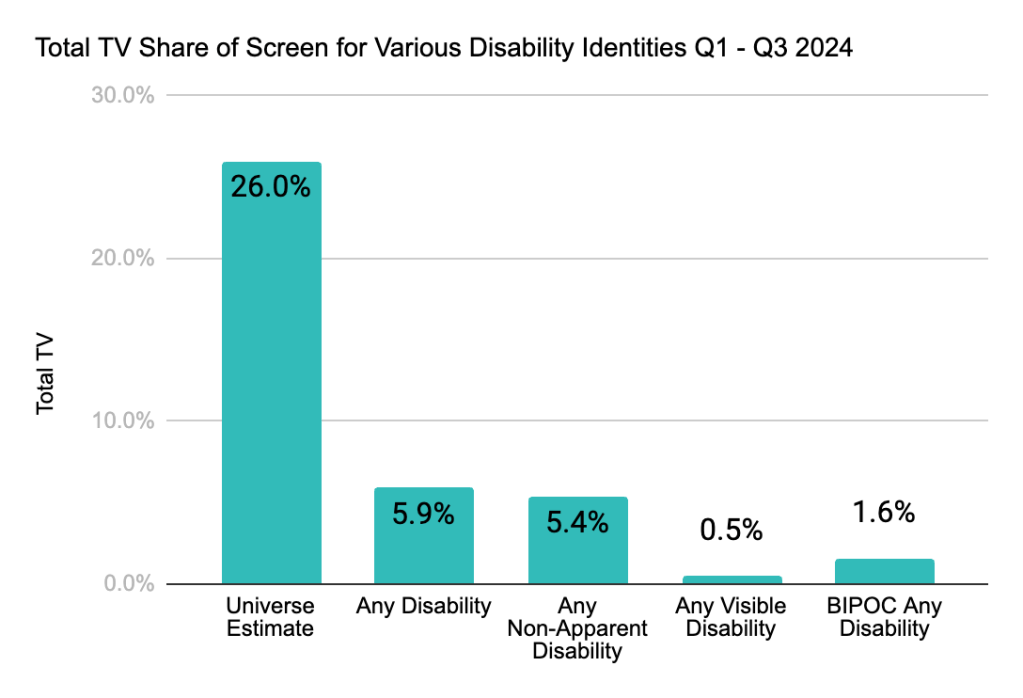
Source: Gracenote Inclusion Analytics, Q1 – Q3 2024
版权所有 ©2024 The Nielsen Company (US), LLC.保留所有权利。
对真实性和相关性的要求
Authenticity has become non-negotiable. Among people with disabilities, 52%3 wish for more representation of their identity group on television, with 50% feeling their identity is often misrepresented. This sentiment is even stronger among those who hold multiple marginalized identities—for example, 60% of Black women with disabilities report feeling misrepresented.
This is even more pronounced for people with mental health disabilities, where 54% report feeling misrepresented. Audiences are more likely to disengage from brands that fall short—61% say they would stop purchasing from brands that don’t respect their community. Misrepresentation doesn’t just alienate viewers; it can have tangible economic consequences for brands.
残疾人将不再购买不重视他们的品牌的产品
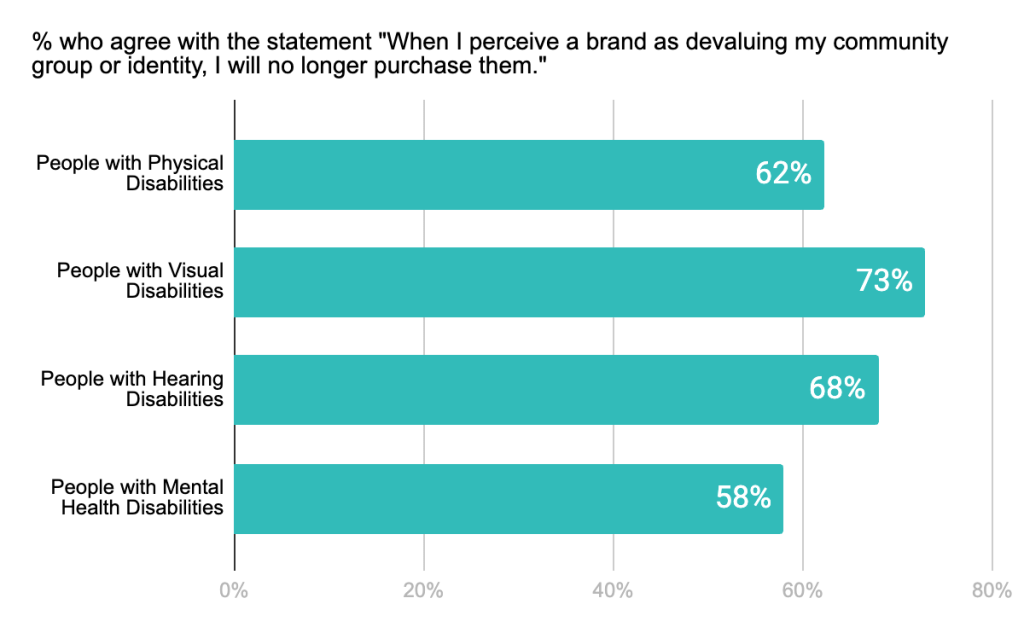
资料来源:2023 年代表权态度调查
版权所有 ©2024 The Nielsen Company (US), LLC.保留所有权利。
强大的经济机遇
The U.S. disability community wields an estimated $490 billion in annual disposable income, influencing an extended market worth more than $1 trillion when considering friends and family4. Moreover, 63% of disabled individuals will consider seeking a new brand because they feel their current brand does not align with the causes they care about.4
People with disabilities are discerning consumers, with 52% expecting brands to support causes aligned with their community4. Brands that prioritize inclusion can tap into this significant market potential, leading to increased market share and customer loyalty. By backing relevant social initiatives and developing accessible, inclusive products and services, brands can see substantial returns on investment.
在关键之处与受众建立联系
Today’s audiences expect brands to meet them where they are. For disabled people, 70% report experiencing ads that don’t feel relevant to them, and 37% are likely to ignore ads that don’t reflect their identity group5. Irrelevant content drives disengagement. Brands can create ads that align with the real experiences and values of people with disabilities, considering the intersections of race, gender identity, age, and socioeconomic status.
“It is important to provide authentic representation of the communities they serve,” said Lauren Appelbaum, SVP of Entertainment & Media of Disability Belongs, one of Nielsen’s partners in disability inclusive marketing. “Just as important, brands can and should include disabled people in their ad campaigns even when the ad is not about disability.”
In a media landscape where digital is growing, local television remains a trusted choice for people with disabilities. 33% select it as their primary news source, and 62% place it among their top three.4 This preference is even more pronounced in certain subgroups—such as older adults and rural communities—highlighting the importance of understanding the nuanced media consumption habits within the disability community.
Nielsen’s local data allows brands to tailor their messaging to specific markets, ensuring relevance and resonance. By identifying the preferred channels and content of different segments within the disability community, brands can optimize their media planning for maximum impact.
无障碍环境作为一项普惠福利:"路缘石效应 "在行动
While accessibility features are essential for disabled people, their benefits extend to all viewers. Just as curb cuts designed for wheelchair users benefit parents with strollers, cyclists, and delivery workers, accessibility features in media offer advantages for everyone. A prime example is closed captioning. While crucial for viewers who are deaf and hard of hearing, a surprising 58% of all people use subtitles. Of these, 38% find it improves their comprehension of the content, and 26% use it to enjoy content in different languages3. When you approach accessibility features from a universal perspective, it enhances the viewing experience for all.
针对特定行业的见解和可行策略
为了推动残疾人更深入地参与品牌活动,品牌应考虑以下策略:
- Invest in authentic representation: Collaborate with creators and talent from the disability community to ensure accurate and respectful portrayal.
- Leverage intersectional data: Use Nielsen’s multidimensional analytics to understand the overlapping identities of your target audience.
- Develop inclusive products and services: Prioritize accessibility in product design and service delivery to meet the needs of all consumers.
- Support relevant causes: Align with social initiatives and organizations that advocate for the disability community, reinforcing brand commitment to inclusion.
- Optimize media planning: Use data-driven insights to choose the right channels and times to reach your audience effectively.
"通过深思熟虑地将无障碍性和代表性纳入其商业计划,包容残疾的品牌不仅创造了一个更具包容性的环境,还与不同的受众建立了更牢固的关系,"Disability Belongs 总裁兼首席执行官 Ariel Simms 说。"从一开始就优先考虑兼顾残疾问题的品牌将使自己从一个更加公平的市场中获益。
By implementing these strategies, brands can enhance their media planning and advertising effectiveness, leading to better engagement and a stronger return on investment. As diverse marketing needs evolve, understanding the unique dimensions of disability representation isn’t just ethical, it’s essential for brands to stay relevant and competitive. The intersection of identity, relevance, and buying power presents a compelling opportunity for brands to create truly inclusive, meaningful connections with a powerful and loyal audience. Nielsen can provide the insights needed to navigate this evolving landscape and drive success through authentic inclusivity.
资料来源
1 Gracenote Inclusion Analytics Q1-Q3 2024 and 2023
2 Gracenote Inclusion Analytics Q1-Q3 2024
3 2023 Attitudes on representation survey
4 American Institutes for Research report 2018
5 2024 Attitudes on advertising survey