The novel coronavirus (COVID-19) pandemic that has hit across the globe has caused significant changes in people’s lives. A Nielsen investigation has identified six thresholds that track trends in consumer behavior around the world as markets have been impacted by the virus. While Indonesia was one of the last countries in Asia to confirm a COVID-19 infection at the beginning of March, cases have since climbed, and Indonesia has joined many other markets around the world at level 5, Restricted Living. Due to concerns around the virus and living restrictions, Indonesians are adapting their media and consumer habits.
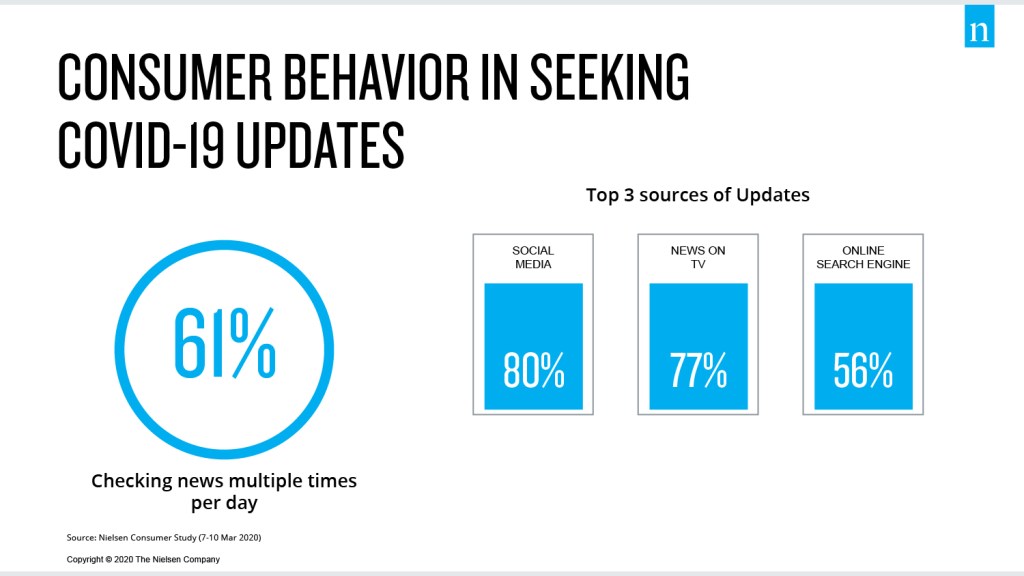
在尼尔森最近的一项调查中,82% 的受访者--主要是上层阶级--表示他们在 2020 年 2 月初就知道 COVID-19。在总统佐科-维多多(Joko Widodo)于 3 月 2 日宣布首例 COVID-19 之后,61% 的受访者每天都会通过各种媒体渠道多次查看与 COVID-19 相关的新闻。
研究发现,社交媒体(80%)、电视新闻(77%)和在线搜索引擎(56%)是消费者获取 COVID-19 最新信息最多的渠道。
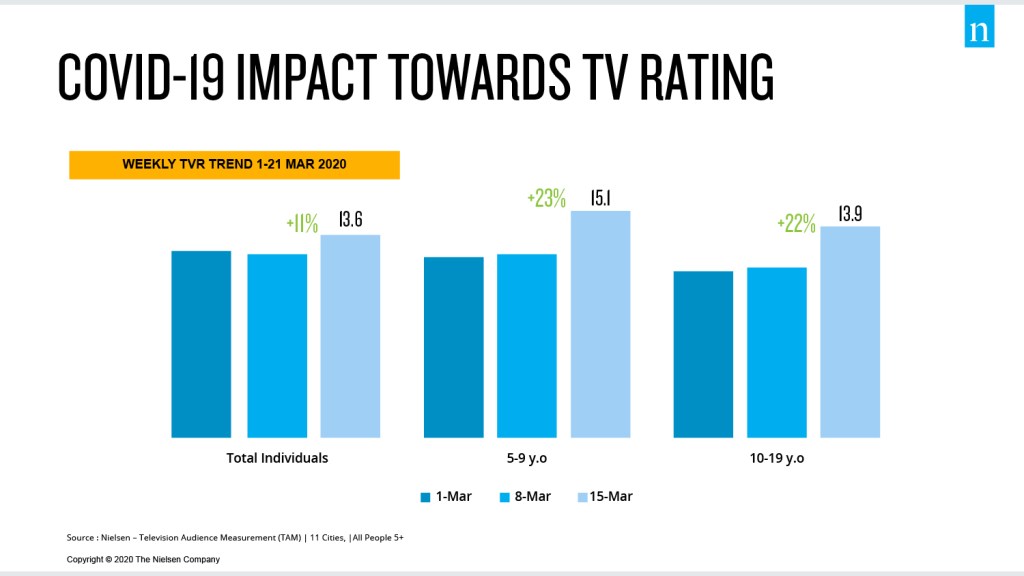
Following the country’s stay-at-home policy to prevent the spread of COVID-19, 30% of respondents planned to shop online more often. It also affected TV viewing, with ratings growing from 2.6% on March 8 to 13.6% on March 15. The highest increase was seen in younger audiences, with ratings increasing 23% for 5-9 year olds increasing and 22% for 15-19 year olds.
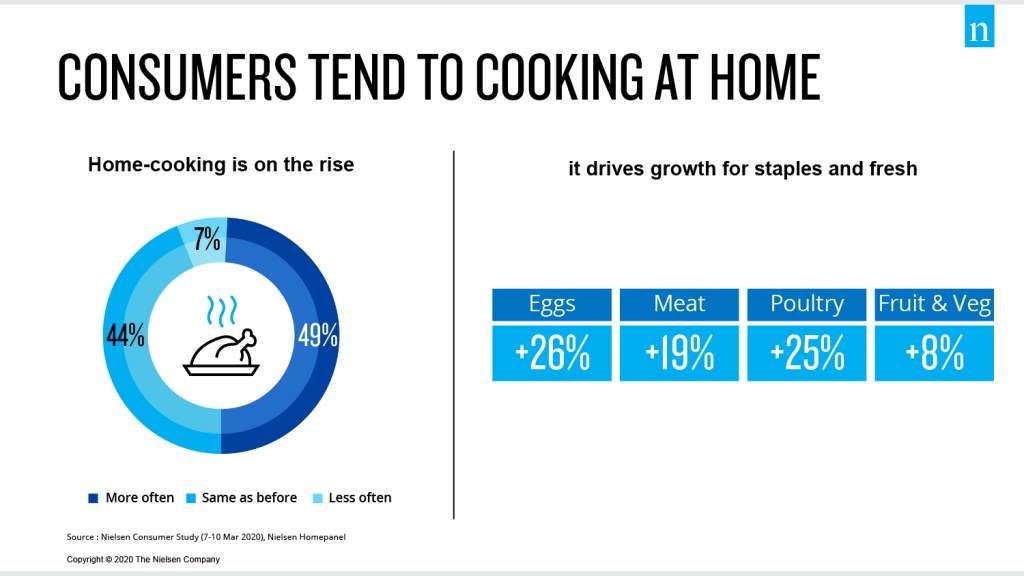
Across other countries in Asia, we’ve seen the rise of the “homebody economy” as consumers stay home due to concerns about the virus and shift their spending to serve this new lifestyle. In Indonesia, 50% of consumers have reduced out-of-home entertainment, and 46% have reduced eating out. On the other hand, 49% of consumers cooked at home more often, and this has driven the sales growth of staples and fresh products, such as eggs (+26), meat (+19%), poultry (+25%) and fruit and vegetables (+8%).
To prepare for stay at home measures, consumers around the world have been purchasing similar products as part of their pantry preparation. In Indonesia, many shoppers turned to Modern Trade outlets for much of their pantry prep, though there were some differences across consumer segments and regions. On the national scale, Upper Class consumers shopped more at Hypermarkets/Supermarkets than other consumers. Meanwhile, the trend in JakartaGreater is different, where not only Upper Class, but also Middle and Lower Class consumers shopped more at Hypermarkets/Supermarkets.
In addition to stocking up on pantry goods, health and hygiene have become major concerns for consumers amid the current pandemic. And early studies from 中国 show that health will likely continue to be key concerns as infection rates slow and Indonesia enters a new normal. As many as 44% of respondents claimed that they consume health products more often, and 37% who claimed they consume vitamin drinks more often. Industry players for vitamins and pharmacies seized this opportunity and increased their advertising budgets on TV. Vitamin ad spending increased 14% and reached more than IDR90 Billion, while cough medicine ad spending increased 22%, reaching more than IDR30 Billion.
对于零售商来说,当前的形势可以为他们创造一个机会,使他们的业务得以继续,同时也可以帮助满足消费者在家期间的需求。超市和大卖场尤其能从上层和部分中层社会经济地位的消费者那里获得机会,因为他们可能会在没有自己通常喜欢的商品的情况下寻找充足的库存和更多的产品选择。同时,迷你超市因其就近性而成为不同社会经济地位消费者的首选,这有助于消费者避开拥挤的人群和使用公共交通工具。
零售商最需要做的是监控库存分配,因为配送线存在风险。提供订货方法简单、方便消费者使用的配送服务,以及利用电视、互联网、社交媒体、信息和聊天应用程序等全渠道传播,将有助于企业满足消费者的需求。
Read in Bahasa Indonesia.
方法
资料来源包括尼尔森消费者研究(2020 年 3 月 7-10 日)、尼尔森扫描跟踪(2020 年 3 月 1 日与 2019 年 3 月 1 日)、尼尔森家庭面板(2020 年 3 月 1 日与 2019 年 3 月 1 日)、尼尔森电视受众测量(2020 年 3 月 1-18 日)、尼尔森广告情报(2020 年 3 月 1-18 日)。
Learn more from our complete COVID-19 coverage.


