The novel coronavirus (COVID-19) pandemic that has hit across the globe has caused significant changes in people’s lives. A Nielsen investigation has identified six thresholds that track trends in consumer behavior around the world as markets have been impacted by the virus. While Indonesia was one of the last countries in Asia to confirm a COVID-19 infection at the beginning of March, cases have since climbed, and Indonesia has joined many other markets around the world at level 5, Restricted Living. Due to concerns around the virus and living restrictions, Indonesians are adapting their media and consumer habits.
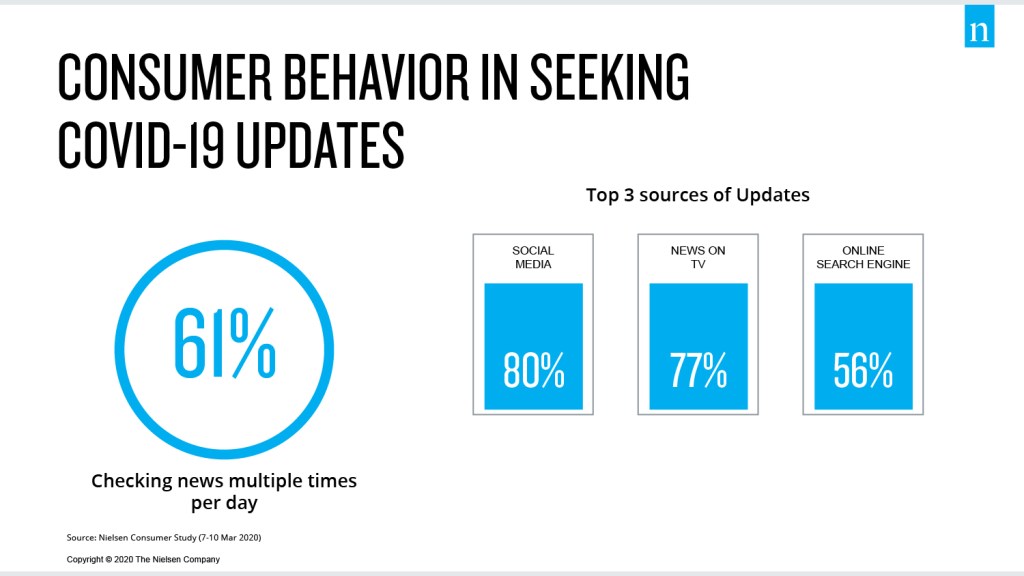
最近のニールセンの調査では、回答者の82%(ほとんどがアッパークラス)が2020年2月上旬にCOVID-19について知っていたと回答した。3月2日にジョコ・ウィドド大統領がCOVID-19の最初の症例について発表した後、回答者の61%がCOVID-19関連のニュースを様々なメディアチャンネルを通じて毎日数回チェックした。
調査によると、消費者がCOVID-19の最新情報を得るために最もアクセスした情報源は、ソーシャルメディア(80%)、テレビニュース(77%)、オンライン検索エンジン(56%)であった。
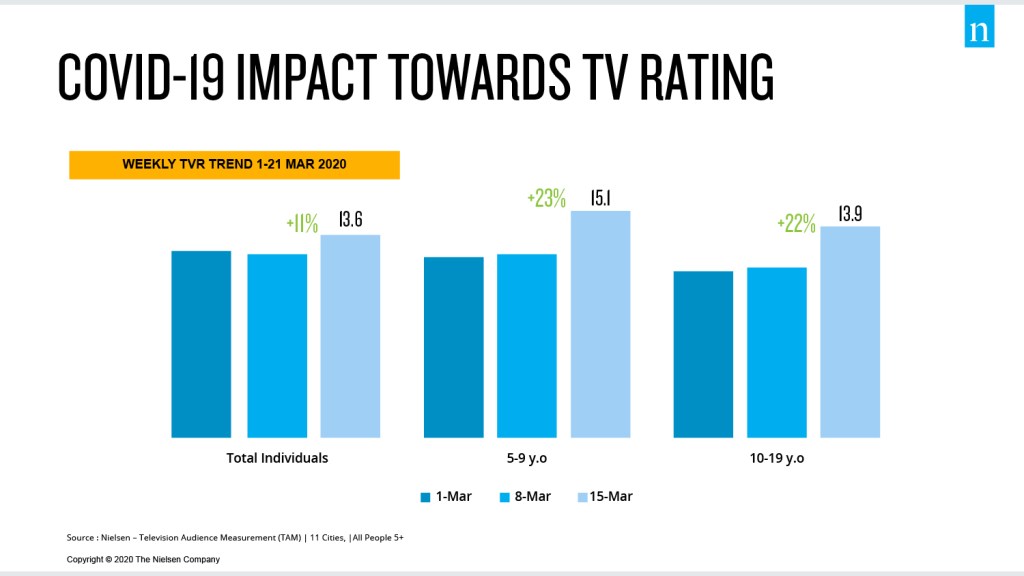
Following the country’s stay-at-home policy to prevent the spread of COVID-19, 30% of respondents planned to shop online more often. It also affected TV viewing, with ratings growing from 2.6% on March 8 to 13.6% on March 15. The highest increase was seen in younger audiences, with ratings increasing 23% for 5-9 year olds increasing and 22% for 15-19 year olds.
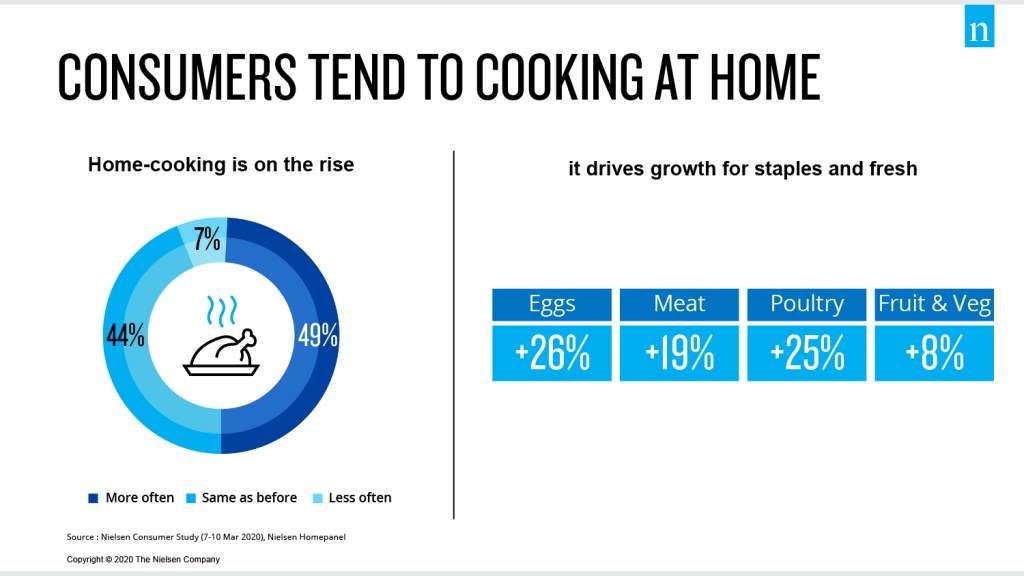
Across other countries in Asia, we’ve seen the rise of the “homebody economy” as consumers stay home due to concerns about the virus and shift their spending to serve this new lifestyle. In Indonesia, 50% of consumers have reduced out-of-home entertainment, and 46% have reduced eating out. On the other hand, 49% of consumers cooked at home more often, and this has driven the sales growth of staples and fresh products, such as eggs (+26), meat (+19%), poultry (+25%) and fruit and vegetables (+8%).
To prepare for stay at home measures, consumers around the world have been purchasing similar products as part of their pantry preparation. In Indonesia, many shoppers turned to Modern Trade outlets for much of their pantry prep, though there were some differences across consumer segments and regions. On the national scale, Upper Class consumers shopped more at Hypermarkets/Supermarkets than other consumers. Meanwhile, the trend in JakartaGreater is different, where not only Upper Class, but also Middle and Lower Class consumers shopped more at Hypermarkets/Supermarkets.
In addition to stocking up on pantry goods, health and hygiene have become major concerns for consumers amid the current pandemic. And early studies from 中国 show that health will likely continue to be key concerns as infection rates slow and Indonesia enters a new normal. As many as 44% of respondents claimed that they consume health products more often, and 37% who claimed they consume vitamin drinks more often. Industry players for vitamins and pharmacies seized this opportunity and increased their advertising budgets on TV. Vitamin ad spending increased 14% and reached more than IDR90 Billion, while cough medicine ad spending increased 22%, reaching more than IDR30 Billion.
小売業者にとって、現在の状況は、ビジネスを継続すると同時に、自宅待機期間中に消費者が必要とするものを提供する手助けをする機会を生み出す可能性がある。スーパーマーケットとハイパーマーケットには、特にアッパー・SESとミドル・SESの消費者にチャンスがある。彼らは、普段好んで買っている商品がなくても、十分な在庫とより多くの商品の選択肢を求めるかもしれない。一方、ミニ・マーケットは、消費者が人ごみを避けたり、公共交通機関を利用したりするのに便利な近さであるため、SES全体で好まれる選択肢となっている。
小売業にとって最も重要なことは、流通ラインにリスクがあるため、在庫配分を監視することである。シンプルな注文方法で消費者がアクセスしやすいデリバリーサービス、テレビ、インターネット、ソーシャルメディア、メッセージング、チャットアプリなどのオムニチャネルコミュニケーションの活用は、企業が消費者のニーズを満たすのに役立つだろう。
Read in Bahasa Indonesia.
方法論
出典:ニールセン消費者調査(2020年3月7日~10日)、ニールセンScantrack(2020年1月~3月対2019年1月~3月)、ニールセンホームパネル(2020年1月~3月対2019年1月~3月)、ニールセンTV視聴者測定(2020年3月1日~18日)、ニールセンアドインテリジェンス(2020年3月1日~18日)。
Learn more from our complete COVID-19 coverage.


