The novel coronavirus (COVID-19) pandemic that has hit across the globe has caused significant changes in people’s lives. A Nielsen investigation has identified six thresholds that track trends in consumer behavior around the world as markets have been impacted by the virus. While Indonesia was one of the last countries in Asia to confirm a COVID-19 infection at the beginning of March, cases have since climbed, and Indonesia has joined many other markets around the world at level 5, Restricted Living. Due to concerns around the virus and living restrictions, Indonesians are adapting their media and consumer habits.
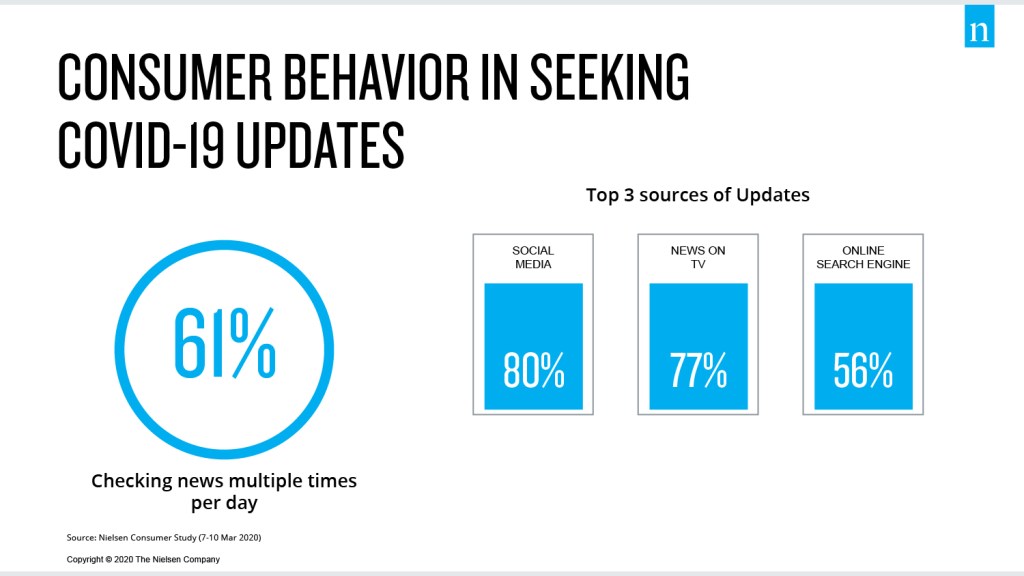
W niedawnym badaniu Nielsena 82% respondentów - głównie z wyższych klas - stwierdziło, że wiedzieli o COVID-19 na początku lutego 2020 roku. Po ogłoszeniu przez prezydenta Joko Widodo pierwszych przypadków COVID-19 2 marca, 61% respondentów sprawdzało wiadomości związane z COVID-19 kilka razy dziennie za pośrednictwem różnych kanałów medialnych.
Badanie wykazało, że media społecznościowe (80%), wiadomości telewizyjne (77%) i wyszukiwarki internetowe (56%) były najczęściej wybieranymi przez konsumentów źródłami informacji na temat COVID-19.
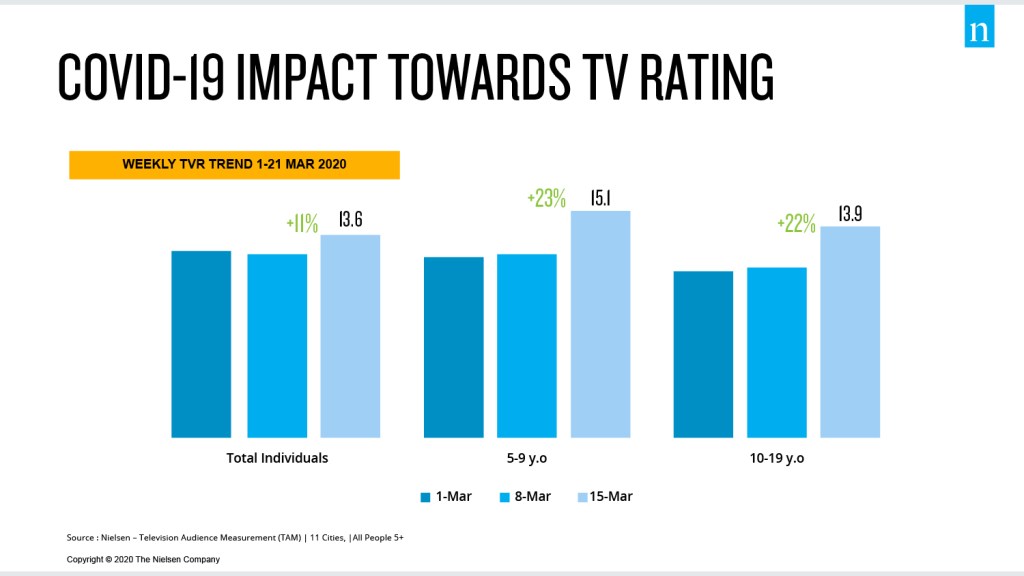
Following the country’s stay-at-home policy to prevent the spread of COVID-19, 30% of respondents planned to shop online more often. It also affected TV viewing, with ratings growing from 2.6% on March 8 to 13.6% on March 15. The highest increase was seen in younger audiences, with ratings increasing 23% for 5-9 year olds increasing and 22% for 15-19 year olds.
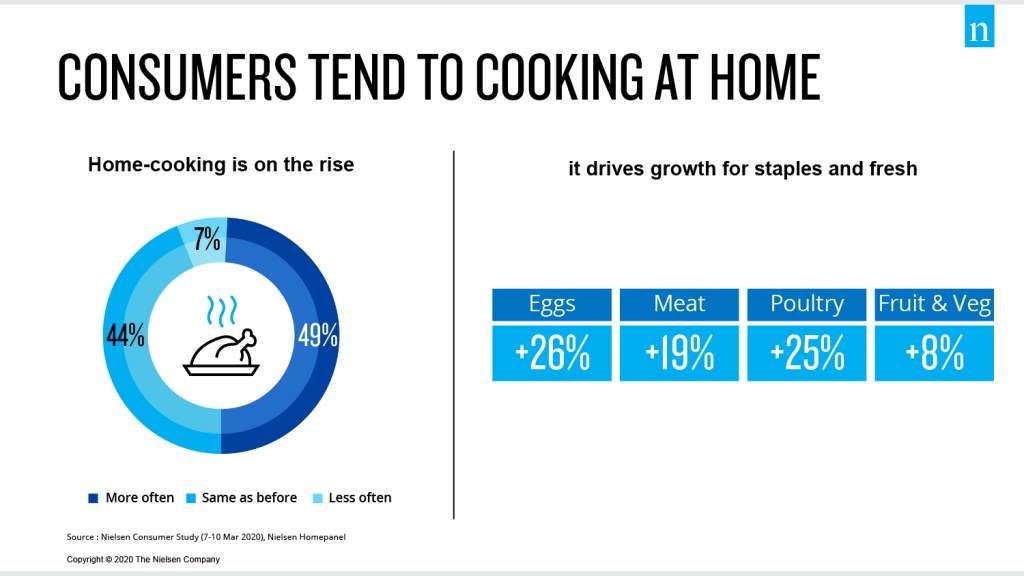
Across other countries in Asia, we’ve seen the rise of the “homebody economy” as consumers stay home due to concerns about the virus and shift their spending to serve this new lifestyle. In Indonesia, 50% of consumers have reduced out-of-home entertainment, and 46% have reduced eating out. On the other hand, 49% of consumers cooked at home more often, and this has driven the sales growth of staples and fresh products, such as eggs (+26), meat (+19%), poultry (+25%) and fruit and vegetables (+8%).
To prepare for stay at home measures, consumers around the world have been purchasing similar products as part of their pantry preparation. In Indonesia, many shoppers turned to Modern Trade outlets for much of their pantry prep, though there were some differences across consumer segments and regions. On the national scale, Upper Class consumers shopped more at Hypermarkets/Supermarkets than other consumers. Meanwhile, the trend in JakartaGreater is different, where not only Upper Class, but also Middle and Lower Class consumers shopped more at Hypermarkets/Supermarkets.
In addition to stocking up on pantry goods, health and hygiene have become major concerns for consumers amid the current pandemic. And early studies from Chiny show that health will likely continue to be key concerns as infection rates slow and Indonesia enters a new normal. As many as 44% of respondents claimed that they consume health products more often, and 37% who claimed they consume vitamin drinks more often. Industry players for vitamins and pharmacies seized this opportunity and increased their advertising budgets on TV. Vitamin ad spending increased 14% and reached more than IDR90 Billion, while cough medicine ad spending increased 22%, reaching more than IDR30 Billion.
Dla sprzedawców detalicznych obecna sytuacja może stanowić okazję do kontynuowania działalności, a jednocześnie pomóc w zaspokojeniu potrzeb konsumentów w okresie pozostawania w domu. Supermarkety i hipermarkety mają taką możliwość, zwłaszcza ze strony konsumentów z wyższego i średniego SES, którzy mogą szukać wystarczających zapasów i większej liczby alternatywnych produktów w przypadku braku zwykle preferowanych produktów. W międzyczasie minimarket jest preferowanym wyborem we wszystkich SES ze względu na jego bliskość, co pomaga konsumentom uniknąć dużych tłumów i korzystania z transportu publicznego.
Najważniejszą rzeczą, jaką muszą zrobić sprzedawcy detaliczni, jest monitorowanie alokacji zapasów, ponieważ istnieje ryzyko dla linii dystrybucji. Usługi dostawcze z prostymi metodami zamawiania i łatwym dostępem do konsumentów oraz wykorzystanie komunikacji wielokanałowej, w tym telewizji, Internetu, mediów społecznościowych, komunikatorów i aplikacji do czatowania, pomogą firmom zaspokoić potrzeby konsumentów.
Read in Bahasa Indonesia.
Metodologia
Źródła obejmują Nielsen Consumer Study (7-10 marca 2020 r.), Nielsen Scantrack (styczeń-marzec 2020 r. vs styczeń-marzec 2019 r.), Nielsen Home Panel (styczeń-marzec 2020 r. vs styczeń-marzec 2019 r.), Nielsen TV Audience Measurement (1-18 marca 2020 r.), Nielsen Ad Intelligence (1-18 marca 2020 r.).
Learn more from our complete COVID-19 coverage.


