The novel coronavirus (COVID-19) pandemic that has hit across the globe has caused significant changes in people’s lives. A Nielsen investigation has identified six thresholds that track trends in consumer behavior around the world as markets have been impacted by the virus. While Indonesia was one of the last countries in Asia to confirm a COVID-19 infection at the beginning of March, cases have since climbed, and Indonesia has joined many other markets around the world at level 5, Restricted Living. Due to concerns around the virus and living restrictions, Indonesians are adapting their media and consumer habits.
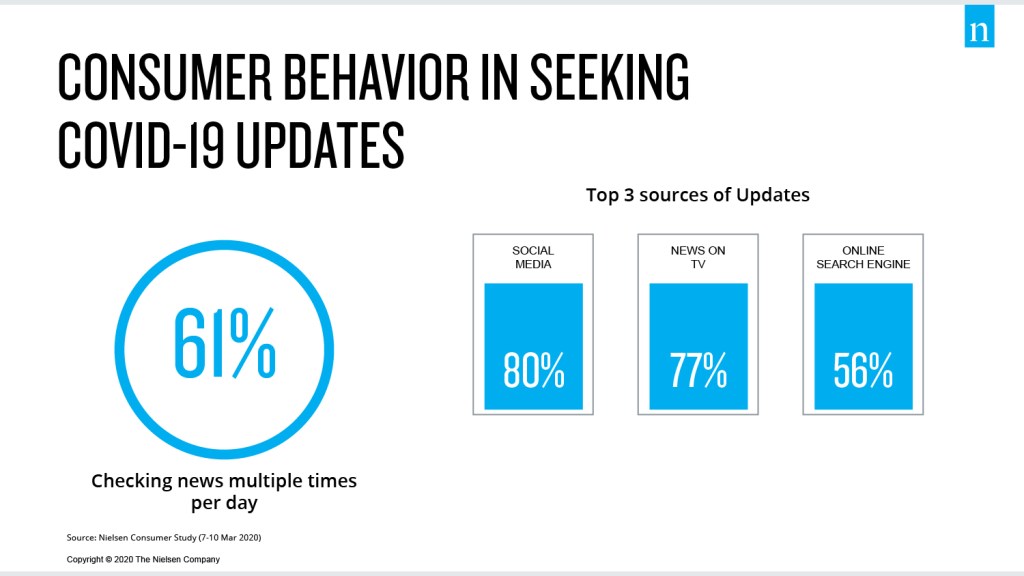
최근 닐슨의 조사에 따르면 응답자의 82%(대부분 상류층)가 2020년 2월 초에 코로나19에 대해 알고 있었다고 답했습니다. 3월 2일 조코 위도도 대통령의 첫 코로나19 확진자 발표 이후 응답자의 61%는 다양한 미디어 채널을 통해 매일 여러 번 코로나19 관련 뉴스를 확인했습니다.
조사에 따르면 소비자들이 코로나19 관련 소식을 접할 때 가장 많이 이용하는 정보 출처는 소셜 미디어(80%), TV 뉴스(77%), 온라인 검색 엔진(56%)인 것으로 나타났습니다.
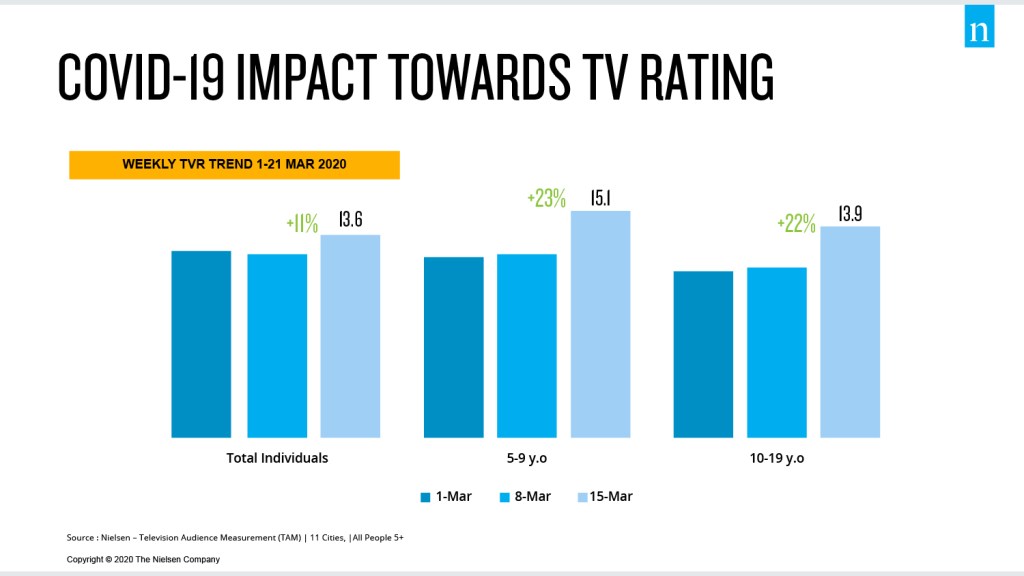
Following the country’s stay-at-home policy to prevent the spread of COVID-19, 30% of respondents planned to shop online more often. It also affected TV viewing, with ratings growing from 2.6% on March 8 to 13.6% on March 15. The highest increase was seen in younger audiences, with ratings increasing 23% for 5-9 year olds increasing and 22% for 15-19 year olds.
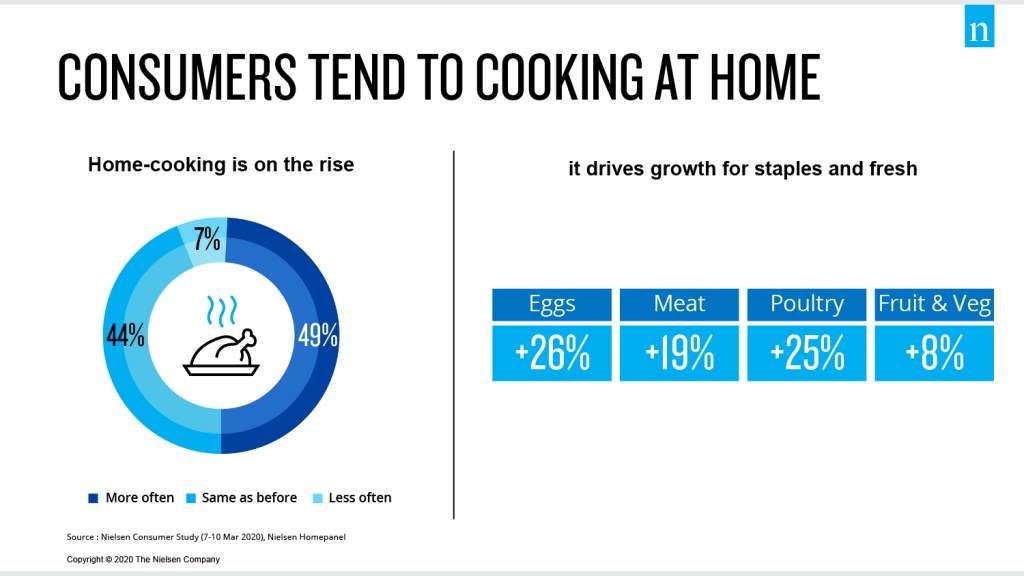
Across other countries in Asia, we’ve seen the rise of the “homebody economy” as consumers stay home due to concerns about the virus and shift their spending to serve this new lifestyle. In Indonesia, 50% of consumers have reduced out-of-home entertainment, and 46% have reduced eating out. On the other hand, 49% of consumers cooked at home more often, and this has driven the sales growth of staples and fresh products, such as eggs (+26), meat (+19%), poultry (+25%) and fruit and vegetables (+8%).
To prepare for stay at home measures, consumers around the world have been purchasing similar products as part of their pantry preparation. In Indonesia, many shoppers turned to Modern Trade outlets for much of their pantry prep, though there were some differences across consumer segments and regions. On the national scale, Upper Class consumers shopped more at Hypermarkets/Supermarkets than other consumers. Meanwhile, the trend in JakartaGreater is different, where not only Upper Class, but also Middle and Lower Class consumers shopped more at Hypermarkets/Supermarkets.
In addition to stocking up on pantry goods, health and hygiene have become major concerns for consumers amid the current pandemic. And early studies from 중국 show that health will likely continue to be key concerns as infection rates slow and Indonesia enters a new normal. As many as 44% of respondents claimed that they consume health products more often, and 37% who claimed they consume vitamin drinks more often. Industry players for vitamins and pharmacies seized this opportunity and increased their advertising budgets on TV. Vitamin ad spending increased 14% and reached more than IDR90 Billion, while cough medicine ad spending increased 22%, reaching more than IDR30 Billion.
소매업체 입장에서는 현재 상황이 비즈니스를 지속하는 동시에 집에 머무는 기간 동안 소비자가 필요로 하는 것을 제공할 수 있는 기회를 만들 수 있습니다. 슈퍼마켓과 대형마트는 특히 평소 선호하는 품목이 없을 때 충분한 재고와 더 많은 대체 상품을 찾는 상위 및 일부 중상위 소비자에게 기회가 될 수 있습니다. 한편, 미니마켓은 대중교통을 이용하지 않고 많은 인파를 피할 수 있는 근접성 때문에 SES 전역에서 선호도가 높습니다.
소매업체가 해야 할 가장 중요한 일은 유통 라인에 위험이 있기 때문에 재고 배분을 모니터링하는 것입니다. 주문 방법이 간단하고 소비자가 쉽게 접근할 수 있는 배송 서비스, TV, 인터넷, 소셜 미디어, 메시징 및 채팅 앱을 포함한 옴니채널 커뮤니케이션 활용은 기업이 소비자의 요구를 충족하는 데 도움이 될 것입니다.
Read in Bahasa Indonesia.
방법론
출처: 닐슨 소비자 연구(2020년 3월 7~10일), 닐슨 스캔트랙(2020년 1월~3월 대 2019년 1월), 닐슨 홈 패널(2020년 1월~3월 대 2019년 1월), 닐슨 TV 시청자 측정(2020년 3월 1~18일), 닐슨 광고 정보(2020년 3월 1~18일)가 있습니다.
Learn more from our complete COVID-19 coverage.


