新型冠状病毒(COVID-19)的出现催生了澳大利亚的 "宅男经济":我们现在更习惯于在家购物、学习、工作和上网娱乐。宅在家里已成为一种新的生活方式,这对我们的饮食方式和饮食内容产生了特别重大的影响。
有了更多的时间待在家里,澳大利亚消费者就有机会反思自己的饮食习惯,寻找有创意、有办法的方法来准备和使用他们的用品,并提高自己的烹饪技能,最终做到不浪费。
Over the months of March and April, we witnessed incredible scenes of shoppers rushing to pack their ‘pandemic pantries’ with enough food staples and essential supplies to last a few months. Strong volume sales for rice, pasta, flour, bread mix and Asian and Indian ingredients signalled a return to home cooking and baking; while a spike in sales for ground coffee and coffee beans revealed that many Australians are craving a barista-style coffee experience at home.
在接下来的几周和几个月里,随着禁售限制开始慢慢解除,品牌商、制造商和零售商需要考虑饮食趋势的 "新常态 "是什么样子,了解不同人群和生命阶段的饮食趋势有何不同,并做出相应的调整和重置。
向澳大利亚不同的食品杂货购买群体进行营销
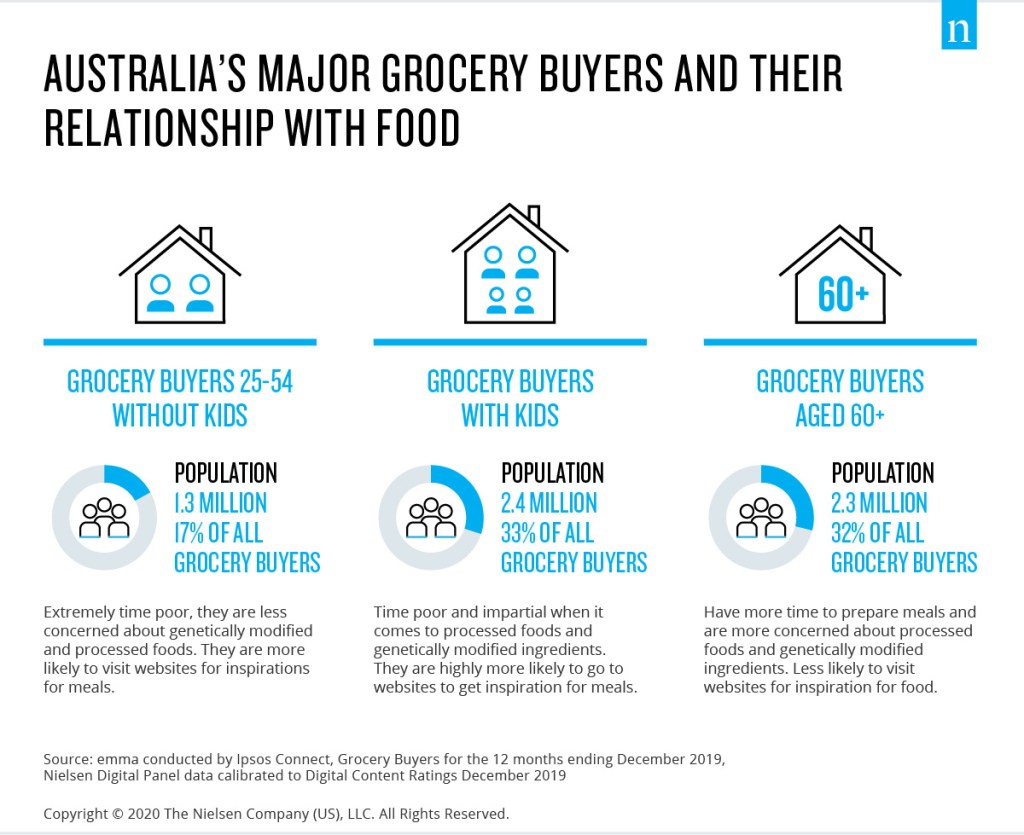
Using data from Nielsen’s Consumer & Media View (CMV), we identified three distinct types of Australian buyer groups. We analysed their eating habits to understand what this means for the immediate and longer-term future as the effects of the pandemic continue to roll out.
25-54 岁无子女的杂货购买者
Traditionally, this group is time-poor when it comes to meal preparation and are 37% more likely to agree that they don’t have time to cook and prepare meals when compared to other grocery buyers. They are 23% more likely to eat on the run and are less likely to be mindful of their diet. This group is less fussy when it comes to ingredients, but more than half (57%) say they either like to or love to cook. They are less likely to be concerned about food that is fattening foods or processed – preferring taste above all else.
营销人员必须考虑到,虽然这一群体喜欢烹饪,但他们过去很少有时间做饭。
With more time at home and no access to cafes and restaurants, brands and retailers have the opportunity to spark a renewed passion for cooking at home with these shoppers with creative recipe ideas that make the most of what is in their pantries.
有 18 岁以下子女的杂货购买者
This group is 19% more likely to feel that they don’t have time to cook and prepare meals when compared to other grocery buyers. They often struggle with balancing the need for fast and affordable meals that are still nutritious and appealing to all members in the household. Grocery buyers with kids are less likely to eat foods with genetically modified ingredients and are more likely to avoid processed foods and buy more fresh and chilled food.
As many Australians continue homeschooling and working from home in the short-term, the availability of convenient meal and snack options will be important. Nielsen Homescan research showed how shoppers have turned to ‘long-lasting’ fruit and vegetable options during lockdown.
On average, grocery buyers with kids spend 30% more per family on groceries each week and are substantially more likely to feel that store’s own brands offer equal quality to well-known brands. In France, retailers have responded to meeting the needs of families by expanding the range of private label organic products they have on offer. Increasing the number of value-options that are healthy and family-friendly has had a positive impact in regions with a higher population of families.
有孩子的家庭会主动从网站、杂志或报纸上获取膳食灵感,为家庭寻找快捷、实惠和营养的膳食。
60 岁以上的杂货购买者
这一群体占澳大利亚食品杂货购买者的近三分之一,与其他食品杂货购买者相比,他们有更多的时间烹饪和准备饭菜。他们也最注重饮食。他们不太可能把烹饪当作一种爱好或兴趣,而是追求简单、基本、有营养且经济实惠的美食。
与其他食品杂货购买者相比,60 岁以上的购物者相信使用最优质食材的几率要高出 13%,购买高纤维产品的几率也要高出 12%;他们更关注发胖食品、防腐剂和转基因成分,并尽可能避免食用加工食品。
As these shoppers are the most susceptible to the effects of COVID-19, they will be seeking greater assurance that the products they buy are free of risk and of the highest quality when it comes to safety standards. It will also be important for this group to understand where the food they are purchasing originates from, with complete transparency from farm to factory, to supply chain and distribution, and details of the measures being taken to assure their safety.
澳大利亚人渴望烹饪创意和灵感
A recent Nielsen Digital Content Ratings report reveals that there was a 71% increase in the amount of time being spent on food and cooking websites during the COVID-19 pandemic. The increases were across all age groups and most profound with the younger audiences aged under 40.
For many Australians, the local supermarket is one of the very few places they have ventured to in the past month and possibly for some time to come. Supermarket in-store magazines have the potential to thrive in this environment. Already, the two major supermarket magazines are by far the most read magazines in Australia and collectively have a total of 6.7 million or 35% of Australian’s reading their publications each month.
There is great potential for marketers to engage and reach each grocery buyer group by creating content related to healthy eating habits and meal preparation, for those who are looking for a delicious and fast recipe for their family. To resonate with consumers, marketers need to reexamine their advertising to make sure that they are addressing consumers’ needs and connecting with them authentically.
方法
关于尼尔森 EMMACMV
Nielsen and The Readership Works (TRW) have a relationship that sees Nielsen’s national Consumer & Media View (CMV) incorporated into emma Cross Platform readership data. This is known as emmaCMV. For over 20 years, Nielsen’s CMV has surveyed consumers across Australia capturing an array of insights that help clients tackle marketing and media challenges. Whether they are involved in the planning, buying or selling of advertising, or responsible for brand strategy, Nielsen CMV insights provide the power to create effective marketing strategies and, ultimately, achieve business and marketing goals. emmaCMV is an enhanced and convenient solution that integrates Nielsen’s CMV into emma to provide readership, attitudinal, lifestyle and product data in one place. This information provides a comprehensive profile of the print consumer and their purchase intentions which supports more actionable analysis and insights.