Pojawienie się nowego koronawirusa (COVID-19) dało początek "gospodarce domowej" w Australii: Jesteśmy teraz bardziej przyzwyczajeni do robienia zakupów, studiowania, pracy i szukania rozrywki online w domu. Pozostawanie w domu stało się nowym sposobem na życie i miało szczególnie znaczący wpływ na to, jak i co jemy.
Mając więcej czasu w domu, australijscy konsumenci mają okazję zastanowić się nad swoimi nawykami żywieniowymi i znaleźć kreatywne i pomysłowe sposoby na przygotowanie i wykorzystanie zapasów, a także doskonalić swoje umiejętności gotowania, aby ostatecznie nic się nie zmarnowało.
Over the months of March and April, we witnessed incredible scenes of shoppers rushing to pack their ‘pandemic pantries’ with enough food staples and essential supplies to last a few months. Strong volume sales for rice, pasta, flour, bread mix and Asian and Indian ingredients signalled a return to home cooking and baking; while a spike in sales for ground coffee and coffee beans revealed that many Australians are craving a barista-style coffee experience at home.
Wraz z powolnym znoszeniem ograniczeń w ciągu najbliższych kilku tygodni i miesięcy, marki, producenci i sprzedawcy detaliczni będą musieli zastanowić się, jak wygląda "nowa normalność" w trendach żywieniowych, zrozumieć, jak różni się ona w zależności od grupy demograficznej i wieku, oraz odpowiednio się dostosować i zresetować.
MARKETING SKIEROWANY DO RÓŻNYCH GRUP NABYWCÓW ARTYKUŁÓW SPOŻYWCZYCH W AUSTRALII
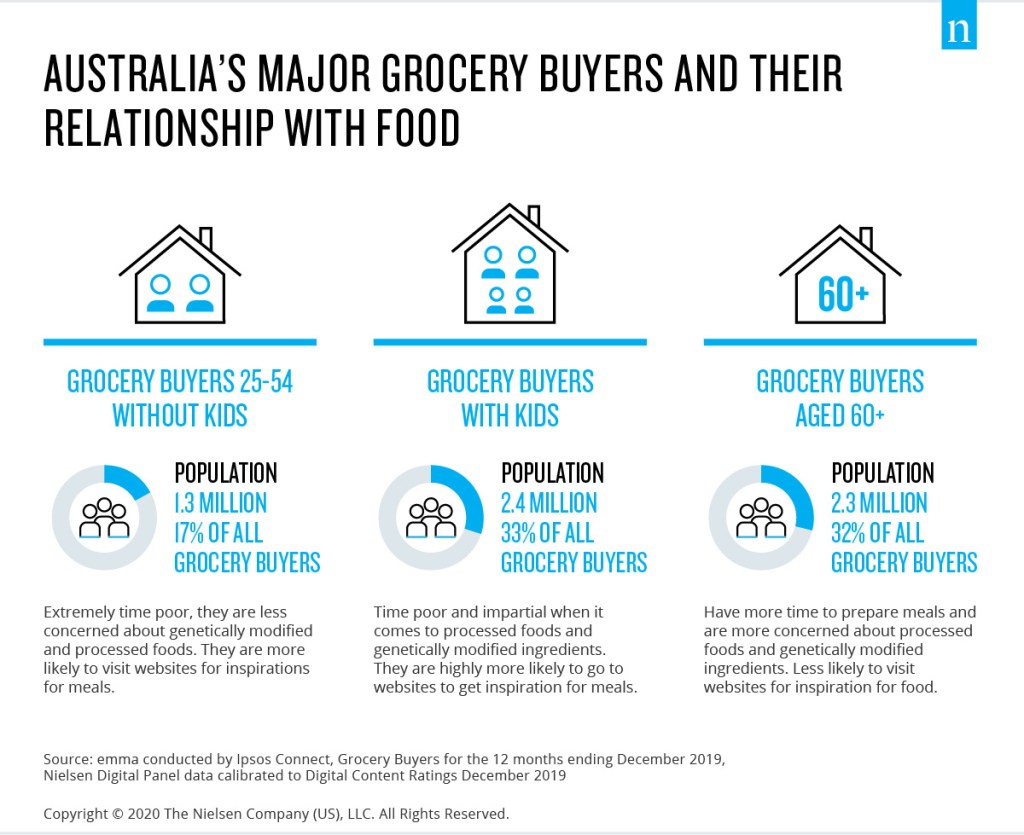
Using data from Nielsen’s Consumer & Media View (CMV), we identified three distinct types of Australian buyer groups. We analysed their eating habits to understand what this means for the immediate and longer-term future as the effects of the pandemic continue to roll out.
Kupujący artykuły spożywcze w wieku 25-54 lat bez dzieci
Traditionally, this group is time-poor when it comes to meal preparation and are 37% more likely to agree that they don’t have time to cook and prepare meals when compared to other grocery buyers. They are 23% more likely to eat on the run and are less likely to be mindful of their diet. This group is less fussy when it comes to ingredients, but more than half (57%) say they either like to or love to cook. They are less likely to be concerned about food that is fattening foods or processed – preferring taste above all else.
Ważne jest, aby marketerzy wzięli pod uwagę, że chociaż ta grupa uwielbia gotować, w przeszłości miała na to niewiele czasu.
With more time at home and no access to cafes and restaurants, brands and retailers have the opportunity to spark a renewed passion for cooking at home with these shoppers with creative recipe ideas that make the most of what is in their pantries.
Kupujący artykuły spożywcze z dziećmi poniżej 18 roku życia
This group is 19% more likely to feel that they don’t have time to cook and prepare meals when compared to other grocery buyers. They often struggle with balancing the need for fast and affordable meals that are still nutritious and appealing to all members in the household. Grocery buyers with kids are less likely to eat foods with genetically modified ingredients and are more likely to avoid processed foods and buy more fresh and chilled food.
As many Australians continue homeschooling and working from home in the short-term, the availability of convenient meal and snack options will be important. Nielsen Homescan research showed how shoppers have turned to ‘long-lasting’ fruit and vegetable options during lockdown.
On average, grocery buyers with kids spend 30% more per family on groceries each week and are substantially more likely to feel that store’s own brands offer equal quality to well-known brands. In France, retailers have responded to meeting the needs of families by expanding the range of private label organic products they have on offer. Increasing the number of value-options that are healthy and family-friendly has had a positive impact in regions with a higher population of families.
Rodziny z dziećmi aktywnie przeglądają strony internetowe, czasopisma lub gazety, aby czerpać inspirację do swoich posiłków i szukać szybkich, niedrogich i pożywnych posiłków dla swojego gospodarstwa domowego.
Kupujący artykuły spożywcze w wieku 60+
Grupa ta, stanowiąca prawie jedną trzecią australijskich klientów sklepów spożywczych, ma więcej czasu na gotowanie i przygotowywanie posiłków niż pozostali klienci. Są oni również najbardziej świadomi tego, co jedzą. Rzadziej postrzegają gotowanie jako hobby lub zainteresowanie i szukają prostych, podstawowych potraw, które są pożywne i ekonomiczne.
W porównaniu z innymi osobami kupującymi artykuły spożywcze, klienci w wieku 60+ są o 13% bardziej skłonni wierzyć w stosowanie najlepszej jakości składników, są również o 12% bardziej skłonni do kupowania produktów o wysokiej zawartości błonnika; są bardziej zaniepokojeni tuczącą żywnością, konserwantami i składnikami modyfikowanymi genetycznie; i unikają przetworzonej żywności, kiedy tylko mogą.
As these shoppers are the most susceptible to the effects of COVID-19, they will be seeking greater assurance that the products they buy are free of risk and of the highest quality when it comes to safety standards. It will also be important for this group to understand where the food they are purchasing originates from, with complete transparency from farm to factory, to supply chain and distribution, and details of the measures being taken to assure their safety.
Australijczycy pragną kulinarnych pomysłów i inspiracji
A recent Nielsen Digital Content Ratings report reveals that there was a 71% increase in the amount of time being spent on food and cooking websites during the COVID-19 pandemic. The increases were across all age groups and most profound with the younger audiences aged under 40.
For many Australians, the local supermarket is one of the very few places they have ventured to in the past month and possibly for some time to come. Supermarket in-store magazines have the potential to thrive in this environment. Already, the two major supermarket magazines are by far the most read magazines in Australia and collectively have a total of 6.7 million or 35% of Australian’s reading their publications each month.
There is great potential for marketers to engage and reach each grocery buyer group by creating content related to healthy eating habits and meal preparation, for those who are looking for a delicious and fast recipe for their family. To resonate with consumers, marketers need to reexamine their advertising to make sure that they are addressing consumers’ needs and connecting with them authentically.
Metodologia
O NIELSEN EMMACMV
Nielsen and The Readership Works (TRW) have a relationship that sees Nielsen’s national Consumer & Media View (CMV) incorporated into emma Cross Platform readership data. This is known as emmaCMV. For over 20 years, Nielsen’s CMV has surveyed consumers across Australia capturing an array of insights that help clients tackle marketing and media challenges. Whether they are involved in the planning, buying or selling of advertising, or responsible for brand strategy, Nielsen CMV insights provide the power to create effective marketing strategies and, ultimately, achieve business and marketing goals. emmaCMV is an enhanced and convenient solution that integrates Nielsen’s CMV into emma to provide readership, attitudinal, lifestyle and product data in one place. This information provides a comprehensive profile of the print consumer and their purchase intentions which supports more actionable analysis and insights.