신종 코로나바이러스(COVID-19)의 발병으로 호주에서는 '재택 경제'가 등장했습니다: 이제 우리는 집에서 온라인으로 쇼핑하고, 공부하고, 일하고, 엔터테인먼트를 찾는 데 더 익숙해졌습니다. 집에 머무는 것이 새로운 생활 방식이 되었으며, 특히 우리가 무엇을 어떻게 먹는지에 큰 영향을 미쳤습니다.
집에 있는 시간이 많아진 호주 소비자들은 자신의 식습관을 되돌아보고, 식재료를 준비하고 사용하는 창의적이고 지혜로운 방법을 찾고, 요리 기술을 연마하여 궁극적으로 낭비되는 것이 없도록 할 수 있는 기회를 갖게 됩니다.
Over the months of March and April, we witnessed incredible scenes of shoppers rushing to pack their ‘pandemic pantries’ with enough food staples and essential supplies to last a few months. Strong volume sales for rice, pasta, flour, bread mix and Asian and Indian ingredients signalled a return to home cooking and baking; while a spike in sales for ground coffee and coffee beans revealed that many Australians are craving a barista-style coffee experience at home.
향후 몇 주, 몇 달에 걸쳐 봉쇄 조치가 서서히 해제되기 시작하면 브랜드, 제조업체, 리테일러는 식생활 트렌드에서 '새로운 정상'이 어떤 모습인지 고려하고, 인구 통계와 생애 단계별로 어떻게 다른지 파악하여 그에 맞게 적응하고 재설정해야 할 것입니다.
호주의 다양한 식료품 구매자 그룹을 대상으로 한 마케팅
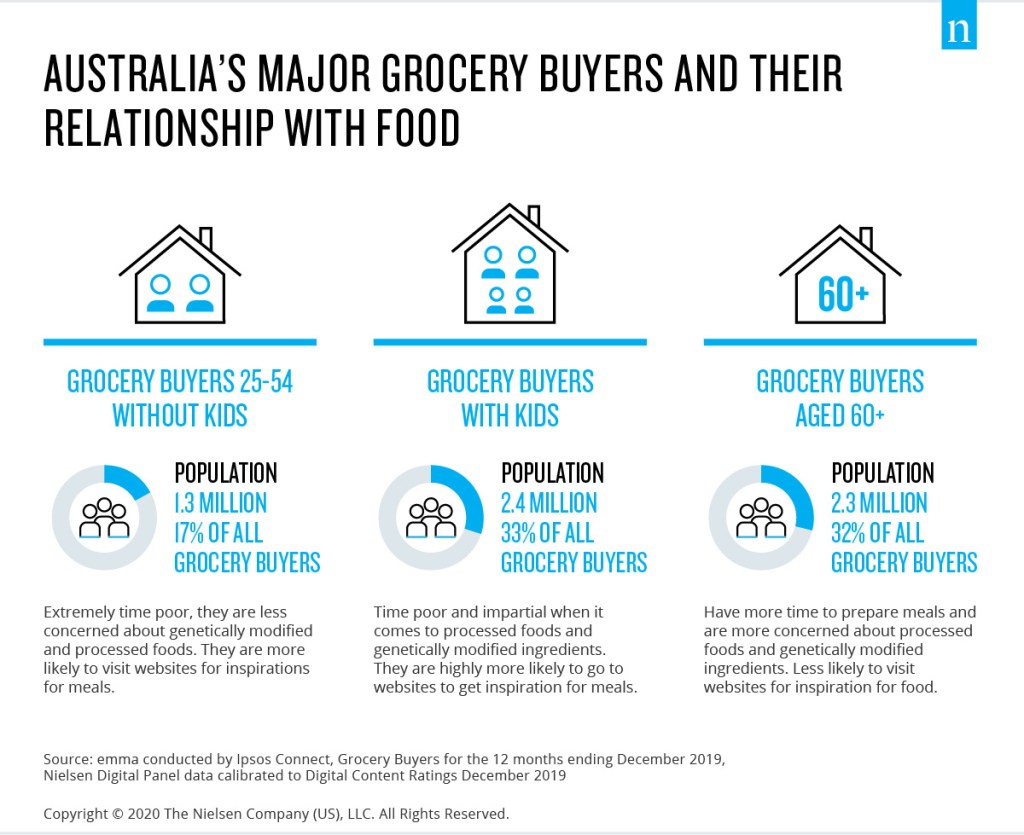
Using data from Nielsen’s Consumer & Media View (CMV), we identified three distinct types of Australian buyer groups. We analysed their eating habits to understand what this means for the immediate and longer-term future as the effects of the pandemic continue to roll out.
자녀가 없는 25~54세 식료품 구매자
Traditionally, this group is time-poor when it comes to meal preparation and are 37% more likely to agree that they don’t have time to cook and prepare meals when compared to other grocery buyers. They are 23% more likely to eat on the run and are less likely to be mindful of their diet. This group is less fussy when it comes to ingredients, but more than half (57%) say they either like to or love to cook. They are less likely to be concerned about food that is fattening foods or processed – preferring taste above all else.
마케터는 이 그룹이 요리를 좋아하지만, 과거에는 요리할 시간이 거의 없었다는 점을 고려하는 것이 중요합니다.
With more time at home and no access to cafes and restaurants, brands and retailers have the opportunity to spark a renewed passion for cooking at home with these shoppers with creative recipe ideas that make the most of what is in their pantries.
18세 미만 자녀를 동반한 식료품 구매자
This group is 19% more likely to feel that they don’t have time to cook and prepare meals when compared to other grocery buyers. They often struggle with balancing the need for fast and affordable meals that are still nutritious and appealing to all members in the household. Grocery buyers with kids are less likely to eat foods with genetically modified ingredients and are more likely to avoid processed foods and buy more fresh and chilled food.
As many Australians continue homeschooling and working from home in the short-term, the availability of convenient meal and snack options will be important. Nielsen Homescan research showed how shoppers have turned to ‘long-lasting’ fruit and vegetable options during lockdown.
On average, grocery buyers with kids spend 30% more per family on groceries each week and are substantially more likely to feel that store’s own brands offer equal quality to well-known brands. In France, retailers have responded to meeting the needs of families by expanding the range of private label organic products they have on offer. Increasing the number of value-options that are healthy and family-friendly has had a positive impact in regions with a higher population of families.
자녀가 있는 가족은 웹사이트, 잡지, 신문 등을 통해 식사에 대한 영감을 얻고 빠르고 저렴하며 영양가 있는 식단을 찾습니다.
60세 이상 식료품 구매자
호주 식료품 구매자의 거의 3분의 1을 차지하는 이 그룹은 다른 식료품 구매자에 비해 요리와 식사 준비에 더 많은 시간을 할애합니다. 또한 이들은 먹는 음식에 대해 가장 신중을 기합니다. 이들은 요리를 취미나 관심사로 여기지 않으며, 영양가 있고 가성비 좋은 간단하고 기본적인 음식을 선호합니다.
다른 식료품 구매자와 비교할 때, 60세 이상의 구매자는 최고 품질의 식재료를 사용한다고 믿을 가능성이 13% 더 높고, 고섬유질 제품을 구매할 가능성이 12% 더 높으며, 살찌는 음식, 방부제 및 유전자 변형 성분에 대해 더 우려하고, 가공식품은 가능한 한 피하는 것으로 나타났습니다.
As these shoppers are the most susceptible to the effects of COVID-19, they will be seeking greater assurance that the products they buy are free of risk and of the highest quality when it comes to safety standards. It will also be important for this group to understand where the food they are purchasing originates from, with complete transparency from farm to factory, to supply chain and distribution, and details of the measures being taken to assure their safety.
요리 아이디어와 영감을 갈망하는 호주인
A recent Nielsen Digital Content Ratings report reveals that there was a 71% increase in the amount of time being spent on food and cooking websites during the COVID-19 pandemic. The increases were across all age groups and most profound with the younger audiences aged under 40.
For many Australians, the local supermarket is one of the very few places they have ventured to in the past month and possibly for some time to come. Supermarket in-store magazines have the potential to thrive in this environment. Already, the two major supermarket magazines are by far the most read magazines in Australia and collectively have a total of 6.7 million or 35% of Australian’s reading their publications each month.
There is great potential for marketers to engage and reach each grocery buyer group by creating content related to healthy eating habits and meal preparation, for those who are looking for a delicious and fast recipe for their family. To resonate with consumers, marketers need to reexamine their advertising to make sure that they are addressing consumers’ needs and connecting with them authentically.
방법론
닐슨 EMACMV 소개
Nielsen and The Readership Works (TRW) have a relationship that sees Nielsen’s national Consumer & Media View (CMV) incorporated into emma Cross Platform readership data. This is known as emmaCMV. For over 20 years, Nielsen’s CMV has surveyed consumers across Australia capturing an array of insights that help clients tackle marketing and media challenges. Whether they are involved in the planning, buying or selling of advertising, or responsible for brand strategy, Nielsen CMV insights provide the power to create effective marketing strategies and, ultimately, achieve business and marketing goals. emmaCMV is an enhanced and convenient solution that integrates Nielsen’s CMV into emma to provide readership, attitudinal, lifestyle and product data in one place. This information provides a comprehensive profile of the print consumer and their purchase intentions which supports more actionable analysis and insights.