The novel coronavirus (COVID-19) pandemic that has hit across the globe has caused significant changes in people’s lives. A Nielsen investigation has identified six thresholds that track trends in consumer behavior around the world as markets have been impacted by the virus. While Indonesia was one of the last countries in Asia to confirm a COVID-19 infection at the beginning of March, cases have since climbed, and Indonesia has joined many other markets around the world at level 5, Restricted Living. Due to concerns around the virus and living restrictions, Indonesians are adapting their media and consumer habits.
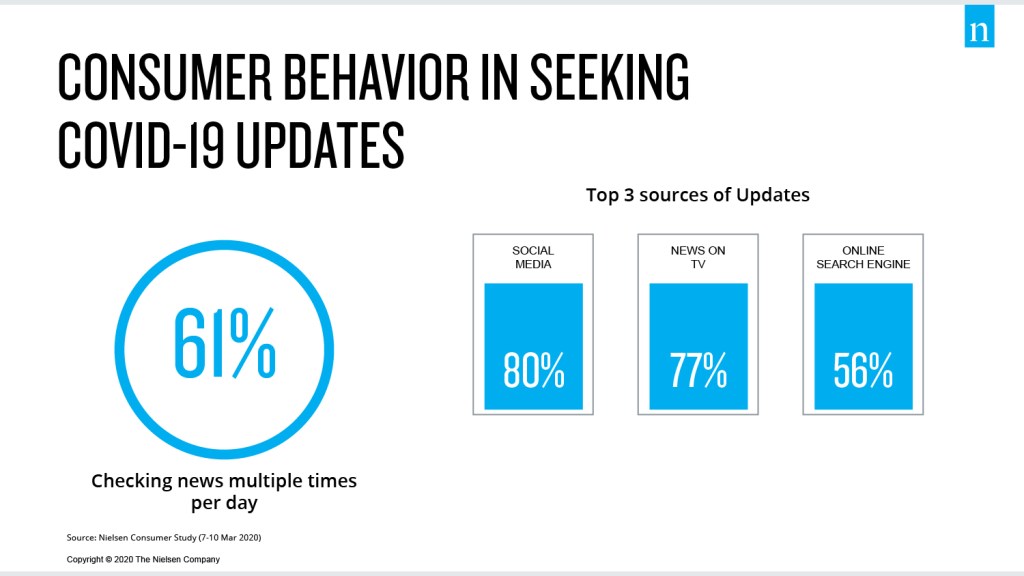
จากการศึกษาของ Nielsen เมื่อไม่นานนี้ ผู้ตอบแบบสอบถามร้อยละ 82 ซึ่งส่วนใหญ่เป็นชนชั้นสูง กล่าวว่าตนทราบเรื่อง COVID-19 ในช่วงต้นเดือนกุมภาพันธ์ 2020 หลังจากที่ประธานาธิบดีโจโก วิโดโด ประกาศเกี่ยวกับกรณี COVID-19 รายแรกเมื่อวันที่ 2 มีนาคม ผู้ตอบแบบสอบถามร้อยละ 61 ตรวจสอบข่าวที่เกี่ยวข้องกับ COVID-19 หลายครั้งต่อวันผ่านช่องทางสื่อต่างๆ
ผลการศึกษาพบว่าโซเชียลมีเดีย (80%) ข่าวทางทีวี (77%) และเครื่องมือค้นหาออนไลน์ (56%) เป็นแหล่งข้อมูลที่ผู้บริโภคเข้าถึงมากที่สุดเพื่อรับข้อมูลอัปเดตเกี่ยวกับ COVID-19
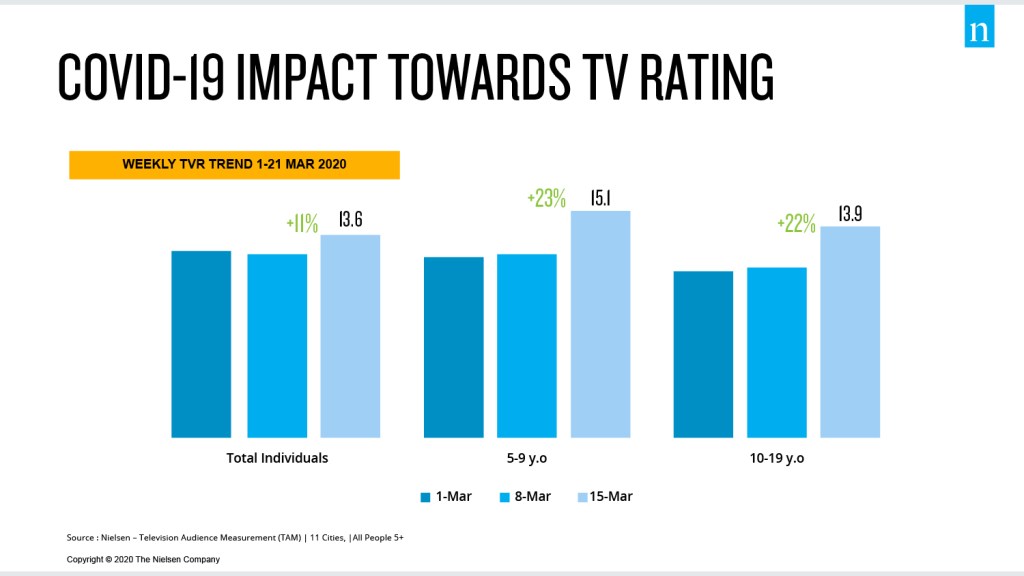
Following the country’s stay-at-home policy to prevent the spread of COVID-19, 30% of respondents planned to shop online more often. It also affected TV viewing, with ratings growing from 2.6% on March 8 to 13.6% on March 15. The highest increase was seen in younger audiences, with ratings increasing 23% for 5-9 year olds increasing and 22% for 15-19 year olds.
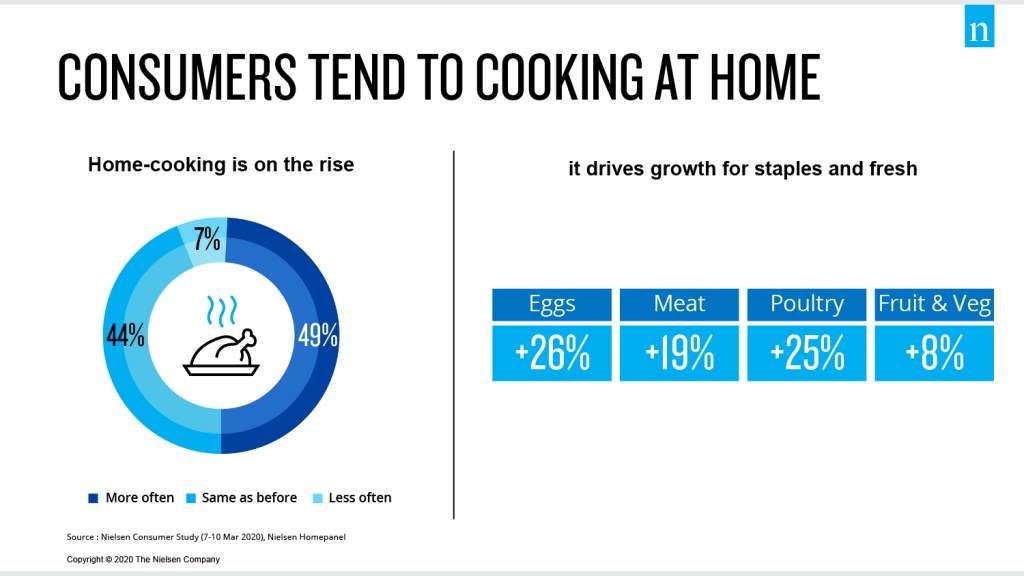
Across other countries in Asia, we’ve seen the rise of the “homebody economy” as consumers stay home due to concerns about the virus and shift their spending to serve this new lifestyle. In Indonesia, 50% of consumers have reduced out-of-home entertainment, and 46% have reduced eating out. On the other hand, 49% of consumers cooked at home more often, and this has driven the sales growth of staples and fresh products, such as eggs (+26), meat (+19%), poultry (+25%) and fruit and vegetables (+8%).
To prepare for stay at home measures, consumers around the world have been purchasing similar products as part of their pantry preparation. In Indonesia, many shoppers turned to Modern Trade outlets for much of their pantry prep, though there were some differences across consumer segments and regions. On the national scale, Upper Class consumers shopped more at Hypermarkets/Supermarkets than other consumers. Meanwhile, the trend in JakartaGreater is different, where not only Upper Class, but also Middle and Lower Class consumers shopped more at Hypermarkets/Supermarkets.
In addition to stocking up on pantry goods, health and hygiene have become major concerns for consumers amid the current pandemic. And early studies from จีน show that health will likely continue to be key concerns as infection rates slow and Indonesia enters a new normal. As many as 44% of respondents claimed that they consume health products more often, and 37% who claimed they consume vitamin drinks more often. Industry players for vitamins and pharmacies seized this opportunity and increased their advertising budgets on TV. Vitamin ad spending increased 14% and reached more than IDR90 Billion, while cough medicine ad spending increased 22%, reaching more than IDR30 Billion.
สำหรับผู้ค้าปลีก สถานการณ์ปัจจุบันอาจเป็นโอกาสให้ธุรกิจดำเนินต่อไปได้ และในขณะเดียวกันก็ช่วยตอบสนองความต้องการของผู้บริโภคในช่วงที่ต้องอยู่บ้าน ซูเปอร์มาร์เก็ตและไฮเปอร์มาร์เก็ตมีโอกาส โดยเฉพาะจากผู้บริโภคใน SES ตอนบนและตอนกลางบางส่วน ซึ่งอาจมองหาสต็อกสินค้าที่เพียงพอและทางเลือกผลิตภัณฑ์เพิ่มเติมในกรณีที่ไม่มีสินค้าที่ตนชื่นชอบตามปกติ ในขณะเดียวกัน มินิมาร์เก็ตเป็นตัวเลือกที่ต้องการใน SES เนื่องจากอยู่ใกล้ๆ ซึ่งช่วยให้ผู้บริโภคหลีกเลี่ยงฝูงชนจำนวนมากและไม่ต้องใช้บริการขนส่งสาธารณะ
สิ่งที่สำคัญที่สุดที่ผู้ค้าปลีกจำเป็นต้องทำคือการตรวจสอบการจัดสรรสต็อกสินค้า เนื่องจากมีความเสี่ยงต่อสายการจัดจำหน่าย บริการจัดส่งที่มีวิธีการสั่งซื้อที่ง่ายดายและเข้าถึงผู้บริโภคได้ง่าย รวมถึงการใช้การสื่อสารแบบ Omnichannel เช่น โทรทัศน์ อินเทอร์เน็ต โซเชียลมีเดีย แอพส่งข้อความและแชท จะช่วยให้ธุรกิจสามารถตอบสนองความต้องการของผู้บริโภคได้
Read in Bahasa Indonesia.
วิธีการ
แหล่งที่มา ได้แก่ Nielsen Consumer Study (7-10 มีนาคม 2020), Nielsen Scantrack (ม.ค.-มี.ค. 2020 เทียบกับ ม.ค.-มี.ค. 2019), Nielsen Home Panel (ม.ค.-มี.ค. 2020 เทียบกับ ม.ค.-มี.ค. 2019), Nielsen TV Audience Measurement (1-18 มีนาคม 2020), Nielsen Ad Intelligence (1-18 มีนาคม 2020)
Learn more from our complete COVID-19 coverage.


