Sports, unlike all other genres, have the power to attract large, consistent TV viewership—and on set schedules. You’d have to have been living under a rock this past year to have not been exposed to the whirlwind NFL season, which culminated in record viewership for Super Bowl LVII. Regardless of the appeal, however, the immense competition for sports rights amid an increasingly fragmented media landscape makes it challenging—and frustrating—for fans to find the games they’re looking for.
Anche se non tutti gli editori possono permettersi di fare offerte per i diritti sportivi, il campo delle destinazioni dei contenuti è molto più ampio di quanto non fosse solo quattro anni fa e i diritti sportivi si stanno dirigendo costantemente verso i servizi di streaming, comprese alcune partite di alto profilo dei playoff della NFL.
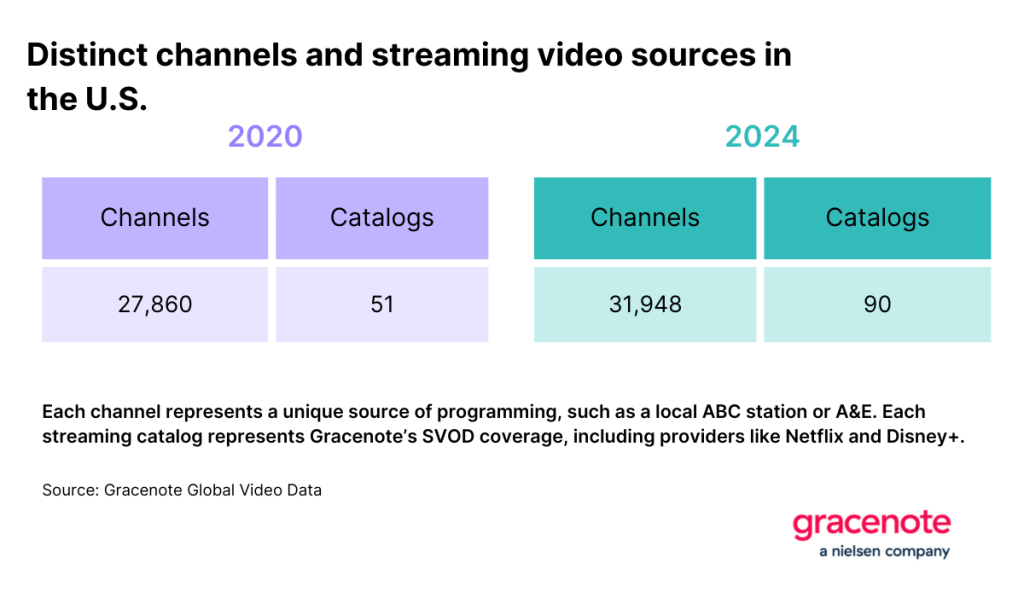
And at the same time, some publishers that once expressed little interest in live sports have changed position and are now staking claim to what remains the most watched content on TV. Netflix, for example, has hosted two live sports events since November, ending an extensive period of previously abstaining from entering the space.
Not every event, however, has the notoriety of the Super Bowl, Thursday Night Football and Netflix’s recent Netflix Slam tournament—an important consideration as the new MLB season kicks off, which features 30 teams that each play 162 games. Die-hard fans of the New York Yankees, for example, will need access to three traditional TV networks (YES Network, ESPN, FOX) and three streaming services (Apple TV+, Amazon Prime Video, MLB TV) if they want to catch all of the season’s on-screen action. On the west coast, fans of the Los Angeles Dodgers have even more to navigate, as their 2024 season will be televised across ABC, CBS, ESPN, FOX, FOX Sports 1, SportsNet LA and Apple TV+.
La scorsa stagione il pubblico televisivo ha guardato quasi 330 miliardi di minuti di partite della MLB.
And outside of major markets like New York, Boston and Philadelphia that can sustain regional sports networks (RSNs) because they have major teams across the NFL, MLB, NBA and NHL, teams and leagues in smaller markets have started striking over-the-air broadcast rights deals with local TV stations while simultaneously offering games direct-to-consumers via streaming apps.
Il punto cruciale di questo mercato estremamente frammentato è che gli sport dal vivo attirano un pubblico enorme, ma solo se il pubblico riesce a trovare le partite. Una recente ricerca sul web, ad esempio, ha rilevato che una recente partita di NHL tra gli Arizona Coyotes e i Washington Capitals era in onda su ESPN+, ma i risultati si sono rivelati errati: un'esperienza frustrante per chi, al di fuori dei mercati locali, voleva assistere all'incontro.
Questo non è un esempio unico, né sarà l'ultimo. La proliferazione dei servizi e la spinta alla monetizzazione con contenuti di alto profilo suggeriscono che il futuro sarà ancora più frammentato.
When Nielsen launched The Gauge, for example, streaming accounted for 26% of our total time with TV, and only five services had enough viewership to warrant being independently reported. Two of the services also didn’t include advertising. In January 2024, by contrast, streaming accounted for 36% of TV usage and 11 services are independently reported (and all either include ads or have ad-supported subscription tiers). And what’s more, four have exclusive rights to select sporting events, as do ESPN+ and Apple TV+.
A un livello molto alto, una singola stagione dei cinque principali campionati sportivi degli Stati Uniti comprende migliaia di partite. La MLB, ad esempio, ne conta quasi 2.500 in una sola stagione. Storicamente, il pubblico era in grado di trovare gli elenchi completi delle partite nella Guida TV settimanale, ma oggi nemmeno Internet è in grado di tenere il passo con le informazioni sui programmi sportivi in diretta. D'altra parte, gli editori si concentrano in genere sulla fornitura di informazioni solo per le gare che ospitano.
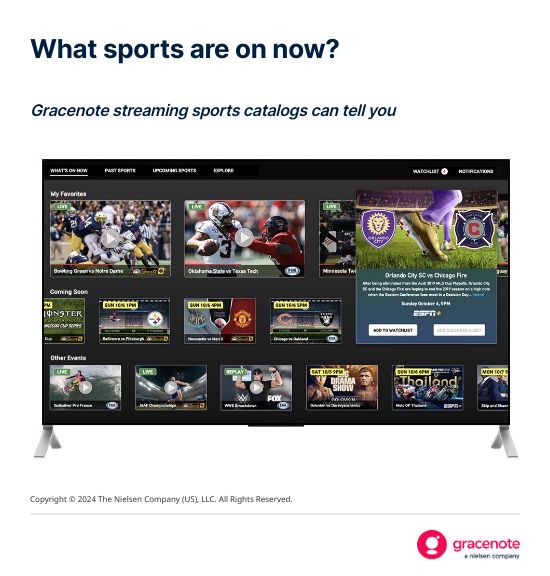
È qui che i produttori di elettronica di consumo (OEM), gli MVPD e i fornitori di servizi digitali possono assumere un ruolo guida e, in ultima analisi, vincere con il pubblico e i detentori dei diritti. Con una chiara comprensione del potere degli sport dal vivo, che rimangono il principale motore di audience, queste organizzazioni possono fornire informazioni sugli sport dal vivo e sui contenuti correlati attraverso le piattaforme over-the-top, offrendo al pubblico informazioni complete e in tempo reale per un panorama mediatico orientato allo streaming.
A version of this article originally appeared on sportsbusinessjournal.com.
Fonte
1Services are independently reported once usage represents at least 1% of TV usage.