Sports, unlike all other genres, have the power to attract large, consistent TV viewership—and on set schedules. You’d have to have been living under a rock this past year to have not been exposed to the whirlwind NFL season, which culminated in record viewership for Super Bowl LVII. Regardless of the appeal, however, the immense competition for sports rights amid an increasingly fragmented media landscape makes it challenging—and frustrating—for fans to find the games they’re looking for.
모든 퍼블리셔가 스포츠 판권에 입찰할 여력이 있는 것은 아니지만, 콘텐츠 대상 분야는 불과 4년 전보다 훨씬 더 광범위해졌으며 일부 유명 NFL 플레이오프 경기를 포함한 스포츠 판권은 꾸준히 스트리밍 서비스로 향하고 있습니다.
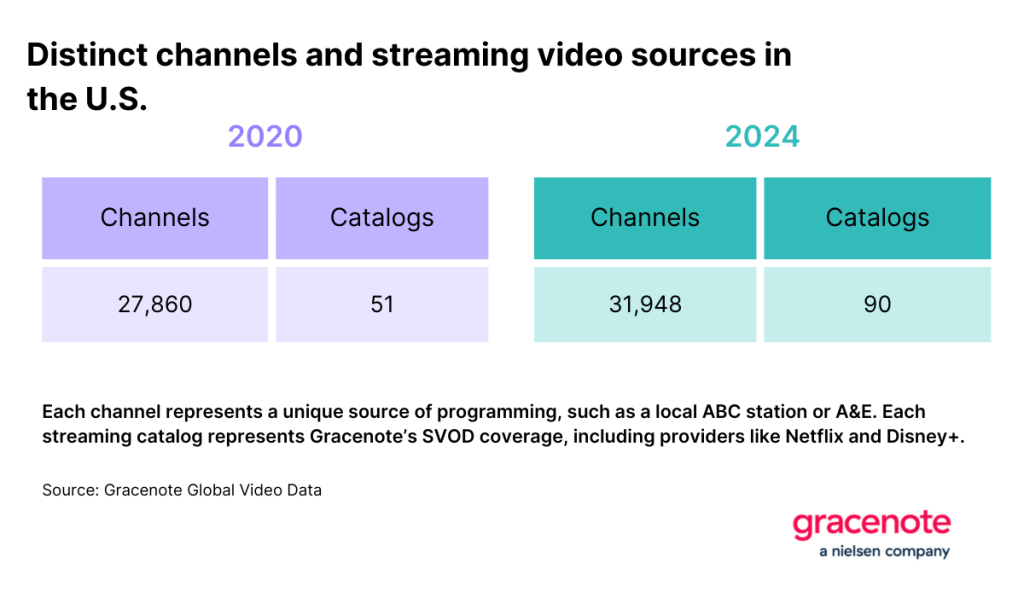
And at the same time, some publishers that once expressed little interest in live sports have changed position and are now staking claim to what remains the most watched content on TV. Netflix, for example, has hosted two live sports events since November, ending an extensive period of previously abstaining from entering the space.
Not every event, however, has the notoriety of the Super Bowl, Thursday Night Football and Netflix’s recent Netflix Slam tournament—an important consideration as the new MLB season kicks off, which features 30 teams that each play 162 games. Die-hard fans of the New York Yankees, for example, will need access to three traditional TV networks (YES Network, ESPN, FOX) and three streaming services (Apple TV+, Amazon Prime Video, MLB TV) if they want to catch all of the season’s on-screen action. On the west coast, fans of the Los Angeles Dodgers have even more to navigate, as their 2024 season will be televised across ABC, CBS, ESPN, FOX, FOX Sports 1, SportsNet LA and Apple TV+.
지난 시즌 TV 시청자들은 약 3,300억 분에 달하는 MLB 경기 장면을 시청했습니다.
And outside of major markets like New York, Boston and Philadelphia that can sustain regional sports networks (RSNs) because they have major teams across the NFL, MLB, NBA and NHL, teams and leagues in smaller markets have started striking over-the-air broadcast rights deals with local TV stations while simultaneously offering games direct-to-consumers via streaming apps.
이처럼 극도로 세분화된 시장에서 라이브 스포츠는 시청자가 경기를 찾을 수 있어야만 많은 시청자를 확보할 수 있습니다. 예를 들어, 최근 웹 검색에서 애리조나 코요테스와 워싱턴 캐피털스 간의 NHL 경기가 ESPN+에서 중계된다고 했지만 결과가 잘못된 것으로 판명되어 해당 경기를 시청하려는 현지 시장 외의 사람들에게 실망스러운 경험을 선사했습니다.
이러한 사례는 어제오늘의 일이 아니며, 앞으로도 계속될 것입니다. 서비스의 확산과 유명 콘텐츠를 통한 수익화 추진은 미래가 더욱 세분화될 것임을 시사합니다.
When Nielsen launched The Gauge, for example, streaming accounted for 26% of our total time with TV, and only five services had enough viewership to warrant being independently reported. Two of the services also didn’t include advertising. In January 2024, by contrast, streaming accounted for 36% of TV usage and 11 services are independently reported (and all either include ads or have ad-supported subscription tiers). And what’s more, four have exclusive rights to select sporting events, as do ESPN+ and Apple TV+.
미국 5대 메이저 스포츠 리그의 한 시즌에는 수천 개의 경기가 치러집니다. 예를 들어, 메이저리그는 한 시즌에 거의 2,500개의 경기가 있습니다. 과거에는 시청자가 주간 TV 가이드에서 전체 경기 목록을 찾을 수 있었지만, 오늘날에는 인터넷조차도 실시간 스포츠 일정에 대한 프로그램 정보를 따라잡을 수 없습니다. 반대로 퍼블리셔는 일반적으로 자신이 주최하는 대회에 대한 정보 제공에만 집중하고 있습니다.
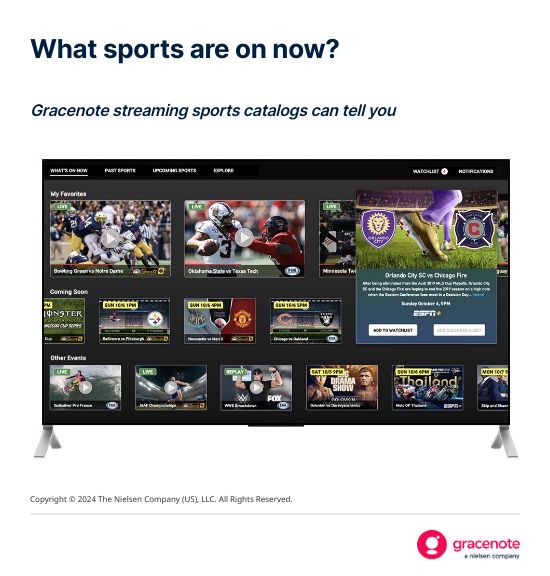
소비자 가전 제조업체(OEM), MVPD, 디지털 서비스 제공업체가 주도권을 잡고 궁극적으로 시청자 및 권리 보유자와 함께 승리할 수 있는 곳입니다. 시청자를 끌어들이는 가장 큰 동력인 라이브 스포츠의 힘을 명확히 이해하고 있는 이러한 조직은 오버더톱 플랫폼에서 라이브 스포츠 및 관련 콘텐츠에 대한 정보를 전달하여 스트리밍 우선 미디어 환경에 맞는 종합적인 실시간 정보를 시청자에게 제공할 수 있습니다.
A version of this article originally appeared on sportsbusinessjournal.com.
출처
1Services are independently reported once usage represents at least 1% of TV usage.