Con l'avvicinarsi della Giornata internazionale delle persone con disabilità, che si celebra il 3 dicembre, i marchi, gli inserzionisti e le piattaforme mediatiche si trovano ad affrontare un panorama mutevole nel marketing diversificato. Con le mutevoli dinamiche politiche, economiche e sociali, la comprensione del pubblico - comprese le persone con disabilità - richiede precisione e sfumature. Ciò è particolarmente vero quando si considerano le identità intersezionali di molti individui. Esaminiamo le aspettative, le esigenze e il potenziale economico di questo gruppo spesso trascurato, evidenziando l'opportunità strategica per i marchi di adottare un'autentica inclusione intersezionale.
Navigare in un nuovo paesaggio nel marketing diversificato
Le recenti elezioni americane hanno messo in evidenza una verità sempre più diffusa: per entrare in contatto con il pubblico è necessario andare oltre i dati demografici di superficie per comprendere identità complesse e intersezionali. Le persone con disabilità non solo portano prospettive uniche, ma si intersecano anche con altri gruppi, tra cui razze, generi, orientamenti sessuali e contesti socioeconomici diversi. Per esempio, un giovane latino con una disabilità fisica può avere preferenze mediatiche e comportamenti d'acquisto diversi rispetto a un veterano bianco più anziano con una disabilità uditiva.
I marchi che possono sfruttare dati precisi e multidimensionali per connettersi con queste diverse esperienze sono ben posizionati per costruire relazioni significative.
La rappresentanza è più importante che mai
Gaps in disability representation remain stark, especially when intersectionality is considered. Overall, disabled individuals make up 26% of the U.S. population, but represented only 5.9% of the time on TV screens in 2024—down from 6.8%1 last year. This disparity is even more pronounced with intersectional identities who belong to multiple marginalized groups; for example, people of color with any disability is represented 1.6% on TV in Q1 – Q3 20242.
Rappresentazione televisiva e quota di popolazione
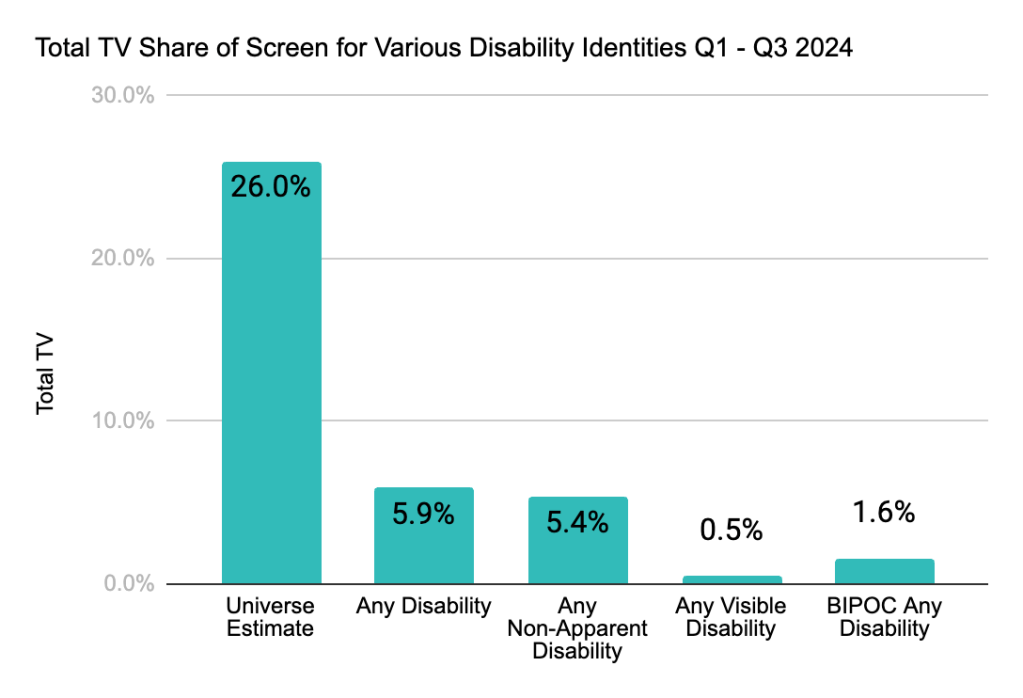
Source: Gracenote Inclusion Analytics, Q1 – Q3 2024
Copyright ©2024 The Nielsen Company (US), LLC. Tutti i diritti riservati.
Richiesta di autenticità e rilevanza
Authenticity has become non-negotiable. Among people with disabilities, 52%3 wish for more representation of their identity group on television, with 50% feeling their identity is often misrepresented. This sentiment is even stronger among those who hold multiple marginalized identities—for example, 60% of Black women with disabilities report feeling misrepresented.
This is even more pronounced for people with mental health disabilities, where 54% report feeling misrepresented. Audiences are more likely to disengage from brands that fall short—61% say they would stop purchasing from brands that don’t respect their community. Misrepresentation doesn’t just alienate viewers; it can have tangible economic consequences for brands.
Le persone con disabilità smetteranno di acquistare dai marchi che non li valorizzano
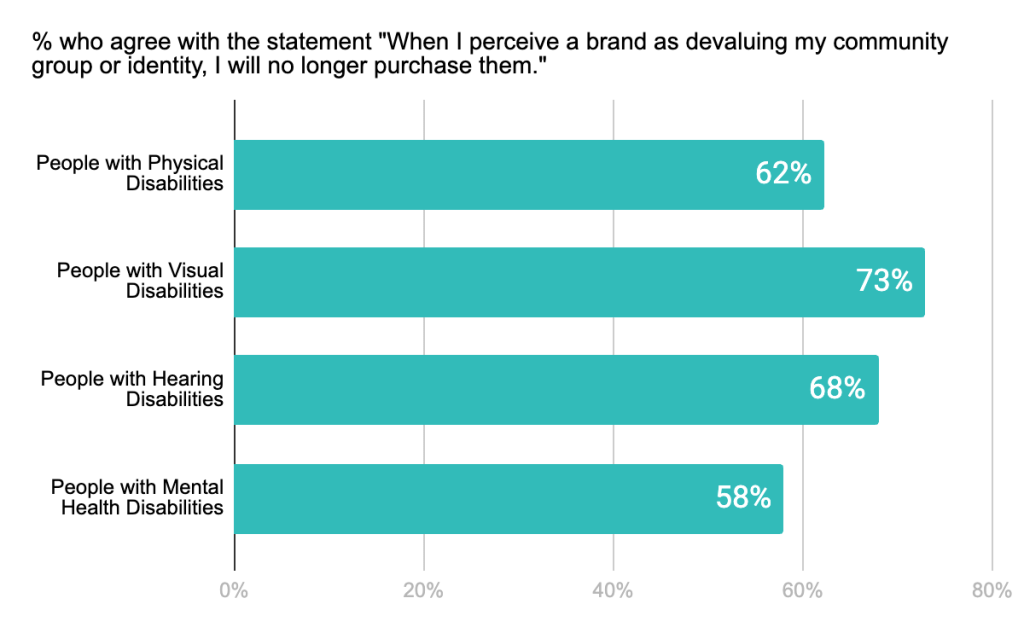
Fonte: Sondaggio 2023 sugli atteggiamenti in materia di rappresentanza
Copyright ©2024 The Nielsen Company (US), LLC. Tutti i diritti riservati.
Una potente opportunità economica
The U.S. disability community wields an estimated $490 billion in annual disposable income, influencing an extended market worth more than $1 trillion when considering friends and family4. Moreover, 63% of disabled individuals will consider seeking a new brand because they feel their current brand does not align with the causes they care about.4
People with disabilities are discerning consumers, with 52% expecting brands to support causes aligned with their community4. Brands that prioritize inclusion can tap into this significant market potential, leading to increased market share and customer loyalty. By backing relevant social initiatives and developing accessible, inclusive products and services, brands can see substantial returns on investment.
Connettersi con il pubblico dove è più importante
Today’s audiences expect brands to meet them where they are. For disabled people, 70% report experiencing ads that don’t feel relevant to them, and 37% are likely to ignore ads that don’t reflect their identity group5. Irrelevant content drives disengagement. Brands can create ads that align with the real experiences and values of people with disabilities, considering the intersections of race, gender identity, age, and socioeconomic status.
“It is important to provide authentic representation of the communities they serve,” said Lauren Appelbaum, SVP of Entertainment & Media of Disability Belongs, one of Nielsen’s partners in disability inclusive marketing. “Just as important, brands can and should include disabled people in their ad campaigns even when the ad is not about disability.”
In a media landscape where digital is growing, local television remains a trusted choice for people with disabilities. 33% select it as their primary news source, and 62% place it among their top three.4 This preference is even more pronounced in certain subgroups—such as older adults and rural communities—highlighting the importance of understanding the nuanced media consumption habits within the disability community.
Nielsen’s local data allows brands to tailor their messaging to specific markets, ensuring relevance and resonance. By identifying the preferred channels and content of different segments within the disability community, brands can optimize their media planning for maximum impact.
L'accessibilità come beneficio universale: l'effetto del taglio dei marciapiedi in azione
While accessibility features are essential for disabled people, their benefits extend to all viewers. Just as curb cuts designed for wheelchair users benefit parents with strollers, cyclists, and delivery workers, accessibility features in media offer advantages for everyone. A prime example is closed captioning. While crucial for viewers who are deaf and hard of hearing, a surprising 58% of all people use subtitles. Of these, 38% find it improves their comprehension of the content, and 26% use it to enjoy content in different languages3. When you approach accessibility features from a universal perspective, it enhances the viewing experience for all.
Approfondimenti specifici per il settore e strategie attuabili
Per ottenere un maggiore coinvolgimento delle persone con disabilità, i marchi dovrebbero considerare le seguenti strategie:
- Invest in authentic representation: Collaborate with creators and talent from the disability community to ensure accurate and respectful portrayal.
- Leverage intersectional data: Use Nielsen’s multidimensional analytics to understand the overlapping identities of your target audience.
- Develop inclusive products and services: Prioritize accessibility in product design and service delivery to meet the needs of all consumers.
- Support relevant causes: Align with social initiatives and organizations that advocate for the disability community, reinforcing brand commitment to inclusion.
- Optimize media planning: Use data-driven insights to choose the right channels and times to reach your audience effectively.
"Integrando in modo ponderato l'accessibilità e la rappresentanza nei loro piani aziendali, i marchi inclusivi della disabilità non solo creano un ambiente più inclusivo, ma favoriscono anche relazioni più forti con un pubblico eterogeneo", ha dichiarato Ariel Simms, presidente e amministratore delegato di Disability Belongs. "I marchi che danno priorità all'inclusione della disabilità fin dall'inizio sono in grado di raccogliere i frutti di un mercato più equo".
By implementing these strategies, brands can enhance their media planning and advertising effectiveness, leading to better engagement and a stronger return on investment. As diverse marketing needs evolve, understanding the unique dimensions of disability representation isn’t just ethical, it’s essential for brands to stay relevant and competitive. The intersection of identity, relevance, and buying power presents a compelling opportunity for brands to create truly inclusive, meaningful connections with a powerful and loyal audience. Nielsen can provide the insights needed to navigate this evolving landscape and drive success through authentic inclusivity.
Fonti:
1 Gracenote Inclusion Analytics Q1-Q3 2024 and 2023
2 Gracenote Inclusion Analytics Q1-Q3 2024
3 2023 Attitudes on representation survey
4 American Institutes for Research report 2018
5 2024 Attitudes on advertising survey