The novel coronavirus (COVID-19) pandemic that has hit across the globe has caused significant changes in people’s lives. A Nielsen investigation has identified six thresholds that track trends in consumer behavior around the world as markets have been impacted by the virus. While Indonesia was one of the last countries in Asia to confirm a COVID-19 infection at the beginning of March, cases have since climbed, and Indonesia has joined many other markets around the world at level 5, Restricted Living. Due to concerns around the virus and living restrictions, Indonesians are adapting their media and consumer habits.
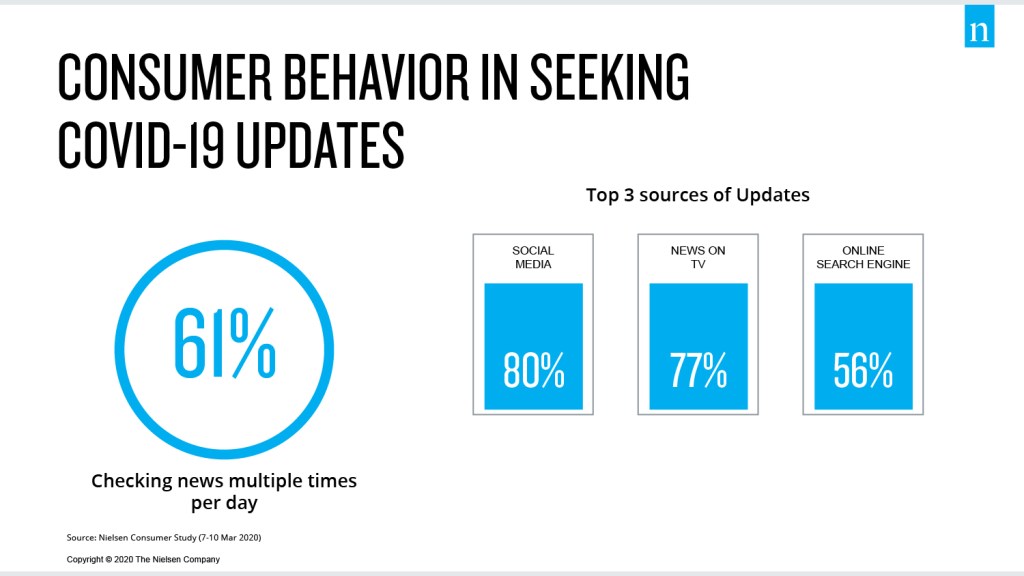
In un recente studio Nielsen, l'82% degli intervistati, per lo più di classe superiore, ha dichiarato di essere a conoscenza della COVID-19 all'inizio di febbraio 2020. Dopo l'annuncio del Presidente Joko Widodo sui primi casi di COVID-19 il 2 marzo, il 61% degli intervistati ha controllato più volte al giorno le notizie relative alla COVID-19 attraverso vari canali mediatici.
Lo studio ha rilevato che i social media (80%), i notiziari televisivi (77%) e i motori di ricerca online (56%) sono state le fonti di informazione più consultate dai consumatori per ottenere aggiornamenti sulla COVID-19.
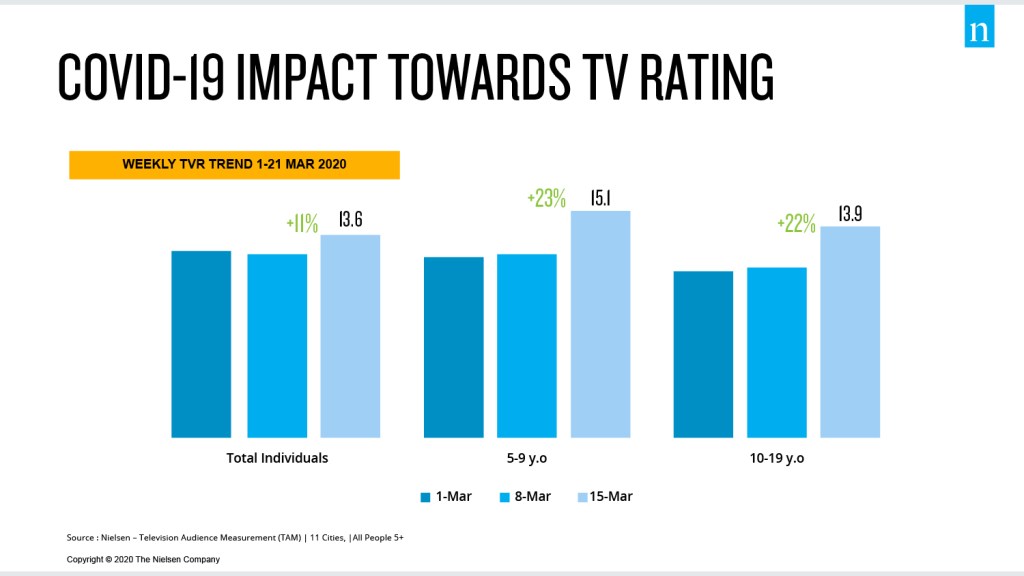
Following the country’s stay-at-home policy to prevent the spread of COVID-19, 30% of respondents planned to shop online more often. It also affected TV viewing, with ratings growing from 2.6% on March 8 to 13.6% on March 15. The highest increase was seen in younger audiences, with ratings increasing 23% for 5-9 year olds increasing and 22% for 15-19 year olds.
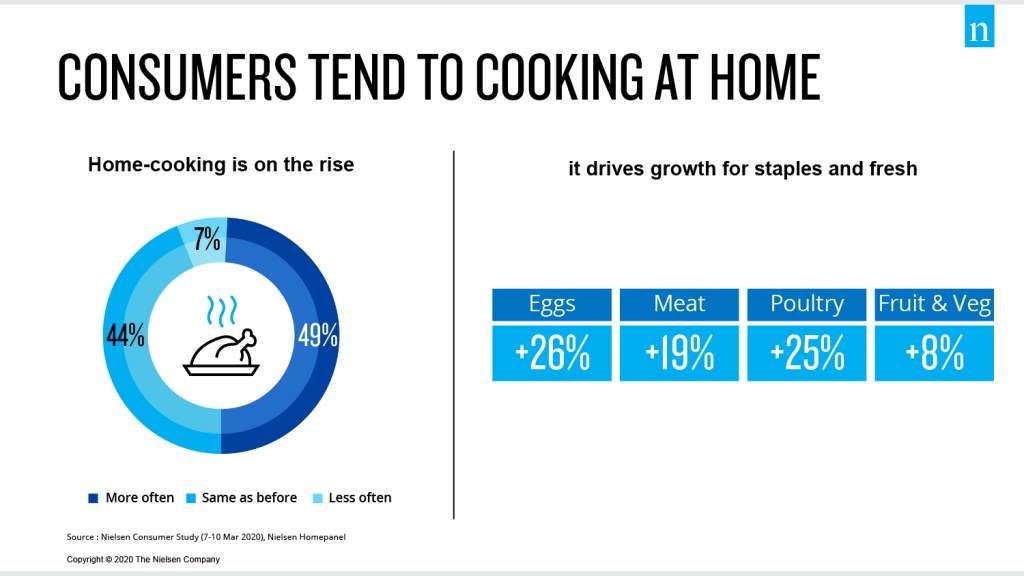
Across other countries in Asia, we’ve seen the rise of the “homebody economy” as consumers stay home due to concerns about the virus and shift their spending to serve this new lifestyle. In Indonesia, 50% of consumers have reduced out-of-home entertainment, and 46% have reduced eating out. On the other hand, 49% of consumers cooked at home more often, and this has driven the sales growth of staples and fresh products, such as eggs (+26), meat (+19%), poultry (+25%) and fruit and vegetables (+8%).
To prepare for stay at home measures, consumers around the world have been purchasing similar products as part of their pantry preparation. In Indonesia, many shoppers turned to Modern Trade outlets for much of their pantry prep, though there were some differences across consumer segments and regions. On the national scale, Upper Class consumers shopped more at Hypermarkets/Supermarkets than other consumers. Meanwhile, the trend in JakartaGreater is different, where not only Upper Class, but also Middle and Lower Class consumers shopped more at Hypermarkets/Supermarkets.
In addition to stocking up on pantry goods, health and hygiene have become major concerns for consumers amid the current pandemic. And early studies from Cina show that health will likely continue to be key concerns as infection rates slow and Indonesia enters a new normal. As many as 44% of respondents claimed that they consume health products more often, and 37% who claimed they consume vitamin drinks more often. Industry players for vitamins and pharmacies seized this opportunity and increased their advertising budgets on TV. Vitamin ad spending increased 14% and reached more than IDR90 Billion, while cough medicine ad spending increased 22%, reaching more than IDR30 Billion.
Per i dettaglianti, la situazione attuale può rappresentare un'opportunità per mantenere la propria attività e, allo stesso tempo, per contribuire a soddisfare le esigenze dei consumatori durante il periodo di permanenza a casa. I supermercati e gli ipermercati hanno un'opportunità soprattutto per i consumatori dell'Upper e di alcuni Middle SES, che potrebbero cercare scorte sufficienti e più alternative di prodotti in assenza dei loro articoli preferiti. Nel frattempo, il Minimarket è la scelta preferita da tutti i SES per la sua vicinanza, che aiuta i consumatori a evitare le grandi folle e l'uso dei trasporti pubblici.
La cosa più importante che i rivenditori devono fare è monitorare l'allocazione delle scorte, poiché ci sono rischi per la linea di distribuzione. Servizi di consegna con metodi di ordinazione semplici e di facile accesso per i consumatori, e l'utilizzo della comunicazione omnichannel, che comprende TV, internet, social media, app di messaggistica e chat, aiuteranno le aziende a soddisfare le esigenze dei consumatori.
Read in Bahasa Indonesia.
Metodologia
Le fonti includono Nielsen Consumer Study (7-10 marzo 2020), Nielsen Scantrack (gennaio-marzo 2020 vs gennaio-marzo 2019), Nielsen Home Panel (gennaio-marzo 2020 vs gennaio-marzo 2019), Nielsen TV Audience Measurement (1-18 marzo 2020), Nielsen Ad Intelligence (1-18 marzo 2020).
Learn more from our complete COVID-19 coverage.