Essendo l'anno del COVID-19, il 2020 è diventato l'anno del consumo dei media, soprattutto durante la chiusura primaverile. Tuttavia, mentre i massicci picchi di consumo registrati all'inizio dell'anno si sono dissipati, il coinvolgimento nei podcast è destinato a registrare un altro anno record, un aspetto che tutti i marketer dovrebbero sfruttare.
The engagement with podcasts is both a testament to the medium and proof that the medium is not reliant on the workday commute to thrive. September 2020 research from eMarketer notes that more than 106 million Americans will be listening to podcasts by the end of the year, which represents annual growth of more than 16%. What’s more, the ad dollars have followed, with the IAB forecasting U.S. podcast ad spend growth of just under 15%, pushing total spend to roughly $1 billion.
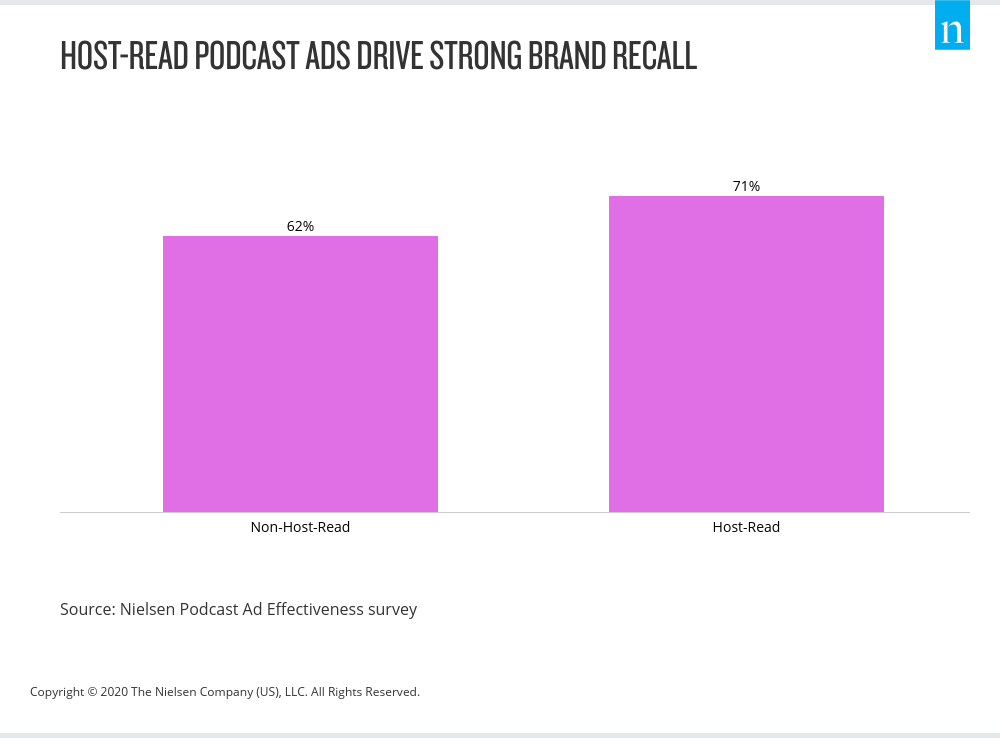
È stato ben documentato che il pubblico dei podcast è tra i più impegnati in assoluto, e gran parte di questo rispecchia i conduttori. Ma l'affinità degli ascoltatori con i conduttori è altrettanto importante dal punto di vista pubblicitario quanto lo è per i contenuti del programma. Questo perché le pubblicità lette dai conduttori fanno ricordare il marchio più di quelle lette dai non conduttori. Vale la pena notare, tuttavia, che gli annunci letti dagli sponsor continuano ad avere un forte richiamo.
Unlike other media, measurement in the podcast space isn’t a cut-and-dry endeavor. The myriad parties involved and increasing platforms that host and distribute the content inhibit the ability to collect holistic and representative listener data. As marketers weigh their campaign efforts, their real focus should be on aligning with podcasts that cater to their specific audiences rather than podcasts that simply boast mass reach. Importantly, a Nielsen study last year found that top-of-mind brand awareness for many popular brands was nearly 70% among podcast listeners.
Per comprendere meglio e confrontare le metriche relative al marchio e ai contenuti tra gli ascoltatori di podcast, Nielsen ha condotto più di 260 indagini su 240 marchi. Questa ricerca, che prevede la presentazione agli ascoltatori di clip di podcast e la valutazione del loro impegno rispetto a coloro che non sono stati esposti a una serie di metriche chiave relative al marchio e ai contenuti, consente ai marchi di misurare l'impatto della loro pubblicità o sponsorizzazione sui podcast.
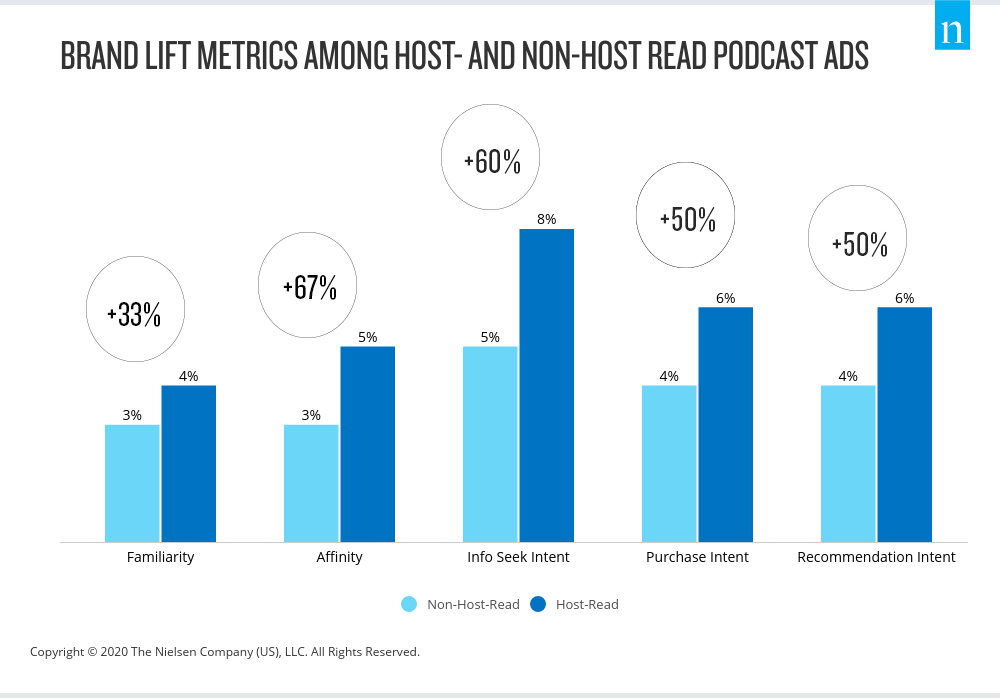
Dal punto di vista degli investimenti di marketing, i nostri dati sul coinvolgimento del marchio illustrano l'eccellenza degli annunci host-read. Ad esempio, gli annunci host-read superano quelli non host-read se si considera che ispirano gli ascoltatori a cercare maggiori informazioni su un prodotto. Gli annunci host-read producono anche un aumento medio del 50% dell'intenzione di acquisto e di raccomandazione degli ascoltatori rispetto agli annunci non host-read.
Aside from the fact that podcast ads drive significant brand lift, the podcast landscape is additionally lucrative because of its growth trajectory. Data from Nielsen’s Podcast Buying Power service shows that the U.S. podcast listener base has been growing at a 20% CAGR since 2014, and is projected to double by 2023. And even more importantly, adults 25-44 (a key buying demo) are driving much of that growth. Nearly 30% of adults 25-34, for example, listen to podcasts.
Podcast engagement in the audio space stands out much like streaming stands out in the video space, providing an ever-expanding array of options while growing the amount of time consumers spend each day with media. The big difference in the podcast space is the engagement with advertising.