不管你称其为社交疏远、隔离还是撤退到安全的地方,在对新型冠状病毒(COVID-19)的担忧中回家势必会影响媒体消费习惯。事实上,待在家里在某些情况下会导致我们观看的内容量增加近 60%,而且根据不同的原因可能会增加更多。考虑到全球各地的消费者已经开始关注越来越多的内容选择和频道,60% 的增长意义重大。
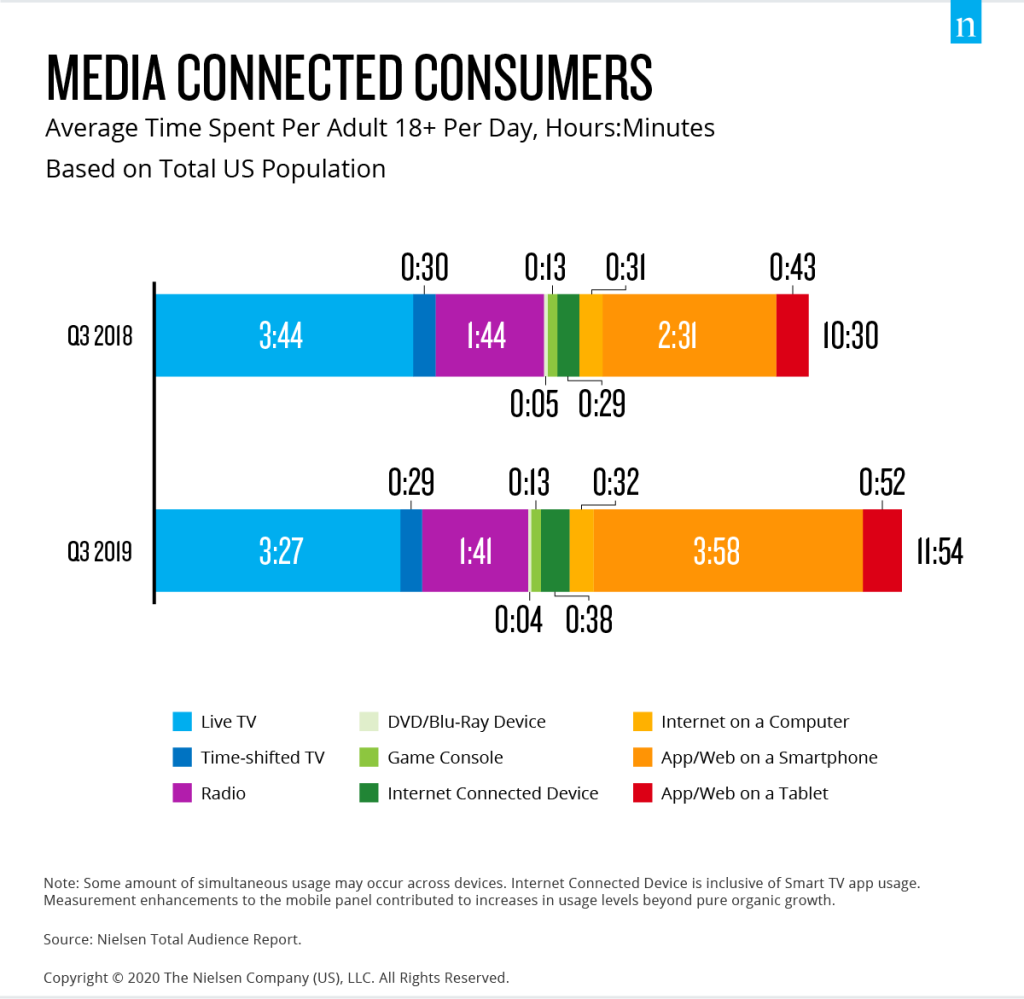
Media consumption in the U.S. is already at historical highs. As reported in the most recent Nielsen Total Audience report, Americans are already spending just shy of 12 hours each day with media platforms. What’s more, three-fourths of U.S. consumers are broadening their media options with streaming subscriptions and TV-connected devices.
危机中的联系
然而,在危机事件期间,无论是暴风雪、飓风还是全球大流行病,媒体用户都会增加媒体消费,以了解信息、消磨时间、寻找慰藉并与他人保持联系。他们还在储藏室里储备必要的食品和用品,以帮助自己度过难关。
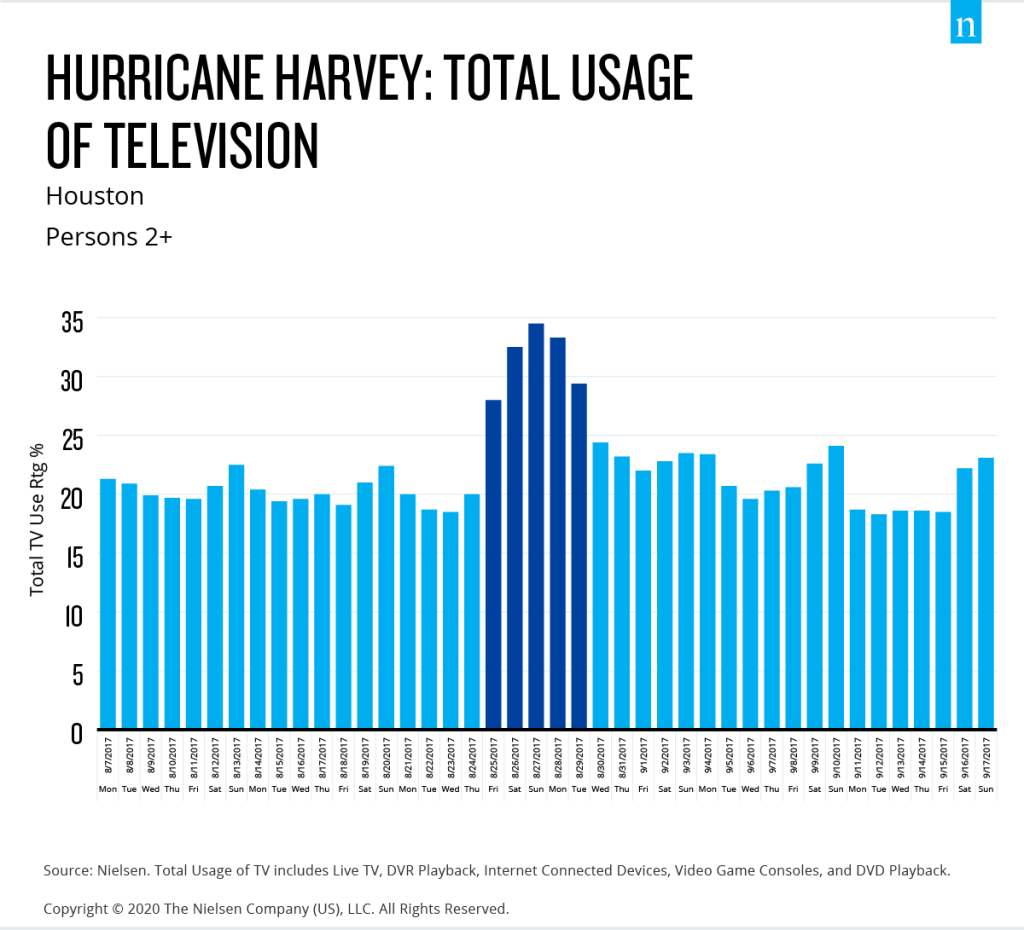
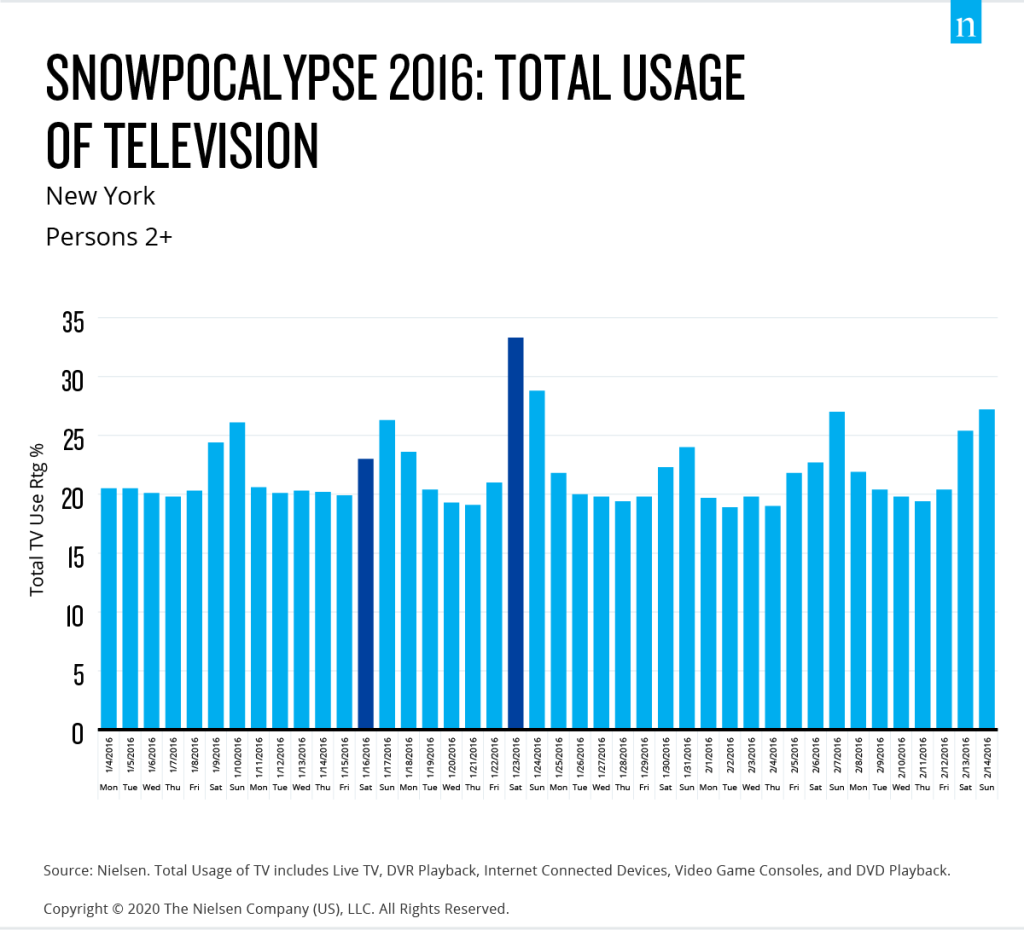
For insight into how consumers adjust during crisis situations, Nielsen analyzed total TV usage (TUT) data during two major crises in recent history: during Hurricane Harvey in 2017 and during a major snowstorm in January 2016. Not surprisingly, TUT levels increased significantly during both occasions.
2017 年 8 月,飓风哈维袭击了得克萨斯州休斯顿。在受影响期间,尼尔森对该市场进行的分析发现,TUT 的使用量与前一时期相比增加了 56%,比风暴过后增加了 40%。
同样,在 2016 年 1 月 23 日的周末,一场严重的暴风雪在纽约地区降下了两英尺多厚的积雪,导致市场活动几乎停止。在纽约市场,大雪发生的周六与之前的周六相比,TUT 使用率高出 45%。同一周六也比暴风雪后的周六高出 49%。
那么,留在室内的消费者在看什么呢?我们发现,消费者对故事片、新闻和一般格式的节目情有独钟。分析还发现,通过电视观看流媒体节目的人数增加了 61%。消费者在室内取暖的同时,也在 "蹭内容"、看电影和了解外面的新闻。
韩国和意大利:COVID-19 期间的观看样本
对全球受 COVID-19 影响的地区进行的分析发现了类似的行为。例如,在韩国,二月初首次报告 COVID-19 病毒后的几周内,电视观看量有所增加。分析指出,对比 2 月第二周和病毒激增的第四周的电视使用人数,电视观看人数增加了 17%,增加了约 120 万观众。而在 2019 年的同一时段,这一数字仅为 1%。

And in Italy it was reported by the Italian Joint Industry Committee, Auditel that during the last week of February, compared to the previous week, there was a 6.5% increase in TV viewing and almost 12% more in the Lombardy region of the country, which was, subsequently, the hardest hit area so far. The increase has been driven by both news consumption as well as a consumer move to stay indoors.
虚拟工作:远程通勤也推动了媒体数量的增长
技术在分割媒体版图的同时,也促使许多公司在可能的情况下鼓励远程通勤。在许多情况下,这种做法降低了办公成本,允许灵活的工作时间安排,吸引了更多精通技术的人才,而且,在 COVID-19 和意外事件中,受影响地区的公司有能力敦促员工在家工作。这样,这些公司在疾病预防控制中心的敦促下,走在了社会疏离的最前沿,同时也使它们有能力在生产连续性没有受到太大干扰的情况下继续运营。
Nielsen data suggest that employees that work remotely during a typical Monday through Friday work schedule connect over three hours more each week with traditional TV than non-remote workers, 25 hours and 2 minutes to 21 hours and 56 minutes respectively. In terms of devices, remote workers also spend a higher amount of time each week on their tablets—over four-and-a-half hours compared to the four hours for non-remote workers. Beyond viewing, remote workers also lean into listening. The reach of 收音机 for remote workers compared to non-remote associates is nearly identical—both at just over 95%.
随着 COVID-19 在美国的不断普及,越来越多的公司允许并制定了虚拟工作的政策,员工在家中工作时的观看行为可能会推动更多的媒体使用。
围绕 COVID-19 的社会对话
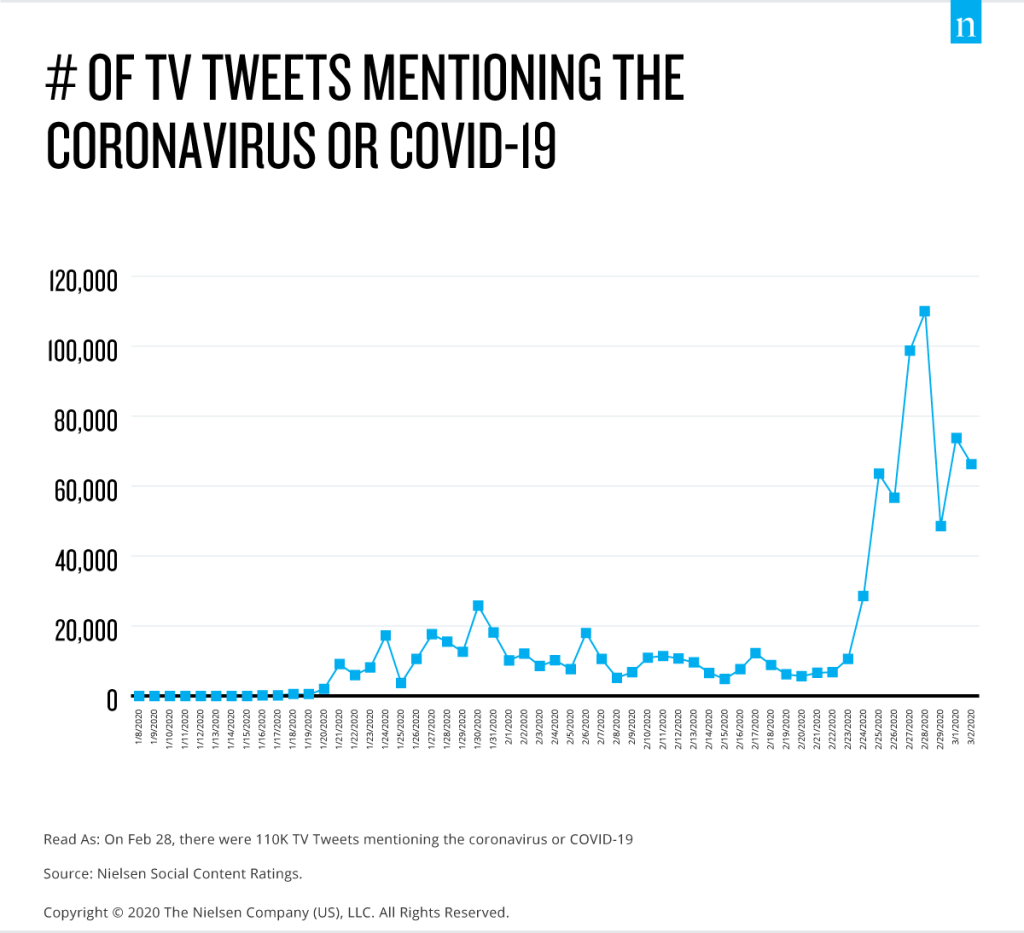
除了电视和媒体的连通性,世界各地的消费者都在使用社交媒体来帮助推动对话,并保持联系、知情和发表意见。根据尼尔森的社交内容评级数据,2020 年 1 月至 2 月的快照显示,在提及 "冠状病毒 "或 "COVID-19 "的社交话题高峰期,有 110,000 条与电视相关的推文提及这两个关键词。
随着 COVID-19 的不断扩散,这一严重的健康威胁已经震撼了全球市场,毫无疑问也将影响媒体生态系统。了解并有可能对广告和媒体投资进行对冲,有助于提高利润率,提高人们对公共卫生信息的认识,甚至可以通过娱乐的力量让消费者不再担心这一威胁。