The novel coronavirus (COVID-19) pandemic that has hit across the globe has caused significant changes in people’s lives. A Nielsen investigation has identified six thresholds that track trends in consumer behavior around the world as markets have been impacted by the virus. While Indonesia was one of the last countries in Asia to confirm a COVID-19 infection at the beginning of March, cases have since climbed, and Indonesia has joined many other markets around the world at level 5, Restricted Living. Due to concerns around the virus and living restrictions, Indonesians are adapting their media and consumer habits.
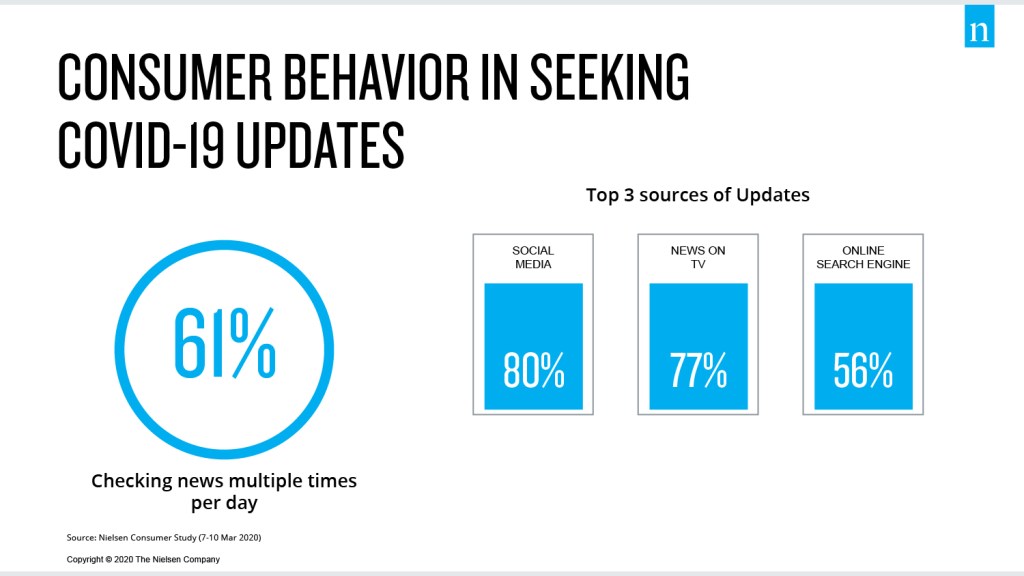
Em um estudo recente da Nielsen, 82% dos entrevistados - a maioria de classe alta - disseram que estavam cientes da COVID-19 no início de fevereiro de 2020. Após o anúncio do presidente Joko Widodo sobre os primeiros casos de COVID-19 em 2 de março, 61% dos entrevistados verificaram notícias relacionadas à COVID-19 várias vezes ao dia por meio de vários canais de mídia.
O estudo constatou que as mídias sociais (80%), os noticiários de TV (77%) e os mecanismos de pesquisa on-line (56%) foram as fontes de informação mais acessadas pelos consumidores para obter atualizações sobre a COVID-19.
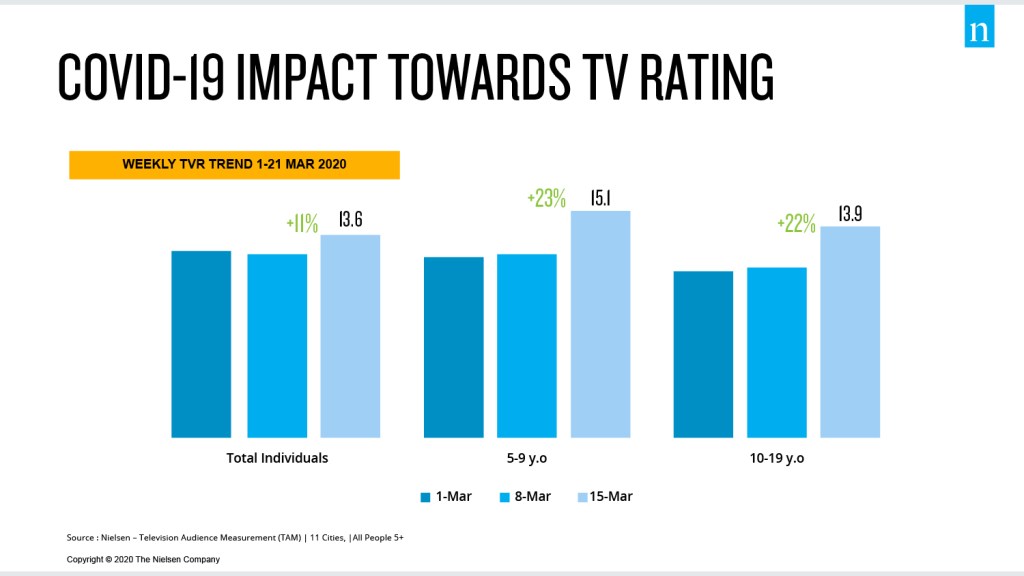
Following the country’s stay-at-home policy to prevent the spread of COVID-19, 30% of respondents planned to shop online more often. It also affected TV viewing, with ratings growing from 2.6% on March 8 to 13.6% on March 15. The highest increase was seen in younger audiences, with ratings increasing 23% for 5-9 year olds increasing and 22% for 15-19 year olds.
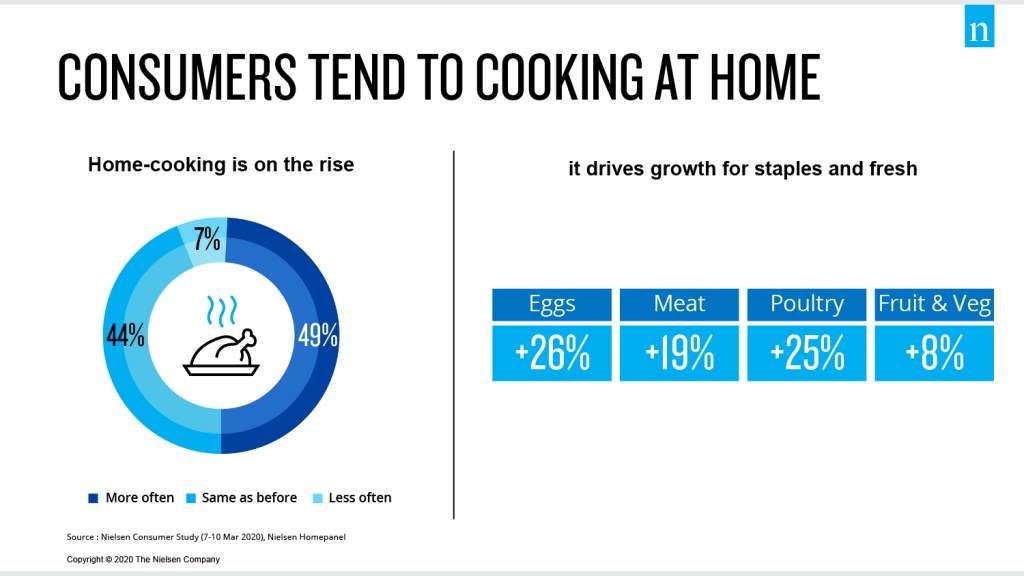
Across other countries in Asia, we’ve seen the rise of the “homebody economy” as consumers stay home due to concerns about the virus and shift their spending to serve this new lifestyle. In Indonesia, 50% of consumers have reduced out-of-home entertainment, and 46% have reduced eating out. On the other hand, 49% of consumers cooked at home more often, and this has driven the sales growth of staples and fresh products, such as eggs (+26), meat (+19%), poultry (+25%) and fruit and vegetables (+8%).
To prepare for stay at home measures, consumers around the world have been purchasing similar products as part of their pantry preparation. In Indonesia, many shoppers turned to Modern Trade outlets for much of their pantry prep, though there were some differences across consumer segments and regions. On the national scale, Upper Class consumers shopped more at Hypermarkets/Supermarkets than other consumers. Meanwhile, the trend in JakartaGreater is different, where not only Upper Class, but also Middle and Lower Class consumers shopped more at Hypermarkets/Supermarkets.
In addition to stocking up on pantry goods, health and hygiene have become major concerns for consumers amid the current pandemic. And early studies from China show that health will likely continue to be key concerns as infection rates slow and Indonesia enters a new normal. As many as 44% of respondents claimed that they consume health products more often, and 37% who claimed they consume vitamin drinks more often. Industry players for vitamins and pharmacies seized this opportunity and increased their advertising budgets on TV. Vitamin ad spending increased 14% and reached more than IDR90 Billion, while cough medicine ad spending increased 22%, reaching more than IDR30 Billion.
Para os varejistas, a situação atual pode criar uma oportunidade de manter seus negócios funcionando e, ao mesmo tempo, ajudar a suprir as necessidades dos consumidores durante o período em que ficam em casa. Os supermercados e hipermercados têm a oportunidade, especialmente para os consumidores de nível socioeconômico alto e médio, que podem procurar estoque suficiente e mais alternativas de produtos na ausência de seus itens preferidos. Enquanto isso, o minimercado é a escolha preferida em todos os níveis socioeconômicos por sua proximidade, o que ajuda os consumidores a evitar grandes aglomerações e o uso de transporte público.
A coisa mais importante que os varejistas precisam fazer é monitorar sua alocação de estoque, pois há riscos para a linha de distribuição. Os serviços de entrega com métodos de pedido simples e de fácil acesso aos consumidores e a utilização da comunicação omnicanal, incluindo TV, Internet, mídia social, aplicativos de mensagens e bate-papo, ajudarão as empresas a atender às necessidades dos consumidores.
Read in Bahasa Indonesia.
Metodologia
As fontes incluem Nielsen Consumer Study (7-10 de março de 2020), Nielsen Scantrack (jan-mar 2020 vs jan-mar 2019), Nielsen Home Panel (jan-mar 2020 vs jan-mar 2019), Nielsen TV Audience Measurement (1-18 de março de 2020), Nielsen Ad Intelligence (1-18 de março de 2020).
Learn more from our complete COVID-19 coverage.


