Niente illustra la capacità di ripresa degli americani come la spesa per i consumi. E dopo aver convissuto con il nuovo coronavirus (COVID-19) negli ultimi otto mesi, la maggioranza degli adulti statunitensi è pronta a mettere la maschera, uscire di casa e tornare a uno stile di vita non ostacolato dalla crisi, anche se in sicurezza.
Grazie alle numerose informazioni disponibili sui modi per proteggersi dalle infezioni, un sondaggio sullo stile di vita dei consumatori condotto in ottobre da Nielsen Audio ha rilevato che il 53% degli americani ritiene che la vita stia iniziando a normalizzarsi, è più propenso a riprendere le attività tipiche e sta iniziando a fare più acquisti, se le restrizioni lo consentono. Ciò non significa, tuttavia, che questi consumatori non tengano conto della salute e della sicurezza. Lo studio ha anche rilevato che le persone pronte a uscire si sentono anche più sicure di evitare i rischi e di stare al sicuro quando escono di casa.
Il sentimento dei consumatori di riprendere a spendere è in linea con i recenti dati del Bureau of Economic Analysis (BEA) degli Stati Uniti, che indicano una crescita della spesa al consumo di 201,4 miliardi di dollari a settembre. Sebbene la spesa dei consumatori rappresenti i due terzi dell'attività economica del Paese, è anche una parte importante del ritorno alla normale routine.
Vale la pena notare che gli oltre 3.000 miliardi di dollari di aiuti federali per la pandemia hanno svolto un ruolo importante nella crescita economica del terzo trimestre di quest'anno. Nonostante l'esaurimento dello stimolo, il tasso di disoccupazione statunitense, come riportato dal Bureau of Labor Statistics, ha registrato una tendenza al ribasso dopo il picco del 14,7% di aprile. L'ultima aggiunta di 661.000 posti di lavoro non agricoli a settembre ha ridotto il tasso di disoccupazione al 7,9%.
Nonostante il recente aumento dei nuovi casi di COVID-19 negli Stati Uniti, il sentimento dei consumatori americani rimane tra i più alti al mondo, con la fiducia dei consumatori del secondo trimestre (come riportato dal Conference Board) che ha raggiunto un livello di indice pari a 102 (2 punti di indice al di sopra del valore di base di 100). L'alleggerimento delle restrizioni commerciali in tutto il Paese, la mentalità marginalmente ottimista dei consumatori, una migliore comprensione di come mantenersi in salute e forse un pizzico di febbre da baita hanno influenzato la maggioranza degli americani a iniziare a spendere in beni non essenziali, tra cui la ristorazione fuori casa, la vendita al dettaglio di prodotti non alimentari e i viaggi.
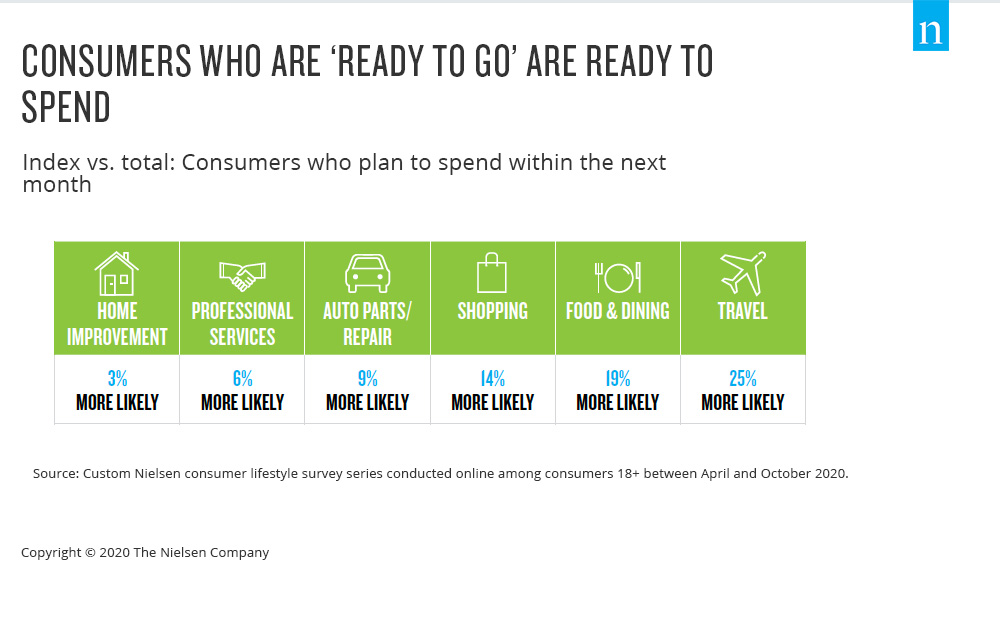
In particolare, gli inserzionisti non sono ciechi di fronte all'aumento della spesa dei consumatori e molti grandi inserzionisti hanno riconfigurato e avviato le loro iniziative di marketing per affrontare la nuova normalità. Mentre molti grandi inserzionisti traggono vantaggio dal fatto di appartenere alle categorie della salute e dell'e-commerce, come P&G e Amazon, Digiday ha recentemente riportato un aumento delle iniziative di marketing da parte di Volkswagen, Expedia e General Motors.
Mentre questi e altri inserzionisti pianificano gli ultimi due mesi del 2020 e il 2021, dovranno considerare il loro pubblico principale, soprattutto quello più propenso a spendere in beni non essenziali. Ciò significa soprattutto capire quali sono i modi migliori per raggiungere questi consumatori. Nonostante tutto quello che è successo nel 2020, il 53% degli americani che sono pronti a tornare alla loro vita sono forti ascoltatori di radio AM/FM. Sono anche un target privilegiato per gli inserzionisti, in quanto è più probabile che abbiano tra i 25 e i 54 anni, abbiano figli e guadagnino più di 100.000 dollari all'anno. È anche più probabile che lavorino lontano da casa (quindi ascoltano molto la radio). Contrariamente a quanto ci si aspetterebbe quando molte persone rimangono vicino a casa, gli ascoltatori radiofonici hanno guidato (e ascoltato) attivamente per tutto l'anno. Il tempo trascorso in auto, tuttavia, è aumentato costantemente da aprile.
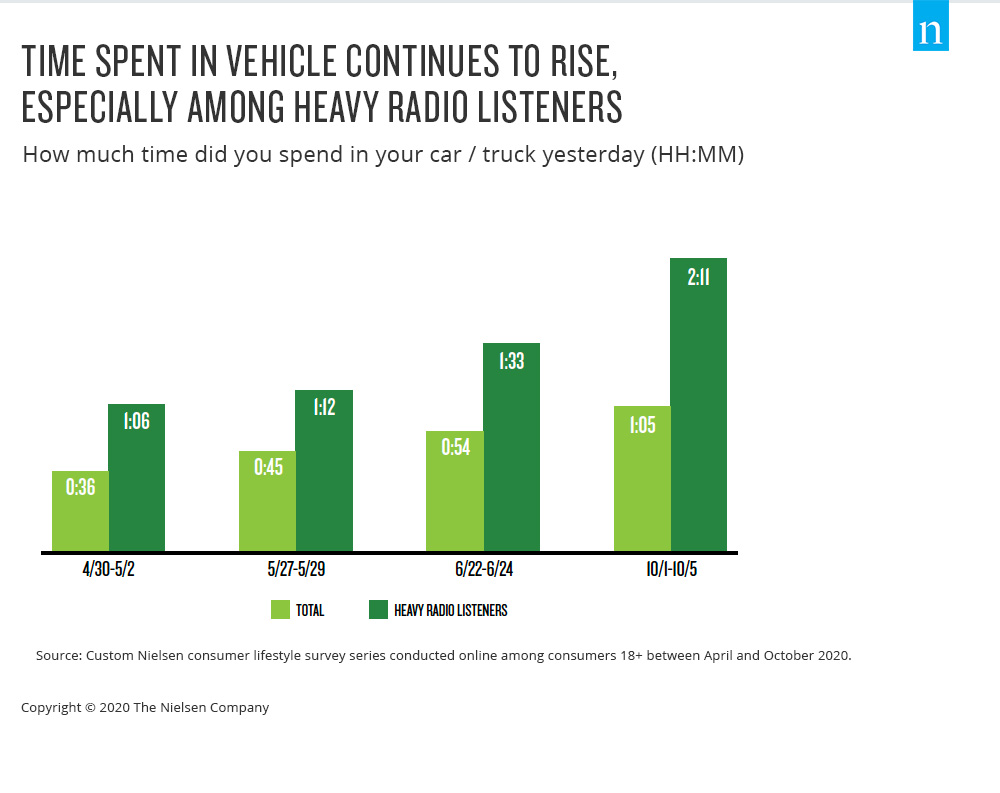
Oltre ad ascoltare più radio rispetto alla media dei consumatori, i forti ascoltatori di radio sono molto più propensi a pianificare un aumento delle spese non essenziali. Ad esempio, hanno il 48% di probabilità in più di fare un acquisto importante, come un elettrodomestico, e il 45% in più di visitare un concessionario di auto o camion. Gli acquisti di veicoli (e la relativa pubblicità) durante una pandemia, anche se è un po' controintuitivo, hanno iniziato a rimbalzare sulla scia di quella che gli analisti del settore definiscono domanda indotta dalla pandemia. Una ricerca di McKinsey e Ipsos ha rilevato che i consumatori considerano i veicoli privati come spazi sicuri rispetto al trasporto pubblico. Anche i tassi di finanziamento molto bassi, insieme ai risparmi dovuti alla riduzione delle vacanze e dei divertimenti, stanno incoraggiando l'acquisto di nuove auto.
È importante notare che non tutti gli ascolti radiofonici avvengono fuori casa. Mentre quasi il 70% degli ascolti radiofonici tra marzo e ottobre è avvenuto fuori casa, la sintonizzazione in casa è rimasta costante e forse più alta di quanto ci si potrebbe aspettare per un mezzo di comunicazione che molti equiparano al pendolarismo. I dati Nielsen PPM mostrano che l'ascolto in casa tra le persone di età superiore ai 18 anni ha oscillato tra il 29% e il 42% nello stesso periodo. La conclusione è che, nonostante i molti titoli di giornale sul passaggio allo streaming, la radio e i suoi ascoltatori rappresentano la capacità di recupero e il desiderio di andare avanti dell'America.
Per ulteriori informazioni, scaricate il nostro recente Sulla strada della ripresa con la radio AM/FM .