Menjelang Hari Penyandang Disabilitas Internasional pada tanggal 3 Desember, merek, pengiklan, dan platform media menghadapi pergeseran lanskap dalam pemasaran yang beragam. Dengan dinamika politik, ekonomi, dan sosial yang terus berubah, memahami audiens-termasuk penyandang disabilitas-membutuhkan ketepatan dan nuansa. Hal ini terutama berlaku ketika mempertimbangkan identitas interseksional yang dimiliki oleh banyak individu. Mari kita lihat ekspektasi, kebutuhan, dan potensi ekonomi dari kelompok yang sering terabaikan ini, yang menyoroti peluang strategis bagi merek untuk bersandar pada inklusivitas yang otentik dan lintas sektoral.
Menavigasi Lanskap Baru dalam Pemasaran yang Beragam
Pemilu AS baru-baru ini menggarisbawahi sebuah kebenaran yang berkembang: Berhubungan dengan audiens berarti melampaui demografi di permukaan untuk memahami identitas yang kompleks dan saling bersinggungan. Penyandang disabilitas tidak hanya membawa perspektif yang unik tetapi juga bersinggungan dengan kelompok lain, termasuk ras, jenis kelamin, orientasi seksual, dan latar belakang sosial ekonomi yang berbeda. Misalnya, seorang pemuda Latin dengan disabilitas fisik mungkin memiliki preferensi media dan perilaku pembelian yang berbeda dengan seorang veteran pria kulit putih yang lebih tua dengan disabilitas pendengaran.
Merek yang dapat memanfaatkan data multidimensi yang tepat untuk terhubung dengan pengalaman yang beragam ini memiliki posisi yang tepat untuk membangun hubungan yang bermakna.
Representasi Lebih Penting dari Sebelumnya
Gaps in disability representation remain stark, especially when intersectionality is considered. Overall, disabled individuals make up 26% of the U.S. population, but represented only 5.9% of the time on TV screens in 2024—down from 6.8%1 last year. This disparity is even more pronounced with intersectional identities who belong to multiple marginalized groups; for example, people of color with any disability is represented 1.6% on TV in Q1 – Q3 20242.
Representasi TV vs Pangsa Populasi
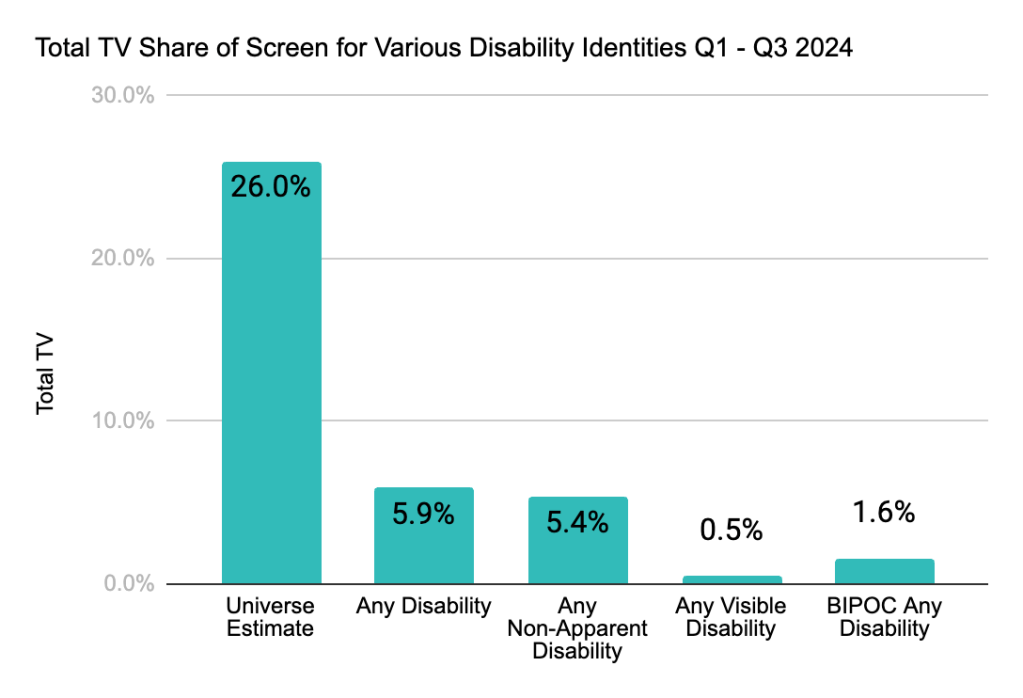
Source: Gracenote Inclusion Analytics, Q1 – Q3 2024
Hak Cipta ©2024 The Nielsen Company (AS), LLC. Semua Hak Cipta Dilindungi Undang-Undang.
Tuntutan akan Keaslian dan Relevansi
Authenticity has become non-negotiable. Among people with disabilities, 52%3 wish for more representation of their identity group on television, with 50% feeling their identity is often misrepresented. This sentiment is even stronger among those who hold multiple marginalized identities—for example, 60% of Black women with disabilities report feeling misrepresented.
This is even more pronounced for people with mental health disabilities, where 54% report feeling misrepresented. Audiences are more likely to disengage from brands that fall short—61% say they would stop purchasing from brands that don’t respect their community. Misrepresentation doesn’t just alienate viewers; it can have tangible economic consequences for brands.
Penyandang disabilitas akan berhenti membeli dari merek yang tidak menghargai mereka
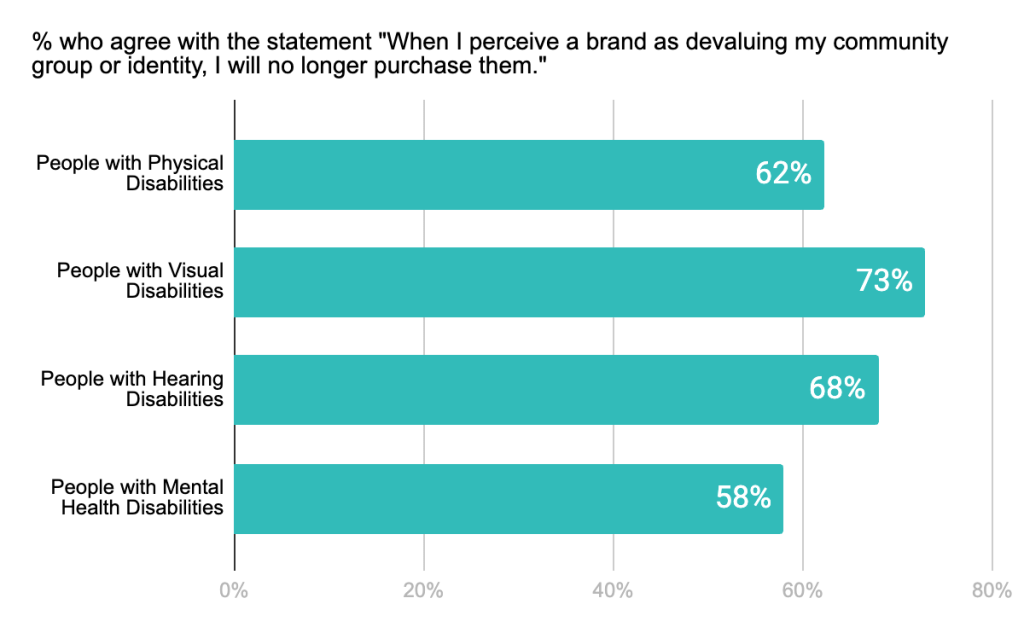
Sumber: Survei Sikap terhadap Representasi tahun 2023
Hak Cipta ©2024 The Nielsen Company (AS), LLC. Semua Hak Cipta Dilindungi Undang-Undang.
Peluang Ekonomi yang Kuat
The U.S. disability community wields an estimated $490 billion in annual disposable income, influencing an extended market worth more than $1 trillion when considering friends and family4. Moreover, 63% of disabled individuals will consider seeking a new brand because they feel their current brand does not align with the causes they care about.4
People with disabilities are discerning consumers, with 52% expecting brands to support causes aligned with their community4. Brands that prioritize inclusion can tap into this significant market potential, leading to increased market share and customer loyalty. By backing relevant social initiatives and developing accessible, inclusive products and services, brands can see substantial returns on investment.
Terhubung dengan Audiens di Tempat yang Penting
Today’s audiences expect brands to meet them where they are. For disabled people, 70% report experiencing ads that don’t feel relevant to them, and 37% are likely to ignore ads that don’t reflect their identity group5. Irrelevant content drives disengagement. Brands can create ads that align with the real experiences and values of people with disabilities, considering the intersections of race, gender identity, age, and socioeconomic status.
“It is important to provide authentic representation of the communities they serve,” said Lauren Appelbaum, SVP of Entertainment & Media of Disability Belongs, one of Nielsen’s partners in disability inclusive marketing. “Just as important, brands can and should include disabled people in their ad campaigns even when the ad is not about disability.”
In a media landscape where digital is growing, local television remains a trusted choice for people with disabilities. 33% select it as their primary news source, and 62% place it among their top three.4 This preference is even more pronounced in certain subgroups—such as older adults and rural communities—highlighting the importance of understanding the nuanced media consumption habits within the disability community.
Nielsen’s local data allows brands to tailor their messaging to specific markets, ensuring relevance and resonance. By identifying the preferred channels and content of different segments within the disability community, brands can optimize their media planning for maximum impact.
Aksesibilitas sebagai Manfaat Universal: Efek Pemotongan Pinggir Jalan Dalam Aksi
While accessibility features are essential for disabled people, their benefits extend to all viewers. Just as curb cuts designed for wheelchair users benefit parents with strollers, cyclists, and delivery workers, accessibility features in media offer advantages for everyone. A prime example is closed captioning. While crucial for viewers who are deaf and hard of hearing, a surprising 58% of all people use subtitles. Of these, 38% find it improves their comprehension of the content, and 26% use it to enjoy content in different languages3. When you approach accessibility features from a universal perspective, it enhances the viewing experience for all.
Wawasan Khusus Industri dan Strategi yang Dapat Ditindaklanjuti
Untuk mendorong keterlibatan yang lebih dalam dengan para penyandang disabilitas, merek harus mempertimbangkan strategi berikut ini:
- Invest in authentic representation: Collaborate with creators and talent from the disability community to ensure accurate and respectful portrayal.
- Leverage intersectional data: Use Nielsen’s multidimensional analytics to understand the overlapping identities of your target audience.
- Develop inclusive products and services: Prioritize accessibility in product design and service delivery to meet the needs of all consumers.
- Support relevant causes: Align with social initiatives and organizations that advocate for the disability community, reinforcing brand commitment to inclusion.
- Optimize media planning: Use data-driven insights to choose the right channels and times to reach your audience effectively.
"Dengan mengintegrasikan aksesibilitas dan representasi ke dalam rencana bisnis mereka, merek-merek yang inklusif terhadap penyandang disabilitas tidak hanya menciptakan lingkungan yang lebih inklusif, tetapi juga membina hubungan yang lebih kuat dengan audiens yang beragam," ujar Ariel Simms, Presiden dan CEO Disability Belongs. "Merek yang memprioritaskan inklusi disabilitas sejak awal memposisikan diri mereka untuk mendapatkan manfaat dari pasar yang lebih adil."
By implementing these strategies, brands can enhance their media planning and advertising effectiveness, leading to better engagement and a stronger return on investment. As diverse marketing needs evolve, understanding the unique dimensions of disability representation isn’t just ethical, it’s essential for brands to stay relevant and competitive. The intersection of identity, relevance, and buying power presents a compelling opportunity for brands to create truly inclusive, meaningful connections with a powerful and loyal audience. Nielsen can provide the insights needed to navigate this evolving landscape and drive success through authentic inclusivity.
Sumber:
1 Gracenote Inclusion Analytics Q1-Q3 2024 and 2023
2 Gracenote Inclusion Analytics Q1-Q3 2024
3 2023 Attitudes on representation survey
4 American Institutes for Research report 2018
5 2024 Attitudes on advertising survey