The novel coronavirus (COVID-19) pandemic that has hit across the globe has caused significant changes in people’s lives. A Nielsen investigation has identified six thresholds that track trends in consumer behavior around the world as markets have been impacted by the virus. While Indonesia was one of the last countries in Asia to confirm a COVID-19 infection at the beginning of March, cases have since climbed, and Indonesia has joined many other markets around the world at level 5, Restricted Living. Due to concerns around the virus and living restrictions, Indonesians are adapting their media and consumer habits.
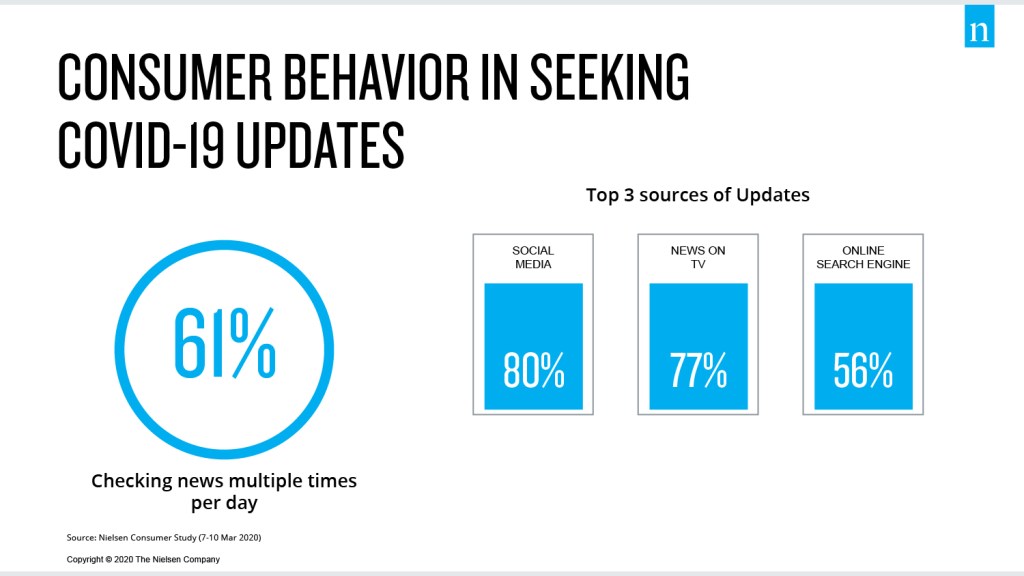
Dalam studi Nielsen baru-baru ini, 82% responden - sebagian besar dari kalangan kelas atas - mengatakan bahwa mereka mengetahui tentang COVID-19 pada awal Februari 2020. Setelah pengumuman Presiden Joko Widodo tentang kasus COVID-19 pertama pada 2 Maret, 61% responden memeriksa berita terkait COVID-19 beberapa kali setiap hari melalui berbagai saluran media.
Studi ini menemukan bahwa media sosial (80%), berita TV (77%), dan mesin pencari online (56%) merupakan sumber informasi yang paling banyak diakses oleh konsumen untuk mendapatkan informasi terbaru tentang COVID-19.
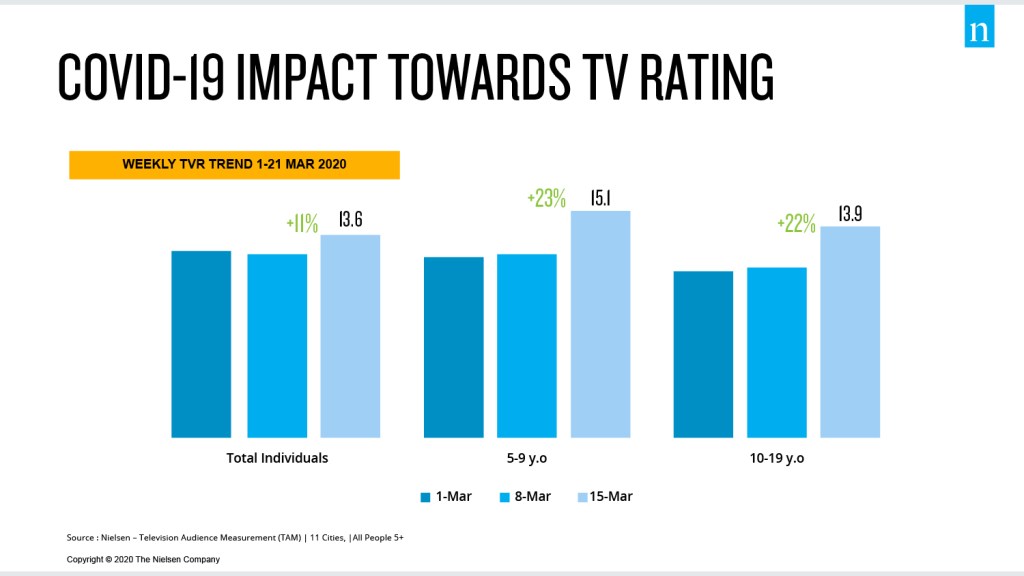
Following the country’s stay-at-home policy to prevent the spread of COVID-19, 30% of respondents planned to shop online more often. It also affected TV viewing, with ratings growing from 2.6% on March 8 to 13.6% on March 15. The highest increase was seen in younger audiences, with ratings increasing 23% for 5-9 year olds increasing and 22% for 15-19 year olds.
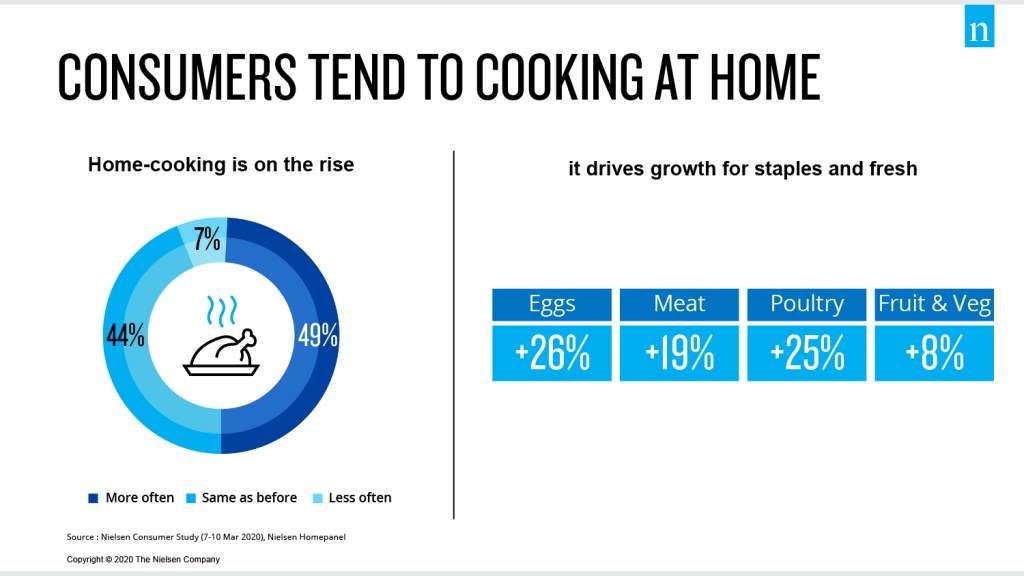
Across other countries in Asia, we’ve seen the rise of the “homebody economy” as consumers stay home due to concerns about the virus and shift their spending to serve this new lifestyle. In Indonesia, 50% of consumers have reduced out-of-home entertainment, and 46% have reduced eating out. On the other hand, 49% of consumers cooked at home more often, and this has driven the sales growth of staples and fresh products, such as eggs (+26), meat (+19%), poultry (+25%) and fruit and vegetables (+8%).
To prepare for stay at home measures, consumers around the world have been purchasing similar products as part of their pantry preparation. In Indonesia, many shoppers turned to Modern Trade outlets for much of their pantry prep, though there were some differences across consumer segments and regions. On the national scale, Upper Class consumers shopped more at Hypermarkets/Supermarkets than other consumers. Meanwhile, the trend in JakartaGreater is different, where not only Upper Class, but also Middle and Lower Class consumers shopped more at Hypermarkets/Supermarkets.
In addition to stocking up on pantry goods, health and hygiene have become major concerns for consumers amid the current pandemic. And early studies from Cina show that health will likely continue to be key concerns as infection rates slow and Indonesia enters a new normal. As many as 44% of respondents claimed that they consume health products more often, and 37% who claimed they consume vitamin drinks more often. Industry players for vitamins and pharmacies seized this opportunity and increased their advertising budgets on TV. Vitamin ad spending increased 14% and reached more than IDR90 Billion, while cough medicine ad spending increased 22%, reaching more than IDR30 Billion.
Bagi para peritel, situasi saat ini dapat menciptakan peluang untuk menjaga bisnis mereka tetap berjalan dan pada saat yang sama membantu menyediakan apa yang dibutuhkan konsumen selama masa tinggal di rumah. Supermarket dan hypermarket memiliki peluang terutama dari konsumen SES atas dan menengah, yang mungkin mencari stok yang cukup dan lebih banyak alternatif produk dengan tidak adanya barang yang biasanya mereka sukai. Sementara itu, Minimarket adalah pilihan yang lebih disukai oleh semua SES karena lokasinya yang dekat, yang membantu konsumen untuk menghindari kerumunan besar dan menggunakan transportasi umum.
Hal terpenting yang perlu dilakukan oleh peritel adalah memonitor alokasi stok mereka karena ada risiko pada jalur distribusi. Layanan pesan antar dengan metode pemesanan yang sederhana dan akses yang mudah bagi konsumen, serta memanfaatkan komunikasi omnichannel, termasuk TV, internet, media sosial, aplikasi pesan dan chatting, akan membantu pelaku usaha untuk memenuhi kebutuhan konsumen.
Read in Bahasa Indonesia.
Metodologi
Sumber-sumber termasuk Nielsen Consumer Study (7-10 Mar 2020), Nielsen Scantrack (Jan-Mar 2020 vs Jan-Mar 2019), Nielsen Home Panel (Jan-Mar 2020 vs Jan-Mar 2019), Nielsen TV Audience Measurement (1-18 Mar 2020), Nielsen Ad Intelligence (1-18 Mar 2020).
Learn more from our complete COVID-19 coverage.


