Munculnya virus corona baru (COVID-19) telah memunculkan "ekonomi rumahan" di Australia: Kita sekarang lebih terbiasa berbelanja, belajar, bekerja, dan mencari hiburan secara online di rumah. Tinggal di rumah telah menjadi cara hidup baru dan memiliki dampak yang sangat signifikan terhadap bagaimana dan apa yang kita makan.
Dengan lebih banyak waktu di rumah, konsumen Australia memiliki kesempatan untuk merefleksikan kebiasaan makan mereka dan menemukan cara-cara kreatif dan cerdas untuk menyiapkan dan menggunakan persediaan mereka, serta mengasah keterampilan memasak mereka sehingga pada akhirnya tidak ada yang sia-sia.
Over the months of March and April, we witnessed incredible scenes of shoppers rushing to pack their ‘pandemic pantries’ with enough food staples and essential supplies to last a few months. Strong volume sales for rice, pasta, flour, bread mix and Asian and Indian ingredients signalled a return to home cooking and baking; while a spike in sales for ground coffee and coffee beans revealed that many Australians are craving a barista-style coffee experience at home.
Ketika pembatasan karantina wilayah perlahan-lahan mulai dicabut selama beberapa minggu dan bulan ke depan, merek, produsen, dan peritel perlu mempertimbangkan seperti apa "normal baru" dalam tren makan, memahami bagaimana hal ini berbeda berdasarkan demografi dan gaya hidup, serta beradaptasi dan mengatur ulang dengan tepat.
MEMASARKAN KE BERBAGAI KELOMPOK PEMBELI BAHAN MAKANAN DI AUSTRALIA
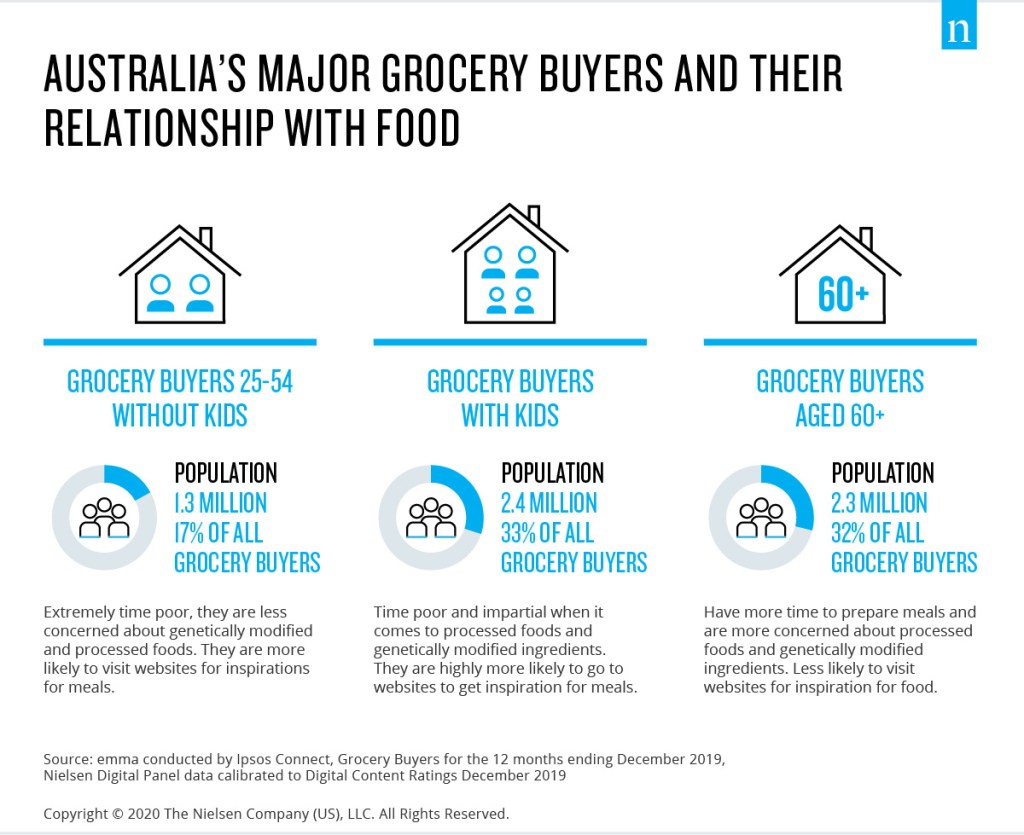
Using data from Nielsen’s Consumer & Media View (CMV), we identified three distinct types of Australian buyer groups. We analysed their eating habits to understand what this means for the immediate and longer-term future as the effects of the pandemic continue to roll out.
Pembeli Bahan Makanan 25-54 Tahun Tanpa Anak
Traditionally, this group is time-poor when it comes to meal preparation and are 37% more likely to agree that they don’t have time to cook and prepare meals when compared to other grocery buyers. They are 23% more likely to eat on the run and are less likely to be mindful of their diet. This group is less fussy when it comes to ingredients, but more than half (57%) say they either like to or love to cook. They are less likely to be concerned about food that is fattening foods or processed – preferring taste above all else.
Penting bagi para pemasar untuk mempertimbangkan bahwa meskipun kelompok ini gemar memasak, namun di masa lalu mereka hanya memiliki sedikit waktu untuk melakukannya.
With more time at home and no access to cafes and restaurants, brands and retailers have the opportunity to spark a renewed passion for cooking at home with these shoppers with creative recipe ideas that make the most of what is in their pantries.
Pembeli bahan makanan dengan anak di bawah 18 tahun
This group is 19% more likely to feel that they don’t have time to cook and prepare meals when compared to other grocery buyers. They often struggle with balancing the need for fast and affordable meals that are still nutritious and appealing to all members in the household. Grocery buyers with kids are less likely to eat foods with genetically modified ingredients and are more likely to avoid processed foods and buy more fresh and chilled food.
As many Australians continue homeschooling and working from home in the short-term, the availability of convenient meal and snack options will be important. Nielsen Homescan research showed how shoppers have turned to ‘long-lasting’ fruit and vegetable options during lockdown.
On average, grocery buyers with kids spend 30% more per family on groceries each week and are substantially more likely to feel that store’s own brands offer equal quality to well-known brands. In France, retailers have responded to meeting the needs of families by expanding the range of private label organic products they have on offer. Increasing the number of value-options that are healthy and family-friendly has had a positive impact in regions with a higher population of families.
Keluarga yang memiliki anak secara aktif melihat situs web, majalah, atau surat kabar untuk mendapatkan inspirasi untuk makanan mereka dan mencari makanan yang cepat, terjangkau, dan bergizi untuk keluarga mereka.
Pembeli Bahan Makanan Berusia 60+
Terdiri dari hampir sepertiga pembeli bahan makanan di Australia, kelompok ini memiliki lebih banyak waktu untuk memasak dan menyiapkan makanan daripada pembeli bahan makanan lainnya. Mereka juga merupakan kelompok yang paling memperhatikan apa yang mereka makan. Mereka cenderung tidak menganggap memasak sebagai hobi atau minat dan mencari makanan sederhana, makanan favorit yang bergizi dan hemat biaya.
Jika dibandingkan dengan pembeli bahan makanan lainnya, pembeli berusia 60+ 13% lebih percaya untuk menggunakan bahan makanan berkualitas terbaik, mereka juga 12% lebih cenderung membeli produk berserat tinggi; lebih peduli dengan makanan yang menggemukkan, pengawet, dan bahan yang dimodifikasi secara genetik; dan menghindari makanan olahan sebisa mungkin.
As these shoppers are the most susceptible to the effects of COVID-19, they will be seeking greater assurance that the products they buy are free of risk and of the highest quality when it comes to safety standards. It will also be important for this group to understand where the food they are purchasing originates from, with complete transparency from farm to factory, to supply chain and distribution, and details of the measures being taken to assure their safety.
Warga Australia Mendambakan Ide dan Inspirasi Memasak
A recent Nielsen Digital Content Ratings report reveals that there was a 71% increase in the amount of time being spent on food and cooking websites during the COVID-19 pandemic. The increases were across all age groups and most profound with the younger audiences aged under 40.
For many Australians, the local supermarket is one of the very few places they have ventured to in the past month and possibly for some time to come. Supermarket in-store magazines have the potential to thrive in this environment. Already, the two major supermarket magazines are by far the most read magazines in Australia and collectively have a total of 6.7 million or 35% of Australian’s reading their publications each month.
There is great potential for marketers to engage and reach each grocery buyer group by creating content related to healthy eating habits and meal preparation, for those who are looking for a delicious and fast recipe for their family. To resonate with consumers, marketers need to reexamine their advertising to make sure that they are addressing consumers’ needs and connecting with them authentically.
Metodologi
TENTANG NIELSEN EMMACMV
Nielsen and The Readership Works (TRW) have a relationship that sees Nielsen’s national Consumer & Media View (CMV) incorporated into emma Cross Platform readership data. This is known as emmaCMV. For over 20 years, Nielsen’s CMV has surveyed consumers across Australia capturing an array of insights that help clients tackle marketing and media challenges. Whether they are involved in the planning, buying or selling of advertising, or responsible for brand strategy, Nielsen CMV insights provide the power to create effective marketing strategies and, ultimately, achieve business and marketing goals. emmaCMV is an enhanced and convenient solution that integrates Nielsen’s CMV into emma to provide readership, attitudinal, lifestyle and product data in one place. This information provides a comprehensive profile of the print consumer and their purchase intentions which supports more actionable analysis and insights.