As the media industry navigates COVID-19 and its greatest period of upheaval in modern memory, having the right data to understand if your ad will command consumer attention has never been more critical. The increasing rate of media consumption during the pandemic has been game-changing for marketers, but how can an ad creative break free from the volume of content, especially when reaching and connecting with the consumer is more difficult than ever? In fact prior to COVID-19, 40% of demographic targeting did not reach the intended audience, 50% of impressions were not viewable and 20% of campaigns were not noticed.
The solution is a strong ad creative. A strong creative is four times more important than your media plan when it comes to generating sales, and it’s five times more important than targeting when it comes to determining whether your ad will be seen.
Les tests en environnement réel des créations publicitaires permettent aux spécialistes du marketing de déterminer si la campagne est efficace :
- Aimable : Les consommateurs aiment-ils la publicité et comment réagissent-ils ?
- Engagement : La création publicitaire apporte-t-elle quelque chose de nouveau aux consommateurs et leur donne-t-elle envie d'en savoir plus ?
- Identifiable : Le destinataire de l'annonce est-il clair ?
- Clarté : Comment les consommateurs décriraient-ils la publicité ? La publicité communique-t-elle bien le message de la campagne ?
- Mémorable : Les consommateurs peuvent-ils se souvenir de votre publicité ?
- À une fréquence optimale : Quelle est la bonne fréquence d'exposition pour maximiser votre budget publicitaire ?
Advertising activity around COVID-19 has increased rapidly – of all monitored ads that mentioned COVID-19 during Q1 2020, around 90% occurred in the last three weeks of March, with more occurring each week in April. Multiple European markets including Germany, UK, Italy and Spain are leading the charge, particularly through finance, telecoms and supermarket ads.
But how best to cut through the noise of COVID-19 ads and create something truly worthwhile? Authenticity – right now the most important thing is to build the voice of your brand by showing empathy, and sharing how your brand is supporting the communities it’s based in. The most effective ads are created tastefully and share one of five common trends we are seeing around the world.
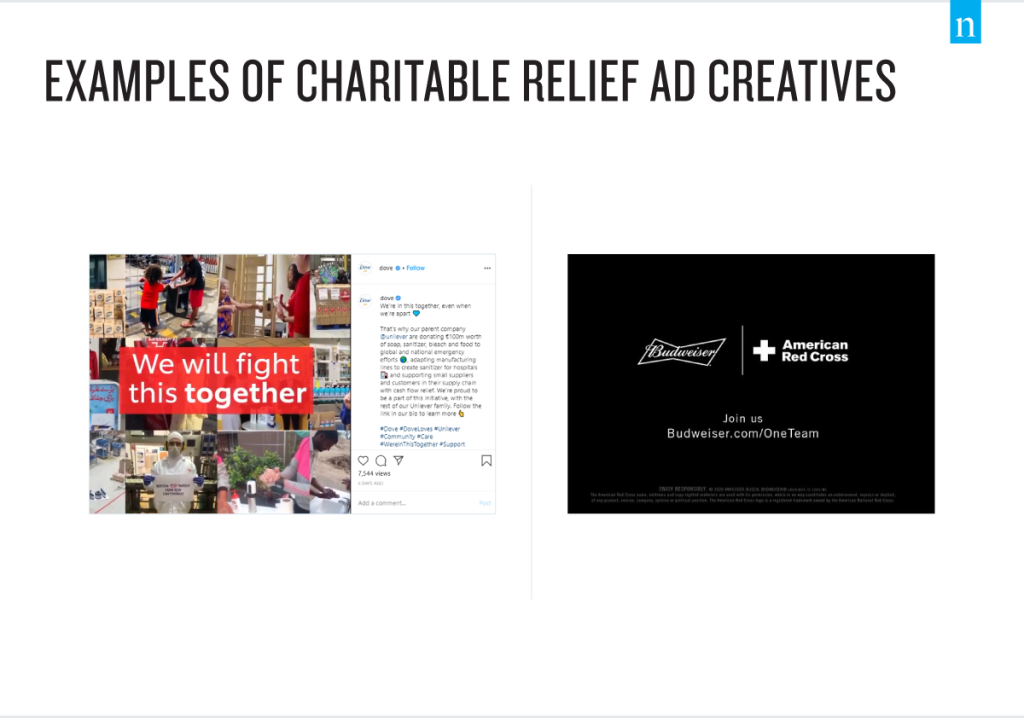
Aide caritative
Personifying the mentality that it will take a community to overcome this pandemic, many brands are putting their money where their mouth is and showing how they are doing their part. For example, Unilever has committed to donating €100 million worth of hand sanitiser, soap, bleach and food in its Dove Instagram campaign. Elsewhere, Budweiser also pledged to donate $5 million of its sports spending toward partnerships with the Red Cross, including the repurposing of stadiums as blood donation centres, communicated via U.S. TV activity.
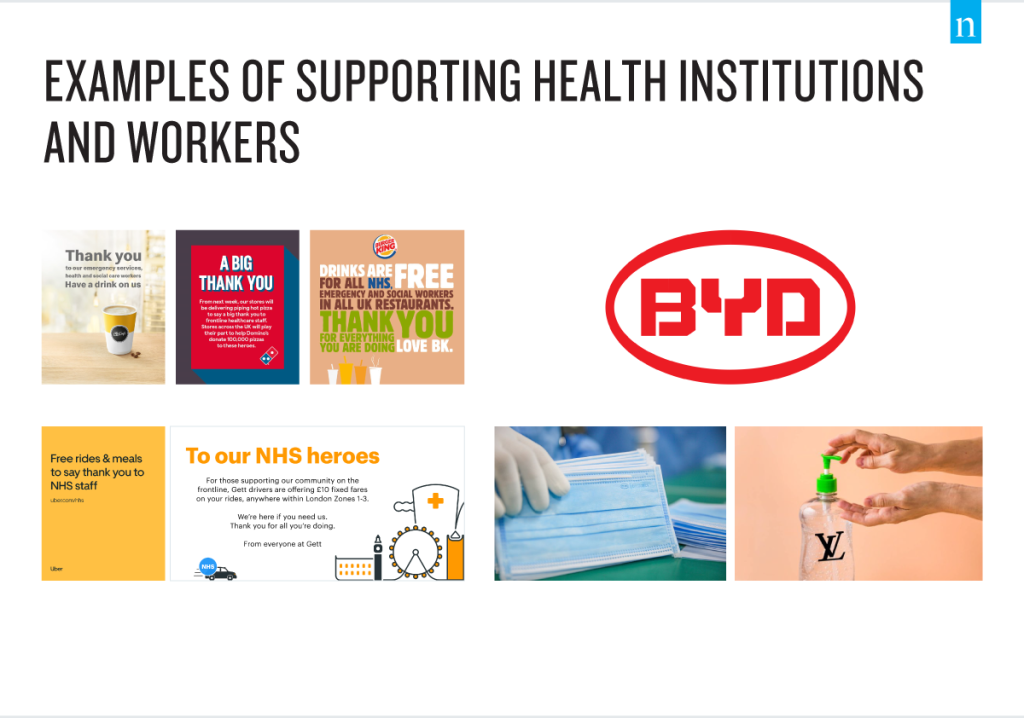
Soutenir les institutions et les travailleurs du secteur de la santé
All over the world, there is unwavering gratitude to those who work in health care, often putting their own lives in danger to support the sick. In the U.K., food restaurants (such as McDonald’s, Domino’s Pizza and Burger King) and transportation firms (including Uber, Gett and Europcar) have shown National Health Service (NHS) support by donating goods or services or simply sharing a thank you message. The trend is also seen globally – in China, electric car manufacturer BYD is making face masks for health care professionals, while in France, Louis Vuitton has updated its production lines to help manufacture hand sanitizer rather than luxury products, in a bid to help ease the strain put on the sector.
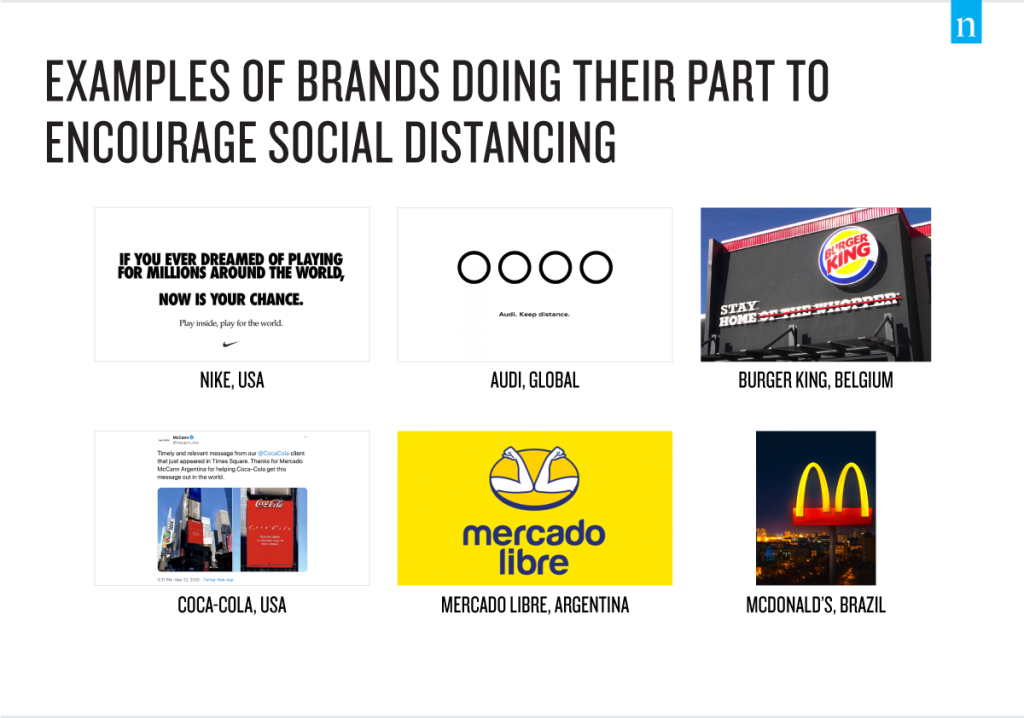
Les marques font leur part pour encourager la distanciation sociale
Social distancing is onerous mentally, but critical to stopping the spread – brands around the world are helping to communicate and reinforce governmental messages around the importance of keeping distant. The most immediate visual application of this has been an update of logos and livery (an eye-catching if relatively commitment-free tactic), but brands are also ploughing investment into ATL campaigns reiterating key distancing measures and emphasising their importance.
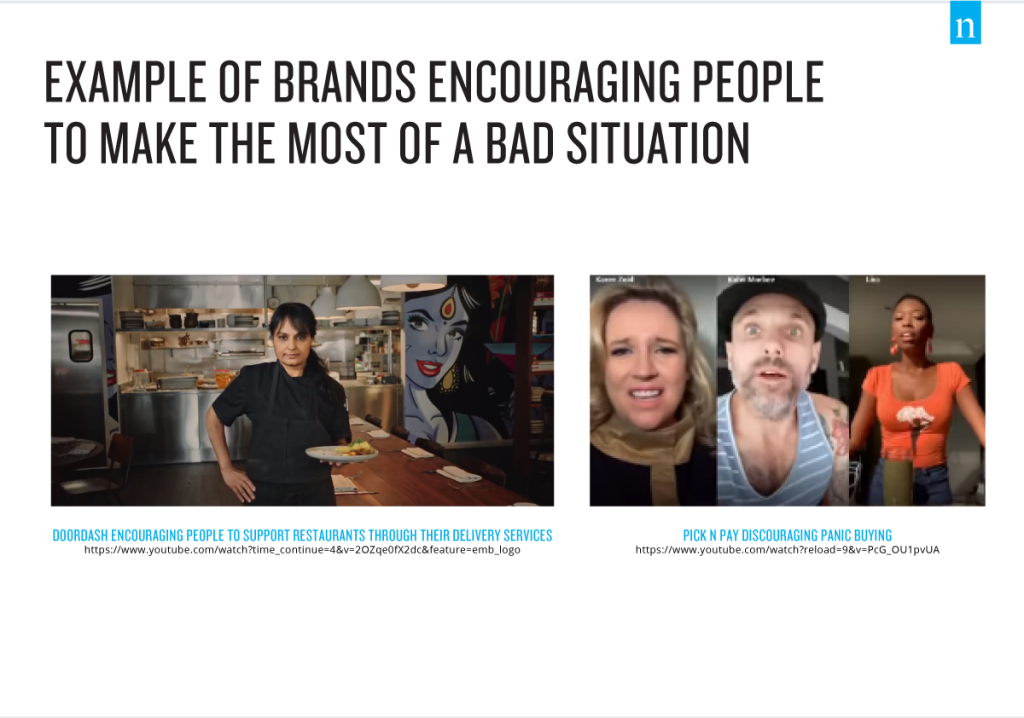
Tirer le meilleur parti d'une mauvaise situation
The very nature of self-isolation has meant that brands in certain categories have found themselves at a bittersweet advantage. COVID-19 has seen an influx of consumers using food delivery services, and brands like Pick n Pay in South Africa are using consumer-fronted communications to share a philanthropic note on the importance of not over-ordering. Meanwhile, DoorDash in the U.S. featured a similar strategy to remind consumers to support local businesses.
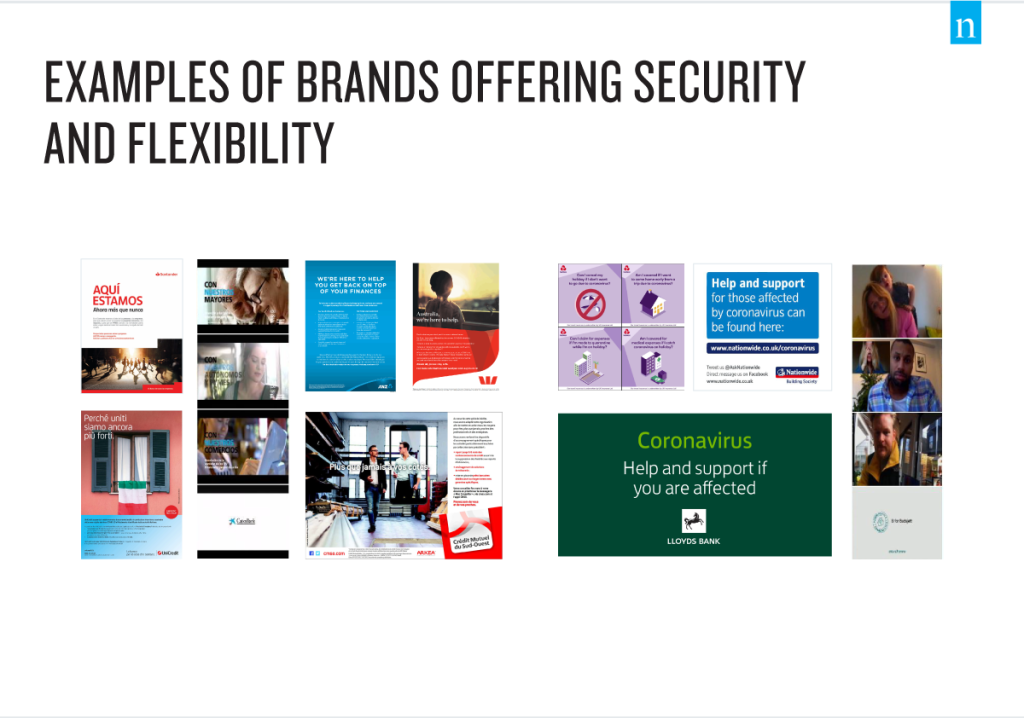
Sécurité et flexibilité
In an effort to provide customers with some financial stability during the COVID-19 crisis, financial institutions have introduced greater flexibility when it comes to repayments and borrowing. Initiatives to support business and personal banking customers include an interest-free “buffer” overdraft, mortgage payment holidays, higher contactless limits and lower interest rates on business loans. While these particular tools are specific to finance, the ability to offer security and flexibility is relevant to all.