Mit Blick auf den Internationalen Tag der Menschen mit Behinderungen am 3. Dezember sehen sich Marken, Werbetreibende und Medienplattformen mit einer sich wandelnden Landschaft im Bereich des vielfältigen Marketings konfrontiert. Angesichts der sich verändernden politischen, wirtschaftlichen und sozialen Dynamik erfordert das Verständnis der Zielgruppen - einschließlich Menschen mit Behinderungen - Präzision und Nuancierung. Dies gilt insbesondere, wenn man die sich überschneidenden Identitäten berücksichtigt, die viele Menschen haben. Untersuchen wir die Erwartungen, Bedürfnisse und das wirtschaftliche Potenzial dieser oft übersehenen Gruppe und zeigen wir auf, welche strategischen Möglichkeiten Marken haben, sich mit authentischer und intersektioneller Inklusivität einzubringen.
Navigieren durch eine neue Landschaft im Marketing der Vielfalt
Die jüngsten US-Wahlen haben gezeigt, dass es immer wichtiger wird, mit dem Publikum in Kontakt zu treten, indem man über oberflächliche demografische Daten hinausgeht und komplexe, sich überschneidende Identitäten versteht. Menschen mit Behinderungen bringen nicht nur einzigartige Perspektiven mit, sondern überschneiden sich auch mit anderen Gruppen, einschließlich verschiedener Ethnien, Geschlechter, sexueller Orientierungen und sozioökonomischer Hintergründe. So kann beispielsweise eine junge Latina mit einer körperlichen Behinderung andere Medienpräferenzen und ein anderes Kaufverhalten haben als ein älterer weißer männlicher Veteran mit einer Hörbehinderung.
Marken, die präzise, multidimensionale Daten nutzen können, um mit diesen unterschiedlichen Erfahrungen in Verbindung zu treten, sind gut positioniert, um sinnvolle Beziehungen aufzubauen.
Repräsentation ist wichtiger denn je
Gaps in disability representation remain stark, especially when intersectionality is considered. Overall, disabled individuals make up 26% of the U.S. population, but represented only 5.9% of the time on TV screens in 2024—down from 6.8%1 last year. This disparity is even more pronounced with intersectional identities who belong to multiple marginalized groups; for example, people of color with any disability is represented 1.6% on TV in Q1 – Q3 20242.
TV-Repräsentation vs. Bevölkerungsanteil
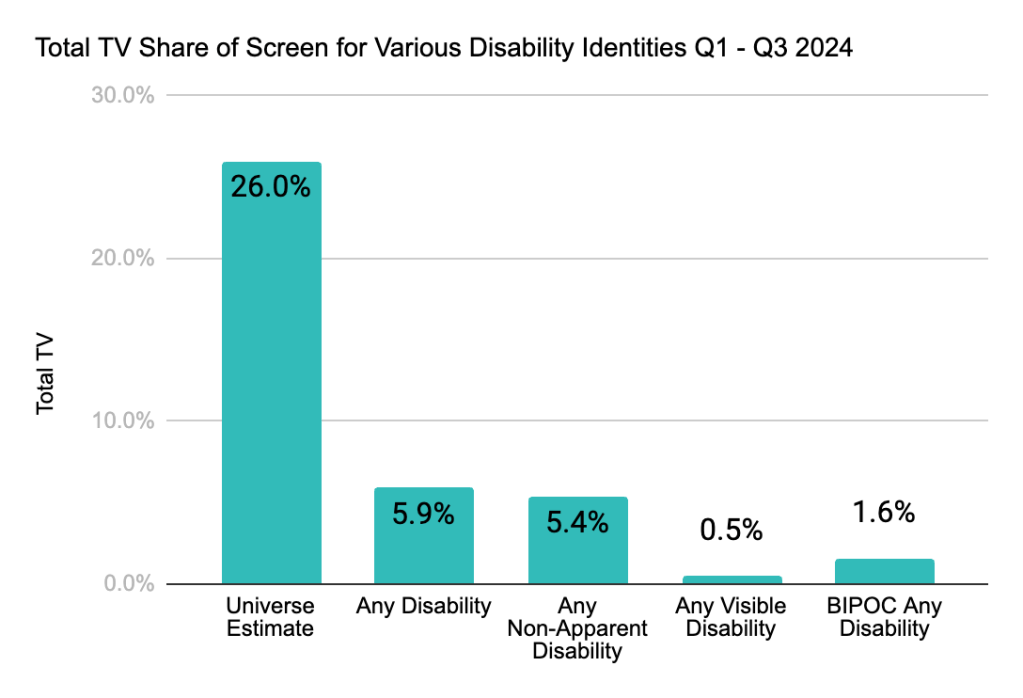
Source: Gracenote Inclusion Analytics, Q1 – Q3 2024
Copyright ©2024 The Nielsen Company (US), LLC. Alle Rechte vorbehalten.
Nachfrage nach Authentizität und Relevanz
Authenticity has become non-negotiable. Among people with disabilities, 52%3 wish for more representation of their identity group on television, with 50% feeling their identity is often misrepresented. This sentiment is even stronger among those who hold multiple marginalized identities—for example, 60% of Black women with disabilities report feeling misrepresented.
This is even more pronounced for people with mental health disabilities, where 54% report feeling misrepresented. Audiences are more likely to disengage from brands that fall short—61% say they would stop purchasing from brands that don’t respect their community. Misrepresentation doesn’t just alienate viewers; it can have tangible economic consequences for brands.
Menschen mit Behinderungen werden nicht mehr bei Marken kaufen, die sie nicht wertschätzen
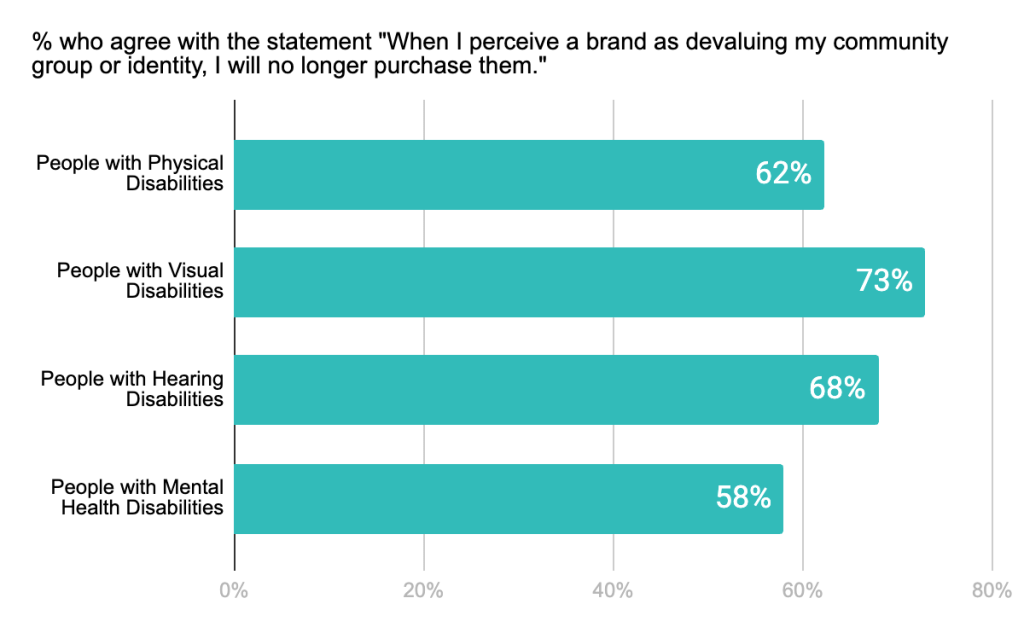
Quelle: Umfrage 2023 zu den Einstellungen zur Repräsentation
Copyright ©2024 The Nielsen Company (US), LLC. Alle Rechte vorbehalten.
Eine leistungsstarke wirtschaftliche Chance
The U.S. disability community wields an estimated $490 billion in annual disposable income, influencing an extended market worth more than $1 trillion when considering friends and family4. Moreover, 63% of disabled individuals will consider seeking a new brand because they feel their current brand does not align with the causes they care about.4
People with disabilities are discerning consumers, with 52% expecting brands to support causes aligned with their community4. Brands that prioritize inclusion can tap into this significant market potential, leading to increased market share and customer loyalty. By backing relevant social initiatives and developing accessible, inclusive products and services, brands can see substantial returns on investment.
Mit dem Publikum in Kontakt treten, wo es darauf ankommt
Today’s audiences expect brands to meet them where they are. For disabled people, 70% report experiencing ads that don’t feel relevant to them, and 37% are likely to ignore ads that don’t reflect their identity group5. Irrelevant content drives disengagement. Brands can create ads that align with the real experiences and values of people with disabilities, considering the intersections of race, gender identity, age, and socioeconomic status.
“It is important to provide authentic representation of the communities they serve,” said Lauren Appelbaum, SVP of Entertainment & Media of Disability Belongs, one of Nielsen’s partners in disability inclusive marketing. “Just as important, brands can and should include disabled people in their ad campaigns even when the ad is not about disability.”
In a media landscape where digital is growing, local television remains a trusted choice for people with disabilities. 33% select it as their primary news source, and 62% place it among their top three.4 This preference is even more pronounced in certain subgroups—such as older adults and rural communities—highlighting the importance of understanding the nuanced media consumption habits within the disability community.
Nielsen’s local data allows brands to tailor their messaging to specific markets, ensuring relevance and resonance. By identifying the preferred channels and content of different segments within the disability community, brands can optimize their media planning for maximum impact.
Barrierefreiheit als universeller Nutzen: Der Curb-Cut-Effekt in Aktion
While accessibility features are essential for disabled people, their benefits extend to all viewers. Just as curb cuts designed for wheelchair users benefit parents with strollers, cyclists, and delivery workers, accessibility features in media offer advantages for everyone. A prime example is closed captioning. While crucial for viewers who are deaf and hard of hearing, a surprising 58% of all people use subtitles. Of these, 38% find it improves their comprehension of the content, and 26% use it to enjoy content in different languages3. When you approach accessibility features from a universal perspective, it enhances the viewing experience for all.
Branchenspezifische Einblicke und umsetzbare Strategien
Um ein stärkeres Engagement für Menschen mit Behinderungen zu erreichen, sollten Marken die folgenden Strategien in Betracht ziehen:
- Invest in authentic representation: Collaborate with creators and talent from the disability community to ensure accurate and respectful portrayal.
- Leverage intersectional data: Use Nielsen’s multidimensional analytics to understand the overlapping identities of your target audience.
- Develop inclusive products and services: Prioritize accessibility in product design and service delivery to meet the needs of all consumers.
- Support relevant causes: Align with social initiatives and organizations that advocate for the disability community, reinforcing brand commitment to inclusion.
- Optimize media planning: Use data-driven insights to choose the right channels and times to reach your audience effectively.
"Durch die durchdachte Integration von Barrierefreiheit und Repräsentation in ihre Geschäftspläne schaffen behindertengerechte Marken nicht nur ein inklusiveres Umfeld, sondern fördern auch stärkere Beziehungen zu unterschiedlichen Zielgruppen", sagte Ariel Simms, Präsident und CEO von Disability Belongs. "Marken, die der Inklusion von Menschen mit Behinderungen von Anfang an Priorität einräumen, sind in der Lage, die Vorteile eines gerechteren Marktes zu ernten."
By implementing these strategies, brands can enhance their media planning and advertising effectiveness, leading to better engagement and a stronger return on investment. As diverse marketing needs evolve, understanding the unique dimensions of disability representation isn’t just ethical, it’s essential for brands to stay relevant and competitive. The intersection of identity, relevance, and buying power presents a compelling opportunity for brands to create truly inclusive, meaningful connections with a powerful and loyal audience. Nielsen can provide the insights needed to navigate this evolving landscape and drive success through authentic inclusivity.
Quellen:
1 Gracenote Inclusion Analytics Q1-Q3 2024 and 2023
2 Gracenote Inclusion Analytics Q1-Q3 2024
3 2023 Attitudes on representation survey
4 American Institutes for Research report 2018
5 2024 Attitudes on advertising survey