The novel coronavirus (COVID-19) pandemic that has hit across the globe has caused significant changes in people’s lives. A Nielsen investigation has identified six thresholds that track trends in consumer behavior around the world as markets have been impacted by the virus. While Indonesia was one of the last countries in Asia to confirm a COVID-19 infection at the beginning of March, cases have since climbed, and Indonesia has joined many other markets around the world at level 5, Restricted Living. Due to concerns around the virus and living restrictions, Indonesians are adapting their media and consumer habits.
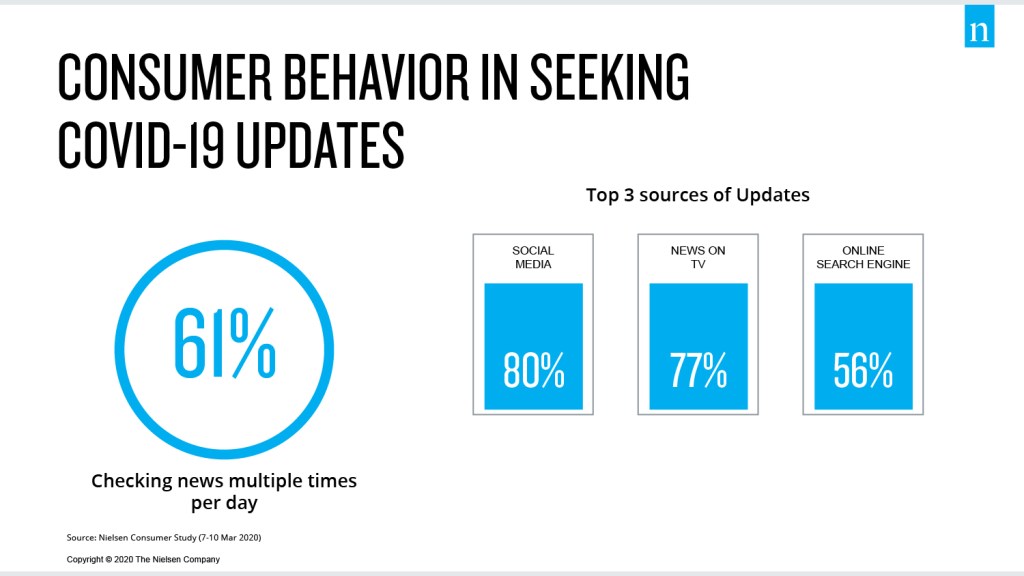
In einer kürzlich durchgeführten Nielsen-Studie gaben 82 % der Befragten - überwiegend aus der Oberschicht - an, dass sie Anfang Februar 2020 über COVID-19 informiert waren. Nach der Bekanntgabe der ersten COVID-19-Fälle durch Präsident Joko Widodo am 2. März informierten sich 61 % der Befragten mehrmals täglich über verschiedene Medienkanäle über COVID-19.
Die Studie ergab, dass soziale Medien (80 %), Fernsehnachrichten (77 %) und Online-Suchmaschinen (56 %) die am häufigsten genutzten Informationsquellen für die Verbraucher waren, um sich über COVID-19 zu informieren.
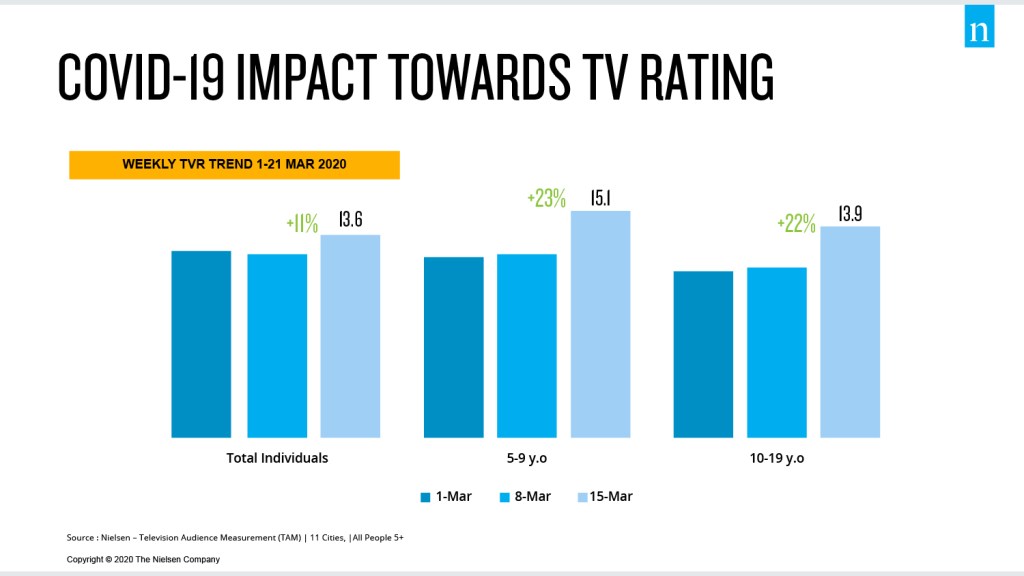
Following the country’s stay-at-home policy to prevent the spread of COVID-19, 30% of respondents planned to shop online more often. It also affected TV viewing, with ratings growing from 2.6% on March 8 to 13.6% on March 15. The highest increase was seen in younger audiences, with ratings increasing 23% for 5-9 year olds increasing and 22% for 15-19 year olds.
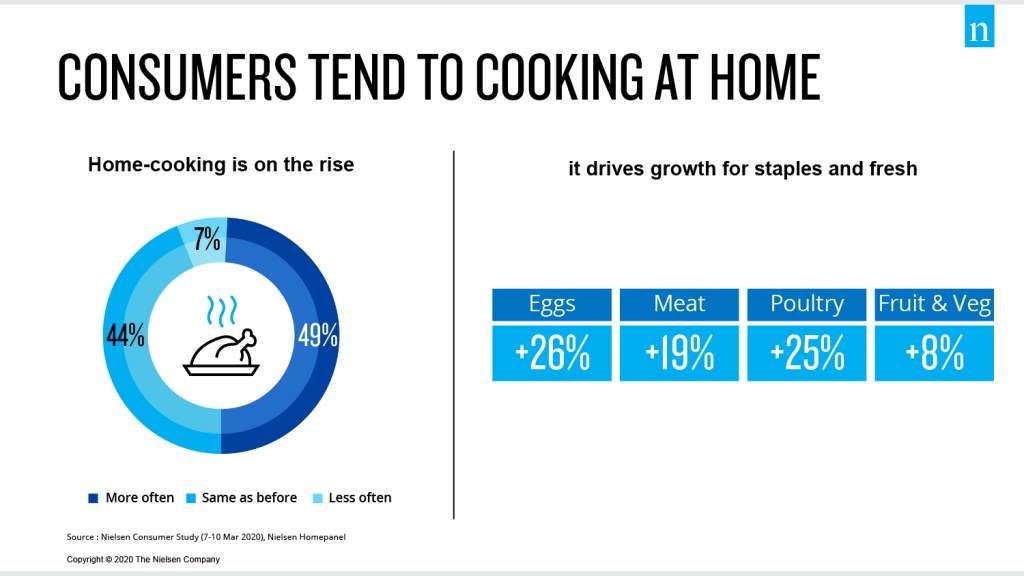
Across other countries in Asia, we’ve seen the rise of the “homebody economy” as consumers stay home due to concerns about the virus and shift their spending to serve this new lifestyle. In Indonesia, 50% of consumers have reduced out-of-home entertainment, and 46% have reduced eating out. On the other hand, 49% of consumers cooked at home more often, and this has driven the sales growth of staples and fresh products, such as eggs (+26), meat (+19%), poultry (+25%) and fruit and vegetables (+8%).
To prepare for stay at home measures, consumers around the world have been purchasing similar products as part of their pantry preparation. In Indonesia, many shoppers turned to Modern Trade outlets for much of their pantry prep, though there were some differences across consumer segments and regions. On the national scale, Upper Class consumers shopped more at Hypermarkets/Supermarkets than other consumers. Meanwhile, the trend in JakartaGreater is different, where not only Upper Class, but also Middle and Lower Class consumers shopped more at Hypermarkets/Supermarkets.
In addition to stocking up on pantry goods, health and hygiene have become major concerns for consumers amid the current pandemic. And early studies from China show that health will likely continue to be key concerns as infection rates slow and Indonesia enters a new normal. As many as 44% of respondents claimed that they consume health products more often, and 37% who claimed they consume vitamin drinks more often. Industry players for vitamins and pharmacies seized this opportunity and increased their advertising budgets on TV. Vitamin ad spending increased 14% and reached more than IDR90 Billion, while cough medicine ad spending increased 22%, reaching more than IDR30 Billion.
Für die Einzelhändler kann die derzeitige Situation eine Chance sein, ihr Geschäft am Laufen zu halten und gleichzeitig dazu beizutragen, die Bedürfnisse der Verbraucher während der Zeit, in der sie zu Hause bleiben, zu erfüllen. Supermärkte und Hypermärkte haben vor allem bei Verbrauchern der gehobenen und einigen der mittleren Einkommensschichten eine Chance, da diese in Ermangelung der von ihnen normalerweise bevorzugten Artikel nach einem ausreichenden Angebot und mehr Produktalternativen suchen könnten. In der Zwischenzeit ist der Minimarkt die bevorzugte Wahl in allen SES-Kategorien, da er aufgrund seiner Nähe den Verbrauchern hilft, große Menschenmengen zu vermeiden und keine öffentlichen Verkehrsmittel zu benutzen.
Das Wichtigste, was Einzelhändler tun müssen, ist, ihre Lagerbestände zu überwachen, da es Risiken für die Vertriebslinie gibt. Lieferdienste mit einfachen Bestellmethoden und leichtem Zugang zu den Verbrauchern sowie die Nutzung der Omnichannel-Kommunikation, einschließlich Fernsehen, Internet, sozialer Medien, Messaging und Chat-Apps, werden den Unternehmen helfen, die Bedürfnisse der Verbraucher zu erfüllen.
Read in Bahasa Indonesia.
Methodik
Quellen: Nielsen Consumer Study (7.-10. März 2020), Nielsen Scantrack (Jan.-März 2020 vs. Jan.-März 2019), Nielsen Home Panel (Jan.-März 2020 vs. Jan.-März 2019), Nielsen TV Audience Measurement (1.-18. März 2020), Nielsen Ad Intelligence (1.-18. März 2020).
Learn more from our complete COVID-19 coverage.


