Das Auftreten des neuartigen Coronavirus (COVID-19) hat in Australien zu einer "Homebody Economy" geführt: Wir haben uns daran gewöhnt, von zu Hause aus einzukaufen, zu lernen, zu arbeiten und uns online zu unterhalten. Zu Hause zu bleiben ist zu einer neuen Lebensweise geworden, und das hat sich besonders stark darauf ausgewirkt, wie und was wir essen.
Mit mehr Zeit zu Hause haben die australischen Verbraucher die Möglichkeit, ihre Essgewohnheiten zu überdenken und kreative und einfallsreiche Wege zu finden, um ihre Vorräte zuzubereiten und aufzubrauchen und ihre Kochkünste aufzufrischen, damit letztendlich nichts verschwendet wird.
Over the months of March and April, we witnessed incredible scenes of shoppers rushing to pack their ‘pandemic pantries’ with enough food staples and essential supplies to last a few months. Strong volume sales for rice, pasta, flour, bread mix and Asian and Indian ingredients signalled a return to home cooking and baking; while a spike in sales for ground coffee and coffee beans revealed that many Australians are craving a barista-style coffee experience at home.
Da die Beschränkungen in den nächsten Wochen und Monaten allmählich aufgehoben werden, müssen Marken, Hersteller und Einzelhändler überlegen, wie das "neue Normal" bei den Ernährungstrends aussieht, verstehen, wie sich dies je nach Demografie und Lebensalter unterscheidet, und sich entsprechend anpassen und umstellen.
MARKETING FÜR DIE VERSCHIEDENEN KÄUFERGRUPPEN IM AUSTRALISCHEN LEBENSMITTELHANDEL
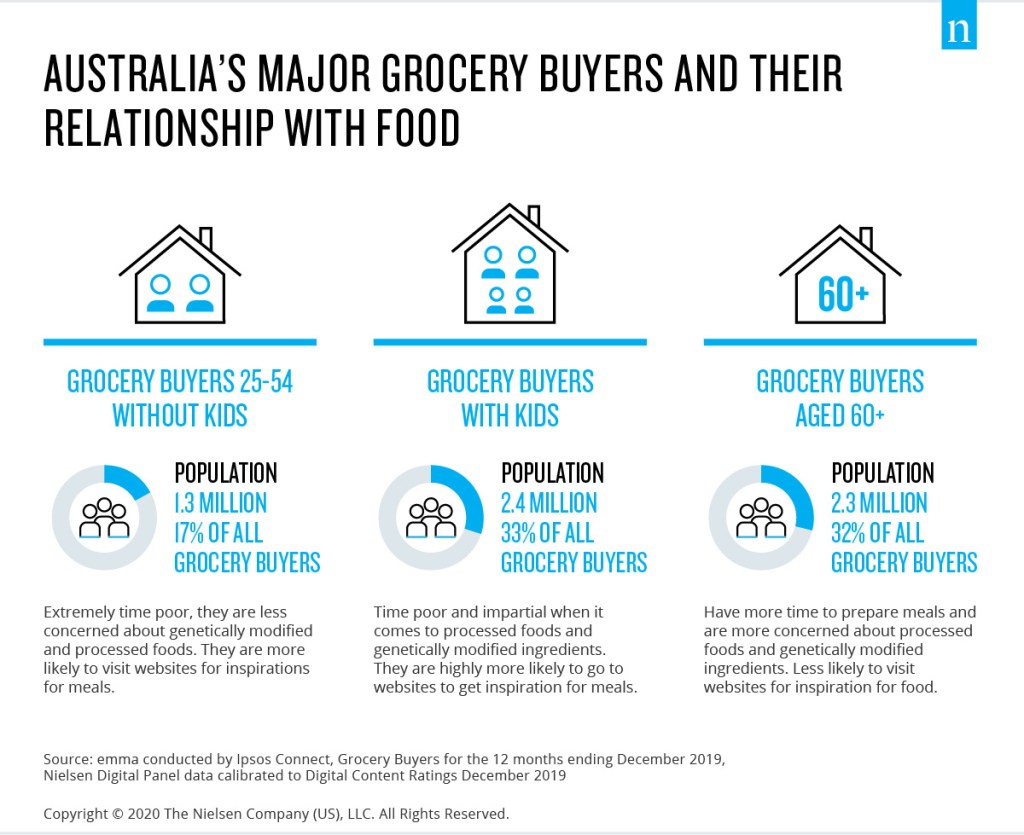
Using data from Nielsen’s Consumer & Media View (CMV), we identified three distinct types of Australian buyer groups. We analysed their eating habits to understand what this means for the immediate and longer-term future as the effects of the pandemic continue to roll out.
Lebensmitteleinkäufer 25-54 ohne Kinder
Traditionally, this group is time-poor when it comes to meal preparation and are 37% more likely to agree that they don’t have time to cook and prepare meals when compared to other grocery buyers. They are 23% more likely to eat on the run and are less likely to be mindful of their diet. This group is less fussy when it comes to ingredients, but more than half (57%) say they either like to or love to cook. They are less likely to be concerned about food that is fattening foods or processed – preferring taste above all else.
Für die Vermarkter ist es wichtig zu bedenken, dass diese Gruppe zwar gerne kocht, aber in der Vergangenheit wenig Zeit dafür hatte.
With more time at home and no access to cafes and restaurants, brands and retailers have the opportunity to spark a renewed passion for cooking at home with these shoppers with creative recipe ideas that make the most of what is in their pantries.
Lebensmitteleinkäufer mit Kindern unter 18 Jahren
This group is 19% more likely to feel that they don’t have time to cook and prepare meals when compared to other grocery buyers. They often struggle with balancing the need for fast and affordable meals that are still nutritious and appealing to all members in the household. Grocery buyers with kids are less likely to eat foods with genetically modified ingredients and are more likely to avoid processed foods and buy more fresh and chilled food.
As many Australians continue homeschooling and working from home in the short-term, the availability of convenient meal and snack options will be important. Nielsen Homescan research showed how shoppers have turned to ‘long-lasting’ fruit and vegetable options during lockdown.
On average, grocery buyers with kids spend 30% more per family on groceries each week and are substantially more likely to feel that store’s own brands offer equal quality to well-known brands. In France, retailers have responded to meeting the needs of families by expanding the range of private label organic products they have on offer. Increasing the number of value-options that are healthy and family-friendly has had a positive impact in regions with a higher population of families.
Familien mit Kindern suchen aktiv auf Websites, in Zeitschriften oder Zeitungen nach Inspirationen für ihre Mahlzeiten und suchen nach schnellen, erschwinglichen und nahrhaften Mahlzeiten für ihren Haushalt.
Lebensmitteleinkäufer ab 60 Jahren
Diese Gruppe, die fast ein Drittel der australischen Lebensmitteleinkäufer ausmacht, hat mehr Zeit zum Kochen und Zubereiten von Mahlzeiten als andere Lebensmitteleinkäufer. Sie achten auch am meisten darauf, was sie essen. Sie betrachten das Kochen weniger als Hobby oder Interesse und suchen nach einfachen, grundlegenden Lieblingsgerichten, die nahrhaft und kosteneffizient sind.
Im Vergleich zu anderen Lebensmitteleinkäufern achten Käufer über 60 Jahre um 13 % häufiger auf die Verwendung von Zutaten bester Qualität, kaufen um 12 % häufiger Produkte mit hohem Ballaststoffgehalt, achten mehr auf Dickmacher, Konservierungsstoffe und gentechnisch veränderte Zutaten und vermeiden verarbeitete Lebensmittel, wann immer sie können.
As these shoppers are the most susceptible to the effects of COVID-19, they will be seeking greater assurance that the products they buy are free of risk and of the highest quality when it comes to safety standards. It will also be important for this group to understand where the food they are purchasing originates from, with complete transparency from farm to factory, to supply chain and distribution, and details of the measures being taken to assure their safety.
Australier sehnen sich nach Kochideen und Inspiration
A recent Nielsen Digital Content Ratings report reveals that there was a 71% increase in the amount of time being spent on food and cooking websites during the COVID-19 pandemic. The increases were across all age groups and most profound with the younger audiences aged under 40.
For many Australians, the local supermarket is one of the very few places they have ventured to in the past month and possibly for some time to come. Supermarket in-store magazines have the potential to thrive in this environment. Already, the two major supermarket magazines are by far the most read magazines in Australia and collectively have a total of 6.7 million or 35% of Australian’s reading their publications each month.
There is great potential for marketers to engage and reach each grocery buyer group by creating content related to healthy eating habits and meal preparation, for those who are looking for a delicious and fast recipe for their family. To resonate with consumers, marketers need to reexamine their advertising to make sure that they are addressing consumers’ needs and connecting with them authentically.
Methodik
ÜBER NIELSEN EMMACMV
Nielsen and The Readership Works (TRW) have a relationship that sees Nielsen’s national Consumer & Media View (CMV) incorporated into emma Cross Platform readership data. This is known as emmaCMV. For over 20 years, Nielsen’s CMV has surveyed consumers across Australia capturing an array of insights that help clients tackle marketing and media challenges. Whether they are involved in the planning, buying or selling of advertising, or responsible for brand strategy, Nielsen CMV insights provide the power to create effective marketing strategies and, ultimately, achieve business and marketing goals. emmaCMV is an enhanced and convenient solution that integrates Nielsen’s CMV into emma to provide readership, attitudinal, lifestyle and product data in one place. This information provides a comprehensive profile of the print consumer and their purchase intentions which supports more actionable analysis and insights.