随着我们每天使用的设备数量不断增加,大数据也变得越来越庞大--这让寻求最准确衡量营销投资回报率(ROI)的营销人员感到困惑。但是,营销人员要想全面衡量营销效果,最好的办法可能不是采用单一的衡量方法,而是采用多模型方法。
Nielsen’s president of global MROI solutions, Ross Link, recently shared findings from the Digital Media Consortium (DMC) II at Re!Think 2016 about how such an approach can help fill the gaps inherent in big data today. However, this strategy isn’t one size fits all—the type of data a marketer has available in terms of granularity and coverage will dictate what methodology they should use.
Nielsen founded the DMC in response to the recent proliferation of big data that has driven a rapid change in marketing ROI measurement techniques. The goal of the DMC II was to improve industry practice in the precise measurement of digital media effectiveness. Specifically, it used granular, household-level data to see how common statistical methodologies with different data limitations—marketing mix modeling (MMM), multi-touch attribution (MTA) and matched panel analysis (MPA)—can work together to get the most accurate ROI for marketers.
"我们原以为会有一种建模方法胜出,但事实证明,每种方法在现代营销人员的工具包中都占有一席之地。何时使用 MMM、MTA 或 MPA 取决于营销人员现有的数据类型以及他们最终想要衡量的内容,"林克说。"例如,当所有营销的影响都可以与某个特定的个人联系起来时(即单一来源数据),理想的解决方案就是家庭级回归(MTA)。对于只投资于数字战术的营销人员来说,现在或许可以做到这一点,但对于目前利用线下营销工具的大多数品牌来说,在美国至少还要再过几年才能获得单源数据,而在发展中市场则要等几十年。
Link 继续指出,在单一来源数据成为现实之前,营销人员应利用商店级 MMM,尤其是在寻求全面优化所有业务驱动因素(包括线上和线下)的投资回报率时。另一方面,当营销人员的目标仅仅是衡量显示和视频等特定数字媒体投资的投资回报率时,他们应该利用家庭级 MPA。

DMC I 包括尼尔森、谷歌、Facebook 和七家主要广告商之间的合作,旨在确定准确衡量社交媒体(包括付费、自有和赚取的数字媒体)投资回报率的突破性见解。这项研究基于 15 亿 Facebook 印象、6 亿 Google 搜索印象和对 20 亿美元销售额的分析。
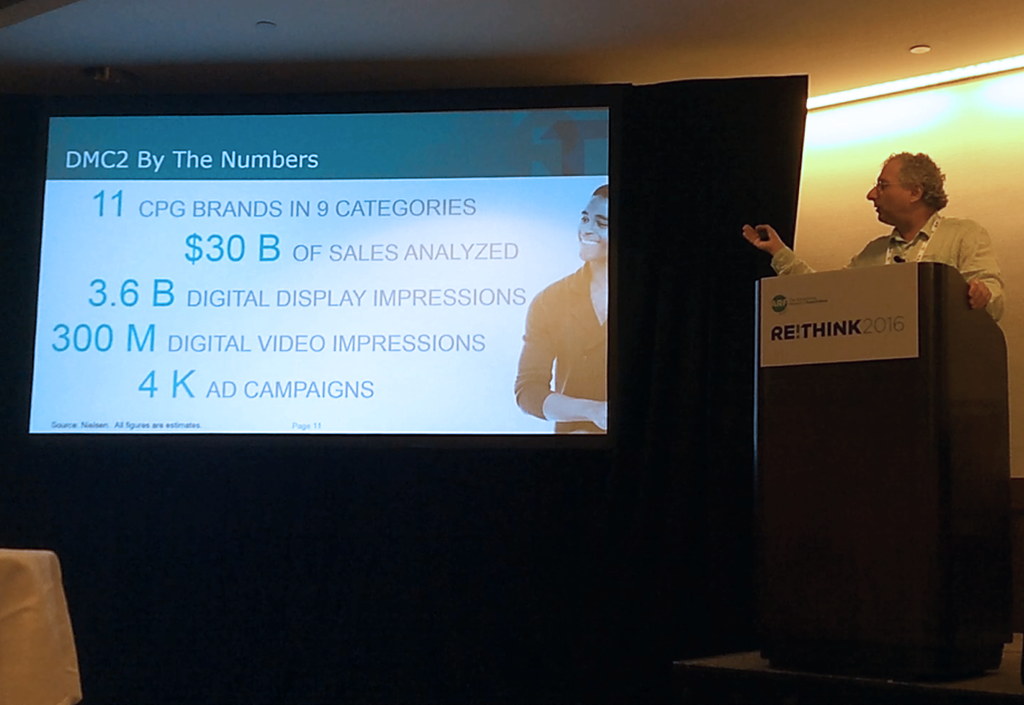
DMC II 的成立是为了解决目前行业内数据归因分析的难题。DMC II 分析了 11 个消费包装品 (CPG) 品牌的 9 个类别,涉及 300 亿美元的销售额、36 亿次数字显示印象、3 亿次数字视频印象和 4000 个广告活动。
