Pride month is over—now what? The month that celebrates the LGBTQ+ community took a while to take root, but June has become the main time when marketers pull out their rainbow branding and feature LGBTQ+ people in their ads—all in an effort to connect with these consumers. With spending power that investment research firm LGBT Capital estimates at $3.7 trillion globally, LGBTQ+ consumers know their worth and expect representation in content and advertisements throughout the year that reflect it. Attempts to cash in on Pride aren’t only easy to spot, they’re especially jarring for LGBTQ+ people, who still experience discrimination and run the risk of losing their human rights as a result of proposed legislations. Showing solidarity and support in June is great, but there’s still a lot to be done year-round to advance equality for LGBTQ+ people.
从事 "彩虹资本主义 "的品牌,如果不能持续展示对 LGBTQ+ 社区的价值或实际支持,就会受到 LGBTQ+ 消费者及其盟友的审查。对社区的支持不仅仅意味着声明或游行。超过 50% 的消费者希望他们购买的公司能够支持他们所关心的事业,他们正在寻求更多的持续行动、倡导和包容。在这个不断变化的市场中,如果没有这种真实的支持,要建立品牌知名度并赢得 LGBTQ+ 消费者和盟友的业务将是一项挑战。
从事 "彩虹资本主义 "的品牌,如果不能持续展示对 LGBTQ+ 社区的价值或实际支持,就会受到审查。超过 50% 的消费者希望他们购买的公司能够支持他们所关心的事业,他们正在寻求更多的持续行动、倡导和包容。
LGBTQ+ consumers are looking to brands to expand their inclusive messaging throughout the year, and these efforts are a key way that advertisers can build ongoing connections with this community. Outside of Pride Month, 尼尔森Ad Intel data shows that ads with representation of LGBTQ+ people are hard to find on TV. In fact, just one week of primetime advertisements in June 2021 aired a more diverse selection of ad categories featuring or targeting LGBTQ+ consumers than the entire month of February. Naturally, brands are rushing to celebrate during the month of June, but if that is the only time they’re engaging or representing LGBTQ+ people, they may be missing the mark. The lack of LGBTQ+ inclusive ads at other times throughout the year shows there’s room for improvement.
鉴于六月份以外的 LGBTQ+ 包容性广告的缺乏,品牌有很大的机会在其广告中增加 LGBTQ+ 的代表性,而不必与所有其他以自豪为主题的活动竞争。以尼尔森Ad Intel 2021 年 2 月的数据为例,在黄金时段线性电视中投放的近 10,000 个独特广告中,仅有 1%的广告创意体现了 LGBTQ+(人物、话题、主题等)。虽然这个比例本身就很低,但如果考虑到许多赞助 "骄傲月 "活动的品牌在其二月黄金时段的电视广告中都没有 LGBTQ+ 的身影,这个比例就更加惊人了。事实上,在二月份投放 1,000 个或更多广告的 48 个品牌中,只有两个品牌的广告中出现了 LGBTQ+ 的身影。当 LGBTQ 主题出现在广告中时,其代表品牌绝大多数是制药类,占包容性广告总量的 16%。
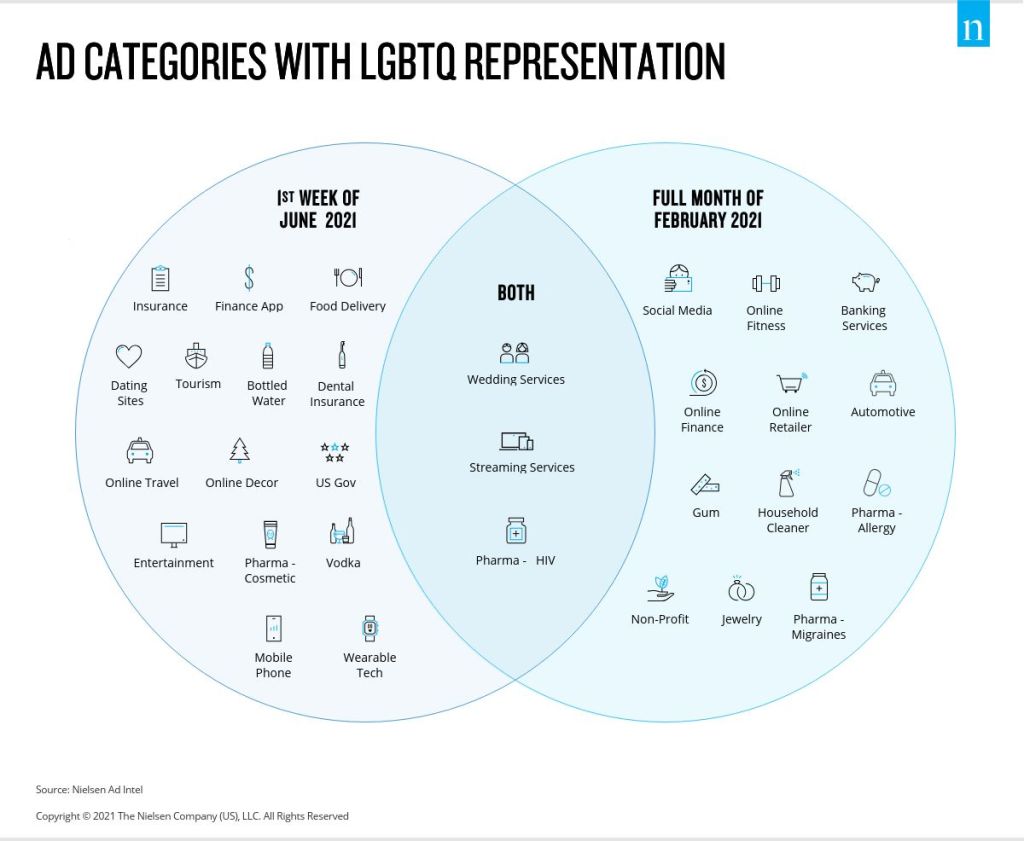
The progress made since the historic Stonewall Riots that inspired Pride to the mainstream parades and marches of today are changes worthy of celebration. But the fight continues, and media has a critical role to play—from more nuanced targeting to increasingly diverse storytelling on TV. As many content creators across television embrace this opportunity for representation, it’s no surprise that two of the top advertisers (based on number of unique ads) featuring LGBTQ+ representation in February were streaming services.
广告商在吸引 LGBTQ+ 消费者和盟友时,如何才能避免随波逐流?
Start with a commitment to ongoing and long-term interactions with the LGBTQ+ community—not just promotions during June. Today’s savvy consumers are even more wary of superficial brand behavior after a year that upended the status quo. Brand messaging once a year won’t be enough if you really want your brand to break through. Working with media that’s focused on the community, like Revry, is one way to maintain engagement year round.
"在 Revry,我们不仅常年看到 LGBTQ+ 社区的价值,我们还生活在其中。我们知道这对同性恋受众和在内容中寻找准确、细致表现的消费者的影响。我们也知道我们的受众对那些以尊重和人性化的方式投资于我们社区的品牌的价值。
Damian Pelliccione,Revry 联合创始人兼首席执行官
Ensure that your brand messaging is authentic to what matters to LGBTQ+ people—like equality, community wellbeing, culture and policy. In a recent GLAAD study, senior management at ad agencies supported featuring LGBTQ+ people in campaigns, but felt that their teams lacked the expertise and knowledge to get the representation “right,” a disconnect that may be driving reluctance to expand LGBTQ+ inclusive brand messaging. Agencies and advertisers can work to close this gap by engaging with organizations like GLAAD and empowering LGBTQ+ business resource groups in their companies to educate their colleagues.
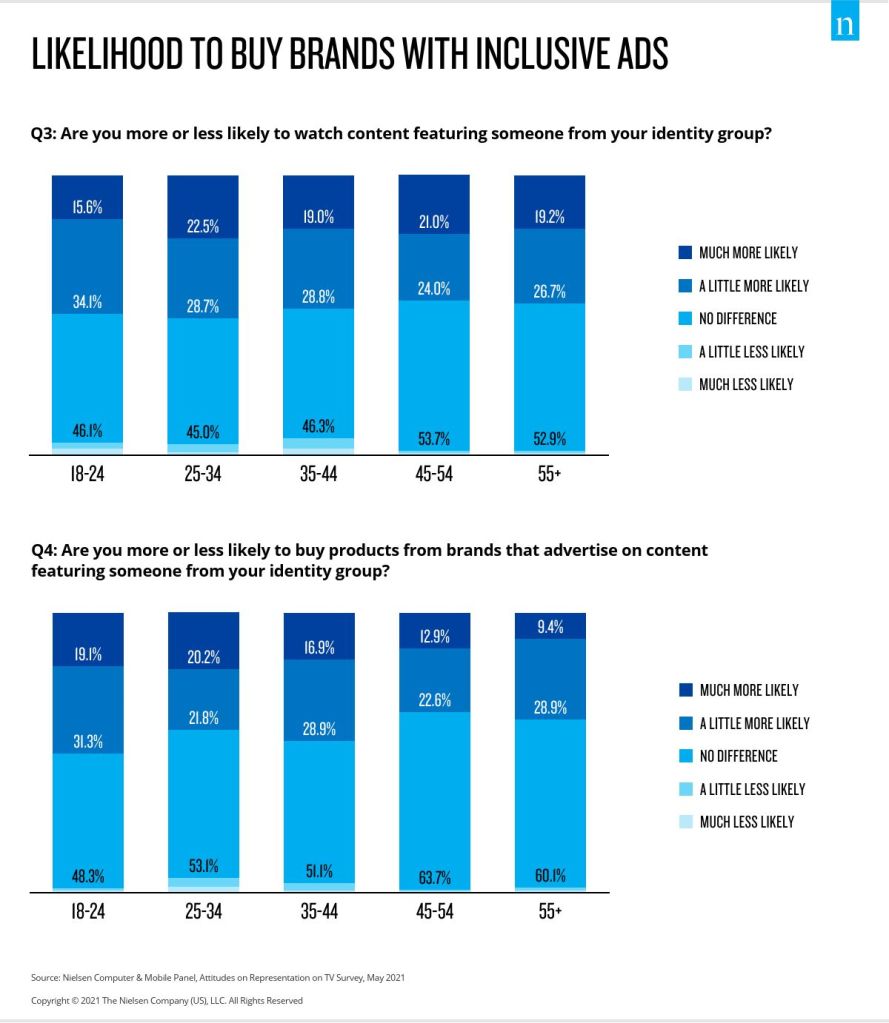
Next, build diversity into your business strategy. Brands must understand that intersectional diversity isn’t a special summer event, it’s our new normal. Not only is Generation Z the most racially and ethnically diverse generation in the U.S., one in six adults in the Gen Z age group identify as a lesbian, gay, bisexual or transgender. Nielsen data shows young people expect the media and brands they engage with to embrace a standard of representation and inclusion true to their lived experience. In Nielsen’s recent Attitudes on Representation on TV survey, half of the respondents aged 18-24 said they were more likely to watch content featuring someone from their identity group and more likely to purchase from brands that advertise in that inclusive content.
Traditional television content and ads aren’t the only place LGBTQ+ audiences are looking for authentic representation. Brands should also work to deepen digital connections—it’s where LGBTQ+ people have created lasting allies and a borderless sense of community. Streaming and sharing video content makes digital engagement a must for connecting your brand to LGBTQ+ consumers. LGBTQ+ usage of YouTube alone outpaces the general population by more than a third and these consumers are more likely to be heavy social media users—particularly for visually driven ad-supported platforms like Instagram. There are LGBTQ+ people in every community every day of the year, and your ad strategy should reflect that.