随着美国越来越多的人有资格接种疫苗,消费者和公司都看到了隧道尽头的曙光。"疫苗小话题 "正在渗透到视频会议中,公司和消费者开始讨论和规划大流行后的未来。当我们审视谁最渴望向前迈进时,少数群体正引领着前进的步伐。
Early on in the pandemic, we saw how COVID-19 impacted different communities and industries unequally. As more states reopen and people resume “normal” activities, it’s clear that these communities and industries will bounce back at different tempos. Using data from the latest Nielsen Total Audience Report: Advertising Across Today’s Media, we’ve identified three primary consumer recovery groups: Recovery Optimists, Cautious Optimists 和 Recovery Pessimists. While consumers who identify with these categories may change as the vaccine rollout progresses, age, gender and ethnicity are a few of the factors advertisers can consider when looking at who’s most optimistic and eager to spend.
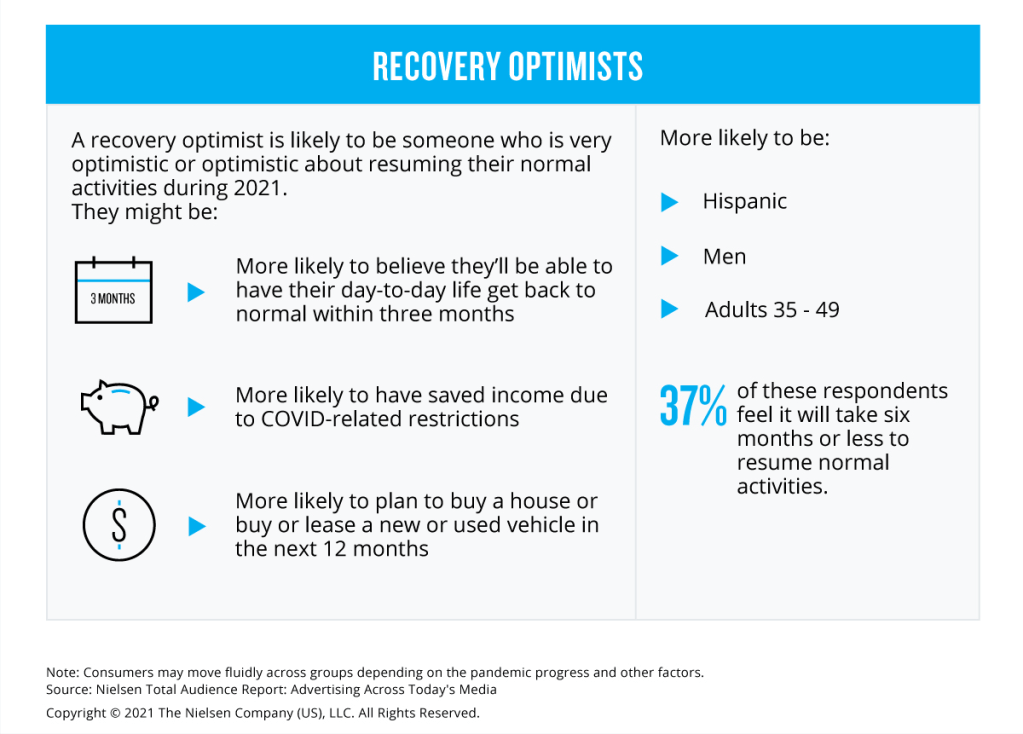
Despite research from the CDC showing that Black, African Americans and Hispanic or Latino persons are two to three times more at risk of COVID-related hospitalizations and death than their White, non-Hispanic counterparts, these consumers are among the most optimistic and eager to spend.
Based on the results from a recent Nielsen survey, Hispanic consumers are more likely to be 恢复乐观主义者. During COVID-19, these respondents reported that they were moderately impacted by COVID-related restrictions, with 44% saying they were able to save more compared with 39% of all adults 18+. Over half (53%) said they were able to make “major” purchases ($500+) during the pandemic compared with 43% of adults 18+.
西班牙裔受访者表示,在未来 12 个月内,他们购买新房的可能性是普通成年人的 2 倍,购买或租赁新车或二手车的可能性也更大。这些消费者最热衷于计划或预订假期(71%)、外出就餐(70%)和光顾咖啡馆(69%)。广告商可以通过智能手机接触到这一消费群体,在 2020 年第二季度,他们每周观看视频、流媒体音频和社交网络的时间超过 18 小时。
Black consumers are more likely to be Cautious Optimists, because a larger percentage reported believing it’ll take longer to recover and have been more hesitant to make larger purchases during the past year. Black respondents indicated they were moderately impacted by COVID-related restrictions, with 52% saying they were able to save more income. Yet nearly six-in-10 indicated that they did not make a “major” ($500+) purchase in 2020, which is more than any other multicultural consumer group.
一旦解除限制,非裔美国消费者表示他们已准备好消费。他们表示计划在明年购买或租赁汽车或购买房屋的可能性分别高出 1.3 倍和 1.7 倍。在较小的消费范围内,非裔美国人消费者热衷于去美发/理发店或美甲沙龙(72%)、外出就餐(66%)以及去咖啡店和咖啡馆(65%)。旅游业的好消息是,三分之二(64%)的非裔美国人对乘坐飞机旅行感兴趣,使他们成为所有多元文化消费者中最愿意乘坐飞机旅行的人。
Advertisers looking to engage with Black consumers should keep in mind the social activism and diversity pledges made over the last year, as well as how that translates into the omnichannel experience, which is especially relevant to this consumer group that over-indexes on time spent across TV, the computer and smartphones. For 谨慎的乐观主义者, the messaging can be positive, but should not abandon health-safety considerations.
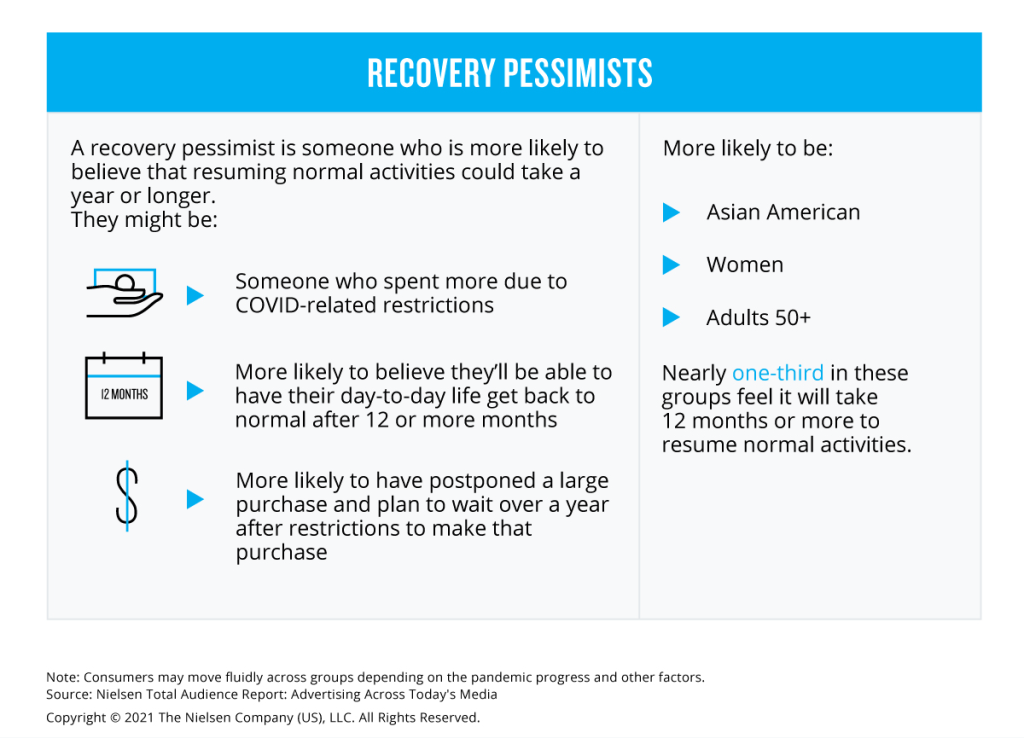
Many factors play into who falls into the 复苏悲观主义者 category, including confidence in vaccine information, protocol and ease of access. These individuals are more likely to have been significantly or severely impacted by the pandemic financially and could belong to more at-risk communities, are caretakers, or are managing additional burdens due to the pandemic. This includes women, who are more likely to be caretakers and take on household responsibilities as well as people who are 50+.
广告商不应忽视这一群体。相反,他们应该明白,这些消费者可能需要更多的保证和持续的健康安全协议宣传。好消息是,虽然这些人可能还没有做好立即消费的准备,但他们可能会花更多的时间进行社交活动,如观看电视和流媒体。
It’s important to note that these consumer groups are not static. The enhanced rollout of the vaccine program, successful re-opening of schools and sustained falling COVID-19 cases could improve the overall optimism of 复苏悲观主义者 and allow them to step into the 谨慎的乐观主义者 category. While set-backs and re-closures may downgrade consumer optimism.
For additional insights download the latest Nielsen Total Audience Report: Advertising Across Today’s Media or see past reports and trends on our Nielsen Total Audience Report Hub.