W miarę jak coraz większa część Stanów Zjednoczonych kwalifikuje się do szczepień, konsumenci i firmy dostrzegają światełko w tunelu. "Szczepionkowy small talk" przenika do wideokonferencji, a firmy i konsumenci zaczynają rozmawiać i planować przyszłość po pandemii. A kiedy spojrzymy na to, kto jest najbardziej chętny do pójścia naprzód, grupy mniejszościowe przewodzą szarży.
Early on in the pandemic, we saw how COVID-19 impacted different communities and industries unequally. As more states reopen and people resume “normal” activities, it’s clear that these communities and industries will bounce back at different tempos. Using data from the latest Nielsen Total Audience Report: Advertising Across Today’s Media, we’ve identified three primary consumer recovery groups: Recovery Optimists, Cautious Optimists oraz Recovery Pessimists. While consumers who identify with these categories may change as the vaccine rollout progresses, age, gender and ethnicity are a few of the factors advertisers can consider when looking at who’s most optimistic and eager to spend.
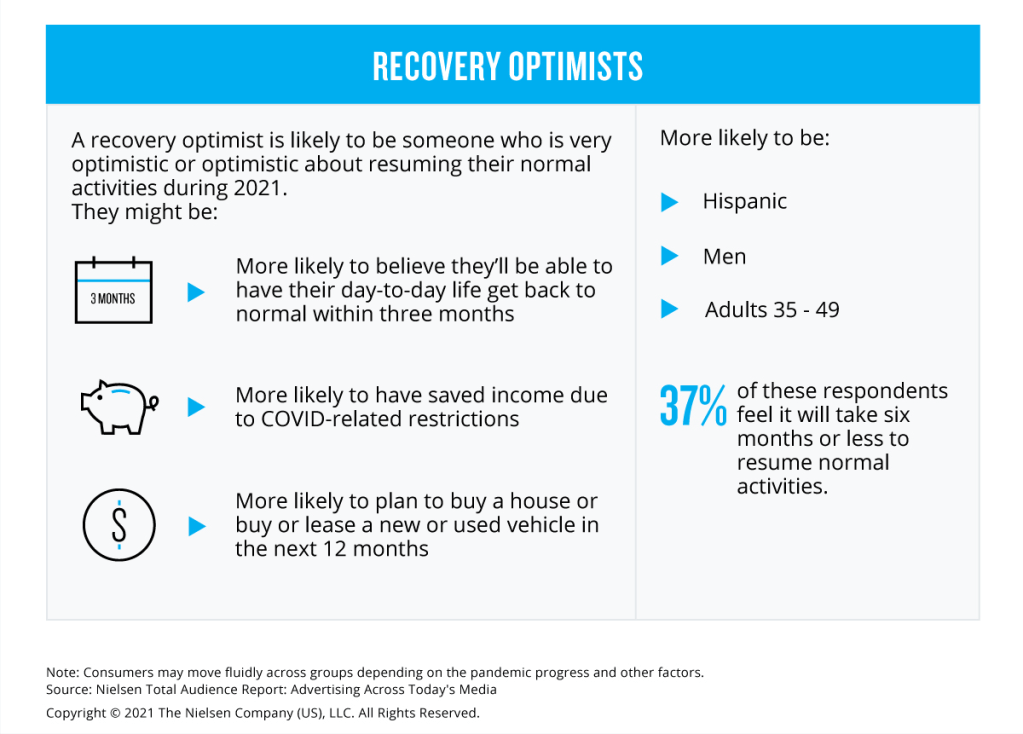
Despite research from the CDC showing that Black, African Americans and Hispanic or Latino persons are two to three times more at risk of COVID-related hospitalizations and death than their White, non-Hispanic counterparts, these consumers are among the most optimistic and eager to spend.
Based on the results from a recent Nielsen survey, Hispanic consumers are more likely to be Optymiści odzysku. During COVID-19, these respondents reported that they were moderately impacted by COVID-related restrictions, with 44% saying they were able to save more compared with 39% of all adults 18+. Over half (53%) said they were able to make “major” purchases ($500+) during the pandemic compared with 43% of adults 18+.
W ciągu najbliższych 12 miesięcy latynoscy respondenci twierdzą, że są 2 razy bardziej skłonni do zakupu nowego domu niż przeciętny dorosły i bardziej skłonni do zakupu lub leasingu nowego lub używanego pojazdu. Konsumenci ci najchętniej planują lub rezerwują wakacje (71%), stołują się w restauracjach (70%) i odwiedzają kawiarnie (69%). Reklamodawcy mogą dotrzeć do tej grupy konsumentów podczas korzystania ze smartfonów, gdzie spędzali ponad 18 godzin tygodniowo na oglądaniu wideo, strumieniowym przesyłaniu dźwięku i korzystaniu z sieci społecznościowych w drugim kwartale 2020 roku.
Black consumers are more likely to be Cautious Optimists, because a larger percentage reported believing it’ll take longer to recover and have been more hesitant to make larger purchases during the past year. Black respondents indicated they were moderately impacted by COVID-related restrictions, with 52% saying they were able to save more income. Yet nearly six-in-10 indicated that they did not make a “major” ($500+) purchase in 2020, which is more than any other multicultural consumer group.
Po zniesieniu ograniczeń afroamerykańscy konsumenci wskazali, że są gotowi do wydawania pieniędzy. Byli oni odpowiednio 1,3x i 1,7x bardziej skłonni powiedzieć, że planują zakup lub leasing samochodu lub zakup domu w ciągu najbliższego roku. W mniejszej skali wydatków, afroamerykańscy konsumenci chętnie chodzą do fryzjera lub salonu paznokci (72%), jedzą posiłki w restauracjach (66%) i odwiedzają kawiarnie (65%). Dobra wiadomość dla branży turystycznej: dwie trzecie (64%) Afroamerykanów jest zainteresowanych podróżowaniem samolotami, co czyni ich najbardziej chętnymi spośród wszystkich wielokulturowych konsumentów.
Advertisers looking to engage with Black consumers should keep in mind the social activism and diversity pledges made over the last year, as well as how that translates into the omnichannel experience, which is especially relevant to this consumer group that over-indexes on time spent across TV, the computer and smartphones. For Ostrożni optymiści, the messaging can be positive, but should not abandon health-safety considerations.
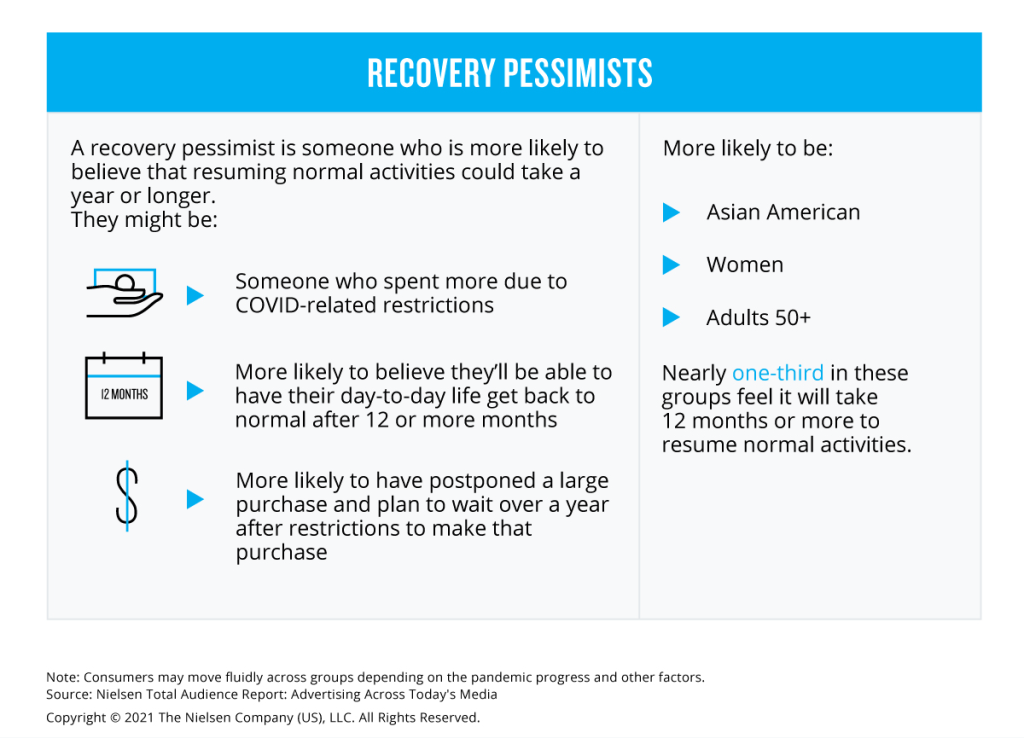
Many factors play into who falls into the Pesymiści ożywienia category, including confidence in vaccine information, protocol and ease of access. These individuals are more likely to have been significantly or severely impacted by the pandemic financially and could belong to more at-risk communities, are caretakers, or are managing additional burdens due to the pandemic. This includes women, who are more likely to be caretakers and take on household responsibilities as well as people who are 50+.
Reklamodawcy nie powinni odrzucać tej grupy. Zamiast tego powinni zrozumieć, że konsumenci ci mogą potrzebować większej pewności i ciągłej promocji protokołów bezpieczeństwa zdrowotnego. Dobrą wiadomością jest to, że chociaż osoby te mogą nie być gotowe do natychmiastowych wydatków, prawdopodobnie spędzają więcej czasu na czynnościach zdystansowanych społecznie, takich jak oglądanie telewizji i przesyłanie strumieniowe.
It’s important to note that these consumer groups are not static. The enhanced rollout of the vaccine program, successful re-opening of schools and sustained falling COVID-19 cases could improve the overall optimism of Pesymiści ożywienia and allow them to step into the Ostrożni optymiści category. While set-backs and re-closures may downgrade consumer optimism.
For additional insights download the latest Nielsen Total Audience Report: Advertising Across Today’s Media or see past reports and trends on our Nielsen Total Audience Report Hub.