Nielsen has long been known for counting everyone. Just as we are the measurement standard for the media industry, we are committed to bringing the industry standard for measuring representation and inclusion in programming. As part of our Diverse Intelligence Series, our new report Being Seen on Screen: The Importance of Quantity and Quality Representation on TV explores the state of inclusion and representation in television programming.
Our goal: help the media industry create inclusive content, powered by diverse content creators.
今年,我们将报告范围从广播、有线电视和流媒体节目的前 300 名扩大到前 1500 名。我们还深入研究了新的身份群体:美国原住民和残疾人。
报告要点
几乎所有主要身份群体在所有平台上都有一定的代表性,但对于屏幕份额最低的群体,尤其是美国原住民和亚裔来说,流媒体正在填补他们的空白。
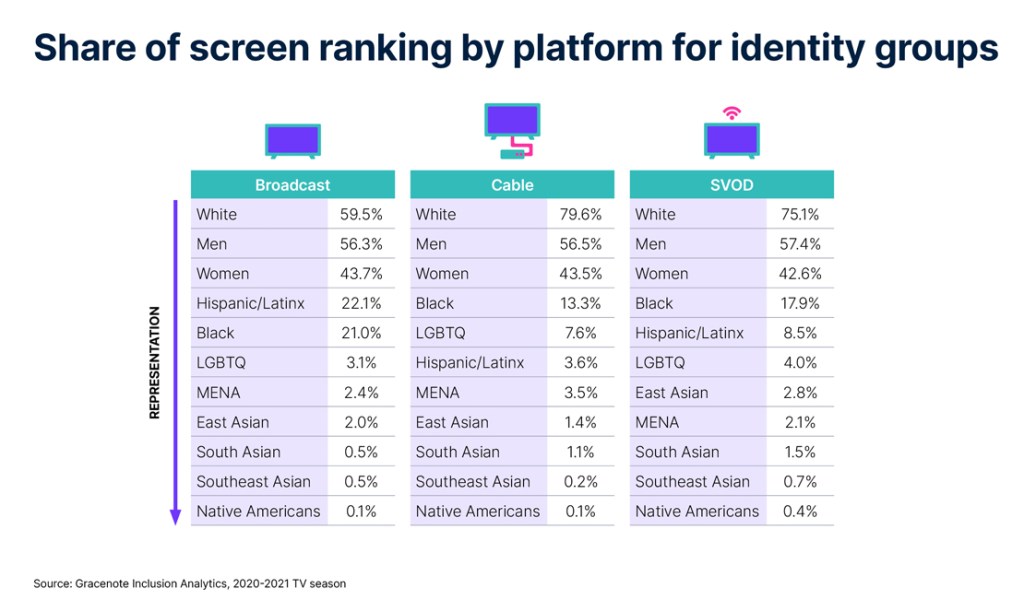
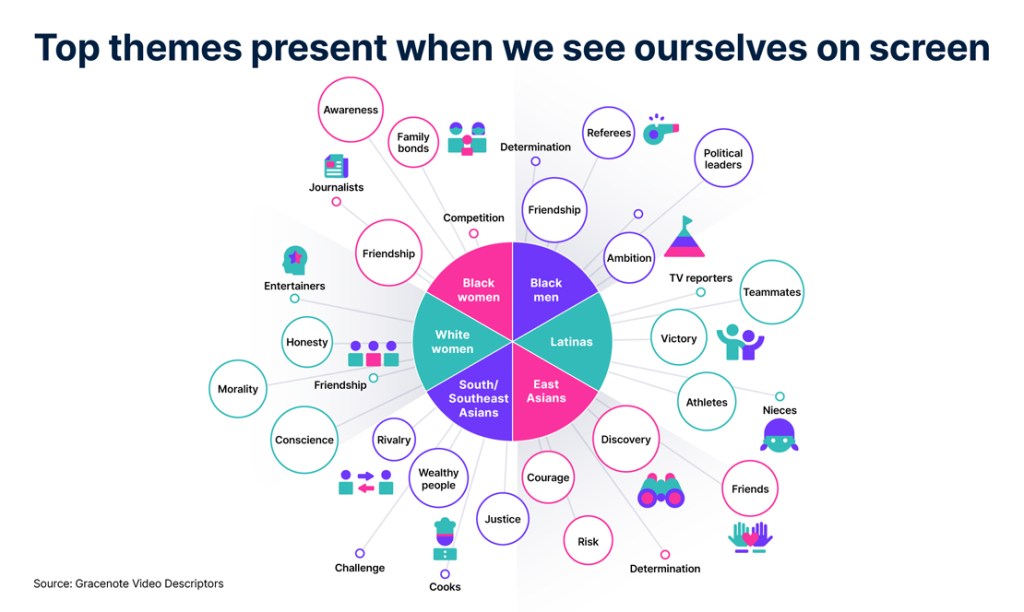
数字的代表性很重要,当一个身份群体出现在屏幕上时,背景也很重要。此外,媒体内容的主题有助于形成观念和改变信仰。
亲自研究数据
The data underpinning Nielsen’s Inclusion on TV report is pulled from Nielsen’s recently launched Gracenote Inclusion Analytics. And we’ve made the Gracenote Inclusion Analytics interactive tool available below to help those across the media landscape learn more about:
- 按性别和种族分列的纳入情况
- 按节目类型(如喜剧、戏剧、现实、新闻)分类
- 纳入广播、有线电视和流媒体平台
如何开始
- 点击蓝色标题,选择您想了解的信息
- 点击左侧按钮选择平台:广播、有线、SVOD(流媒体视频点播)或总计(所有平台的综合视图)
- 在右侧下拉列表中选择身份组
如何阅读结果
- 将鼠标悬停在每个条形图上,查看具体数值。如果数值低于 100,说明该身份群体的代表性不足。
- 融入机会指数(IOI)* 和类型:中间点(100%)表示某一身份群体(如女性)在银幕上的代表性与其在人口估计中的代表性相当。
- 屏幕份额(SOS)**:百分比表示在节目中经常出现的前 10 位演员中,各身份群体所占的比例。
*包容机会指数(IOI):比较某一身份群体(如妇女)的 SOS 与他们在人口估计中的代表性
**屏幕份额(SOS):前 10 名经常出现的演员中身份群体(如女性、女同性恋、男同性恋、双性恋、变性者、西班牙裔)的比例
通过使用该解决方案,媒体生态系统的参与者可以了解屏幕上不同性别、种族、民族和性取向的人才代表情况以及受众的多样性。Gracenote Inclusion Analytics 还能帮助内容所有者、发行商和品牌围绕包容性内容投资做出更明智的决策。
Interested in more insights? Read our latest Diverse Intelligence Series report to learn how the quality and context of representation matters.